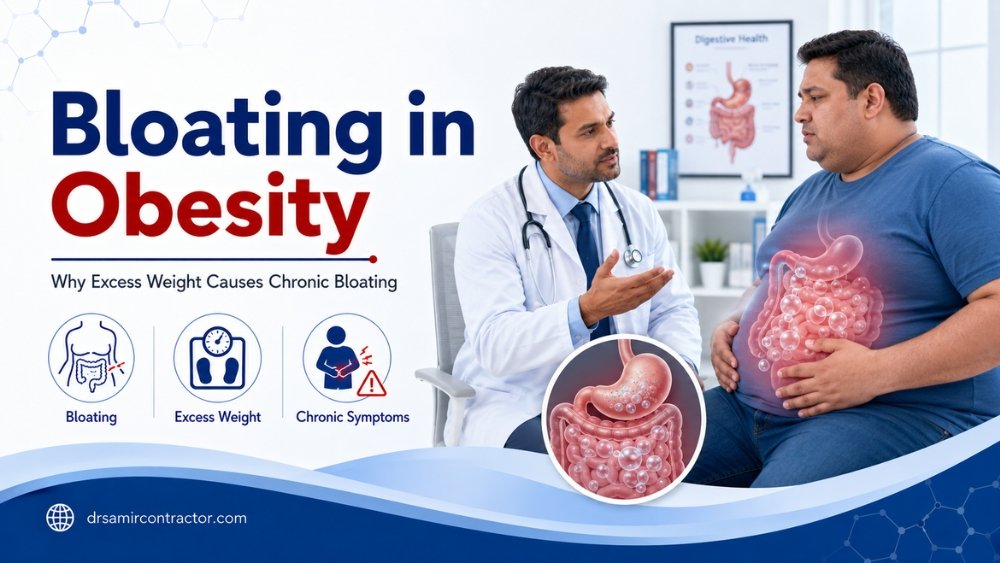
Bloating is one of the most common and most overlooked digestive complaints in obese individuals. Excess weight - particularly visceral fat around the abdomen - physically compresses the intestines, alters gut bacteria, slows motility, and contributes to fatty liver, all of which combine to produce persistent, uncomfortable bloating that often does not respond to antacids or gas tablets alone.
Quick Answer
Why Obesity and Bloating Are So Closely Linked
In my bariatric surgery practice at Sterling Hospital, Vadodara, bloating is among the top three GI complaints I hear from patients with a BMI above 30. Most have tried antacids, digestive enzymes, and home remedies - with little lasting relief. The reason is straightforward: bloating in obesity is not a simple gas problem. It is a multi-system issue driven by the physical, metabolic, and microbial consequences of excess body weight.
Understanding these mechanisms matters because the treatment approach is fundamentally different from treating bloating in a normal-weight individual. A gas tablet will not fix visceral fat compressing your colon. Antacids will not correct an obesity-driven shift in gut bacteria. Addressing the root cause - the excess weight itself - is what produces lasting improvement.
The Four Mechanisms: How Excess Weight Produces Bloating
1. Visceral Fat Compresses the Bowel
Visceral fat - the deep fat stored around the intestines, liver, and stomach inside the abdominal cavity - is the most metabolically active and most mechanically disruptive form of fat. Unlike subcutaneous fat (the fat you can pinch under the skin), visceral fat wraps around the bowel loops, mesentery, and omentum.
This internal fat mass physically compresses the intestines. The bowel has less room to distend normally after meals, less room for gas to move through, and less freedom to contract in its normal rhythmic pattern (peristalsis). The result is a constant sensation of fullness, tightness, and trapped gas - even when the amount of gas produced is normal.
Patients with central obesity - a large waist circumference relative to their height - are disproportionately affected. A person with a BMI of 35 who carries most of their weight around the abdomen will experience more bloating than someone with the same BMI whose fat is distributed in the hips and thighs. This is why waist circumference (above 90 cm in Indian men, above 80 cm in Indian women) is a stronger predictor of GI symptoms than BMI alone.
2. Altered Gut Microbiome in Obesity
The gut microbiome - the trillions of bacteria living in the intestines - is significantly different in obese individuals compared to lean individuals. Research consistently shows that obesity is associated with a higher ratio of Firmicutes to Bacteroidetes bacteria. This matters for bloating because:
- More efficient fermentation: The obesity-associated microbiome is better at extracting calories from food - and a byproduct of this increased fermentation is more gas (hydrogen, methane, and carbon dioxide).
- Increased methane production: Higher methane levels slow colonic transit, leading to constipation and gas retention - both of which worsen bloating.
- Reduced microbial diversity: A less diverse microbiome is less stable and more prone to producing bloating, irregular bowel habits, and abdominal discomfort.
- Increased intestinal permeability: Obesity-related changes in gut bacteria can weaken the intestinal barrier, allowing bacterial products to trigger low-grade inflammation that further impairs gut function.
3. Insulin Resistance Slows Gut Motility
Insulin resistance - a hallmark of obesity, pre-diabetes, and type 2 diabetes - directly affects the gut. Insulin plays a role in regulating the enteric nervous system (the network of nerves that controls gut movement). When cells become resistant to insulin, gut motility slows. Food and gas move through the intestines more slowly, producing prolonged contact between food and bacteria, more fermentation, more gas, and more bloating.
This is one reason why diabetic patients with obesity report significantly more bloating than non-diabetic obese patients. The combination of visceral fat compression and insulin-mediated motility impairment is particularly troublesome. Gastroparesis (delayed stomach emptying) - which occurs in some diabetic patients - adds another layer: food sits in the stomach longer, causing early fullness, nausea, and upper abdominal bloating after meals.
4. Fatty Liver Contributes to Abdominal Fullness
Non-alcoholic fatty liver disease (NAFLD) affects an estimated 30 to 40 percent of obese adults in India. When fat infiltrates the liver, the organ enlarges - sometimes significantly. This enlarged, fatty liver occupies more space in the right upper abdomen, pushing against the stomach and transverse colon.
Patients with moderate to severe fatty liver often describe a persistent heaviness or pressure in the upper abdomen that they attribute to gas or acidity. In reality, it is the physical presence of the enlarged liver. This fullness is typically worse after meals - when the stomach distends against the already enlarged liver - and is often misdiagnosed as functional dyspepsia or chronic acidity.
Fat vs. Bloat: How to Tell the Difference
One of the most common questions I hear from patients is: "Doctor, is this fat or is this bloating?" The distinction is important because the management is different. Here is how to differentiate them clinically.
| Feature | Fat (Adiposity) | Bloat (Gas / Fluid) |
|---|---|---|
| Consistency | Soft, pinchable, jiggly | Tight, drum-like, pressured |
| Fluctuation | Constant - same morning and night | Fluctuates - worse after meals, better in the morning |
| Timing | Does not change with meals | Increases 30 to 90 minutes after eating |
| Associated symptoms | None specific | Belching, flatulence, tightness, discomfort |
| Clothing fit | Consistently tight | Tighter by evening, looser in the morning |
| Percussion (doctor's exam) | Dull sound | Tympanic (drum-like) sound |
| Response to weight loss | Gradual, proportional reduction | Often resolves before significant fat loss |
The clinical reality in obese patients is that both exist simultaneously. A patient with a BMI of 38 may have 6 to 8 cm of subcutaneous fat on the abdominal wall and visceral fat compressing the bowel internally - plus gas-related bloating on top of that. The bloating component is the one that causes discomfort, fluctuates, and responds more quickly to treatment. The fat component requires sustained weight loss.
Indian Dietary Patterns That Cause Both Obesity and Bloating
In my practice in Vadodara, I find that many of the dietary habits driving obesity are the same ones that worsen bloating. Addressing these kills two problems with one intervention.
| Dietary Pattern | Obesity Link | Bloating Link |
|---|---|---|
| Excess refined carbs (maida, white rice, white bread) | High glycaemic index drives insulin spikes, fat storage, and weight gain | Rapidly fermented by gut bacteria, producing large amounts of gas in a short time |
| Fried snacks (bhajia, samosa, gathiya, fafda, chevdo) | Extremely calorie-dense; regular consumption drives steady weight gain | High fat content slows gastric emptying, causing prolonged fullness and upper abdominal pressure |
| Sugary drinks (cold drinks, packaged juices, sweetened chai) | Liquid calories contribute to weight gain without producing satiety | High fructose content is poorly absorbed, causing osmotic water retention and gas in the colon |
| Large portion sizes at dinner | Excess calories consumed late at night are stored as fat | Eating beyond satiety mechanically distends the stomach; lying down after a heavy meal slows digestion |
| Low fibre intake | Promotes overeating because low-fibre foods produce less satiety | Causes constipation, which leads to gas retention and bloating |
| Frequent eating out (restaurant / street food) | Larger portions, hidden fats and sugars drive calorie surplus | High-fat, high-salt meals slow motility and cause fluid retention, worsening bloating |
Dietary Changes That Help Both Bloating and Weight
- Switch to whole grains: Bajra, jowar, whole wheat roti instead of maida-based products. Higher fibre reduces both constipation and overeating.
- Reduce fried food frequency: Limit bhajia, gathiya, and fried snacks to once or twice a week rather than daily.
- Replace sugary drinks: Plain water, nimbu pani without sugar, chaas, or coconut water instead of cold drinks and packaged juice.
- Eat smaller, more frequent meals: Three moderate meals with two small snacks prevent both overeating and the post-meal bloating surge.
- Finish dinner by 7:30 to 8:00 PM: Allows 2 to 3 hours for gastric emptying before lying down.
- Add a 15-minute post-dinner walk: Stimulates gut motility, reduces gas retention, and improves insulin sensitivity.
Struggling with persistent bloating and weight gain?
Consult Dr. Samir Contractor at Sterling Hospital, Vadodara.
How Weight Loss Resolves Chronic Bloating
Weight loss - whether through structured diet and exercise or bariatric surgery - addresses every mechanism that drives bloating in obesity. This is why my patients who successfully lose weight almost universally report dramatic improvement in their GI symptoms, often before they have reached their target weight.
- Reduced visceral fat: Visceral fat is the first type of fat the body mobilizes during calorie restriction. Even 5 to 8 kg of weight loss reduces intra-abdominal pressure enough to noticeably improve bloating.
- Restored gut microbiome: Weight loss has been shown to shift the Firmicutes-to-Bacteroidetes ratio back toward a healthier profile, reducing gas production and improving microbial diversity.
- Improved insulin sensitivity: Even moderate weight loss significantly improves insulin sensitivity, which restores normal gut motility. Patients report that food "moves through" more normally.
- Fatty liver reversal: Weight loss of 7 to 10 percent of body weight can substantially reduce liver fat and, in many cases, normalize liver size - removing the mechanical compression on the stomach and colon.
- Better dietary habits: The process of losing weight naturally involves reducing the very foods - refined carbs, fried items, sugary drinks - that worsen bloating.
Medical Weight Loss
For patients with a BMI of 27 to 35 who do not meet criteria for surgery, a structured medical weight loss programme combining dietary counselling, physical activity, and - when appropriate - pharmacotherapy can produce meaningful weight loss and bloating relief. Medications such as liraglutide and semaglutide (GLP-1 receptor agonists) not only promote weight loss but also improve gut motility directly, providing a dual benefit for bloating.
Bariatric Surgery
For patients with a BMI above 35, or above 32.5 with obesity-related comorbidities (using Asian criteria), bariatric surgery is the most effective long-term solution. The two primary procedures I perform at Sterling Hospital are:
- Sleeve gastrectomy: Removes approximately 75 to 80 percent of the stomach, reducing capacity and hunger hormone (ghrelin) levels. Most common bariatric procedure in India.
- Gastric bypass (Roux-en-Y): Creates a small stomach pouch and bypasses a segment of the small intestine, producing both restriction and metabolic changes. Particularly effective for patients with diabetes and severe GERD.
Both procedures produce sustained weight loss of 25 to 35 percent of total body weight over 12 to 18 months. As the weight comes off, bloating resolves progressively. However, it is important to note that some patients develop temporary post-bariatric bloating in the first 3 to 6 months after surgery due to altered gut anatomy, changed eating speed, and microbiome shifts. This is manageable and temporary.
Bloating with Specific Obesity-Related Conditions
Bloating and GERD in Obesity
Gastro-oesophageal reflux disease (GERD) and bloating frequently coexist in obese patients. Increased intra-abdominal pressure from visceral fat pushes stomach acid upward into the oesophagus. The same pressure that causes reflux also slows gastric emptying, producing upper abdominal bloating. Patients often describe a combination of heartburn, regurgitation, and a bloated, full feeling after meals. Treating one without addressing the other produces incomplete relief - which is why weight loss remains the most effective single intervention for both.
Bloating and Constipation in Obesity
Constipation is extremely common in obese individuals - driven by low fibre intake, inadequate water consumption, sedentary lifestyle, and insulin-mediated slow gut transit. Retained stool in the colon undergoes prolonged bacterial fermentation, producing excess gas that cannot escape efficiently. The combination of stool-loaded colon, gas retention, and visceral fat compression produces severe bloating that many patients describe as their most distressing symptom. Correcting the constipation with fibre, hydration, and physical activity often produces rapid bloating relief.
Bloating and Polycystic Ovary Syndrome (PCOS)
PCOS - which frequently coexists with obesity and insulin resistance - adds hormonal contributors to bloating. Elevated androgens and progesterone fluctuations slow gut motility. Many women with PCOS and obesity report persistent bloating that worsens around their menstrual cycle. Weight loss improves both PCOS and the associated bloating.
Seek prompt evaluation if bloating is accompanied by:
- Progressive abdominal distension that keeps increasing week over week - may indicate ascites, ovarian pathology, or bowel obstruction
- Unintentional weight loss despite obesity - may indicate an underlying malignancy
- Vomiting or inability to pass gas/stool - suggests intestinal obstruction, which is a surgical emergency
- Blood in stool or black tarry stool - needs urgent investigation for GI bleeding
- Jaundice (yellow eyes or skin) - may indicate worsening liver disease or bile duct pathology
- Severe upper abdominal pain radiating to back - may suggest pancreatitis
- New-onset bloating in women over 50 with pelvic discomfort - requires evaluation to exclude ovarian pathology
- Fever with abdominal pain and bloating - may indicate infection, cholecystitis, or peritonitis
Diagnosis: How We Evaluate Bloating in Obese Patients
The diagnostic approach for bloating in an obese patient is more layered than for a normal-weight patient because multiple contributing factors typically coexist.
Clinical Assessment
- BMI and waist circumference: Quantifies the degree of obesity and central adiposity
- Dietary history: Identifies specific triggers - refined carbs, fried food, large portions, timing of meals
- Bowel habit assessment: Determines if constipation is a contributing factor
- Medication review: Metformin, certain blood pressure medications, and insulin can all worsen bloating
- Abdominal examination: Differentiates fat from bloating, checks for hepatomegaly (enlarged liver), and identifies any masses or tenderness
Investigations
| Test | What It Reveals | When Indicated |
|---|---|---|
| Blood tests (LFT, lipid profile, fasting glucose, HbA1c) | Fatty liver, diabetes, insulin resistance | All obese patients with persistent bloating |
| Ultrasound abdomen | Fatty liver grading, gallstones, liver size, ascites | First-line imaging for upper abdominal bloating |
| Upper GI endoscopy | Gastritis, oesophagitis, hiatal hernia, H. pylori | If reflux symptoms, dyspepsia, or red-flag signs present |
| Colonoscopy | Colonic pathology, polyps, strictures | If associated with altered bowel habits, bleeding, or age above 45 |
| Breath test (hydrogen/methane) | SIBO, lactose intolerance | If bloating is disproportionate to diet, or occurs within 30 to 60 minutes of eating |
| Thyroid function | Hypothyroidism (causes both weight gain and slow motility) | If weight gain is unexplained or if constipation is prominent |
Treatment Approach for Bloating in Obese Patients
The treatment of bloating in obesity must address the weight itself - not just the symptom. In my practice, I use a layered approach.
Layer 1: Dietary Correction
This is the foundation. Reducing refined carbohydrates, fried foods, sugary drinks, and portion sizes simultaneously reduces calorie intake (promoting weight loss) and reduces gas production (improving bloating). I work with patients to create realistic meal plans based on their typical Gujarati or Indian diet - not imported Western diet templates that patients cannot sustain.
Layer 2: Physical Activity
Even 30 minutes of walking per day stimulates colonic motility, reduces gas retention, improves insulin sensitivity, and contributes to weight loss. For obese patients who find walking difficult, starting with 10 to 15 minutes twice daily and gradually increasing is effective.
Layer 3: Medications (When Needed)
- Prokinetics: Domperidone or levosulpiride to improve gut motility when slow transit is confirmed
- Antispasmodics: Mebeverine or dicyclomine for cramping associated with bloating
- Probiotics: Specific strains (Lactobacillus, Bifidobacterium) to support microbiome restoration
- Rifaximin: For confirmed SIBO - a gut-targeted antibiotic that reduces bacterial overgrowth without systemic absorption
- GLP-1 receptor agonists: Liraglutide or semaglutide for weight loss; also improve gut motility and reduce bloating as a secondary benefit
Layer 4: Bariatric Surgery
For patients with severe obesity (BMI above 35, or above 32.5 with comorbidities), bariatric surgery is the most effective long-term treatment for both obesity and its associated GI symptoms. In my experience, 80 to 90 percent of patients report complete or near-complete resolution of chronic bloating within 6 to 12 months after surgery - as visceral fat decreases, the microbiome rebalances, insulin sensitivity improves, and fatty liver reverses.
Bloating in Obesity - The Indian Context
- India faces a dual burden of malnutrition and obesity. Urban obesity rates have risen sharply - with an estimated 30 to 40 percent of urban Indian adults now classified as overweight or obese using Asian BMI criteria (above 23 for overweight, above 25 for obese).
- Asian Indians carry proportionately more visceral fat at any given BMI compared to Western populations. This means that even at a BMI of 27 or 28, Indian patients may have the same degree of visceral fat - and GI symptoms - as a Western patient at BMI 32 or 33.
- The traditional Indian meal structure - large dinner, small breakfast - is a significant contributor. A heavy dinner at 9:30 or 10:00 PM, followed by lying down, maximizes both bloating and acid reflux while promoting fat storage.
- The widespread practice of treating bloating with antacids, digestive enzymes, or Ayurvedic churna masks symptoms without addressing the underlying obesity-driven cause. Many patients I see have taken these remedies for years before seeking evaluation.
- NAFLD (fatty liver) prevalence in urban India is among the highest in the world. Many patients with persistent upper abdominal bloating are found to have moderate to severe fatty liver on ultrasound - a finding that directly links their bloating to their weight.
તમારી ભાષામાં સવાલો · Questions in Gujarati / Hinglish
Haa, bilkul. Vajan vadhare hoy tyare pet ni andar nu charbi (visceral fat) aantda ne dabave chhe, gut bacteria badle chhe, ane digestion dheemu thay chhe. Aa badha karansar pet vadhare fule chhe. Vajan ghatadva thi bloating ma significant improvement aave chhe - ghani vaad 4-6 week ma farak padé chhe.
Charbi constant hoy chhe - savare ane saanje sarkhuj. Soft hoy ane chimti thi pakdi shakay. Bloating fluctuate kare chhe - jaman pachi vadhare thay, savare ochhu hoy. Bloating ma tightness ane pressure lagé. Motabhaag na obese patients ma banne sathe hoy chhe - charbi upar ane gas ni bloating andar.
Obesity ma bloating gas eklu nathi - visceral fat nu dabaan, liver ni mothai, ane slow digestion pan kaam kare chhe. Gas tablet ek j mechanism address kare chhe. Root cause - je vajan chhe - te ghataadya vagar permanent relief nahi male. Diet change, walking, ane jyare jaruri hoy tyare bariatric surgery ni discuss karo.
Fatty liver ma liver mothu thai jay chhe ane pet ma pressure create kare chhe. 7-10% vajan ghatadva thi liver fat significantly ochhu thay chhe. Oily khavanu, maida, ane sugar ghatado. Daily 30 minute walk karo. Blood test ane ultrasound karavo jethithi grade samjhai. Jaruri padé to specialist consultation lo.
Long-term ma bloating ghatay chhe - kyarek ki 80-90% patients ma. Pan surgery pachi pehla 3-6 months ma temporary bloating aavi shakey chhe kyarek ki gut anatomy badle chhe. Aa temporary hoy chhe ane dietary guidance thi manage thay chhe. Weight ghatya pachi visceral fat ghatay, microbiome sudharay, ane bloating resolve thay.
Fried food ma bahuj calorie hoy chhe (vajan vadhe) ane high fat gastric emptying slow kare chhe (bloating vadhe). Farsaan, bhajiya, gathiya ne week ma ek-be vaad limit karo. Bajra-jowar na rotla, steamed sabzi, dahi, fruits vadharo. Aa ek change banne problems - vajan ane bloating - ma farak padade chhe.