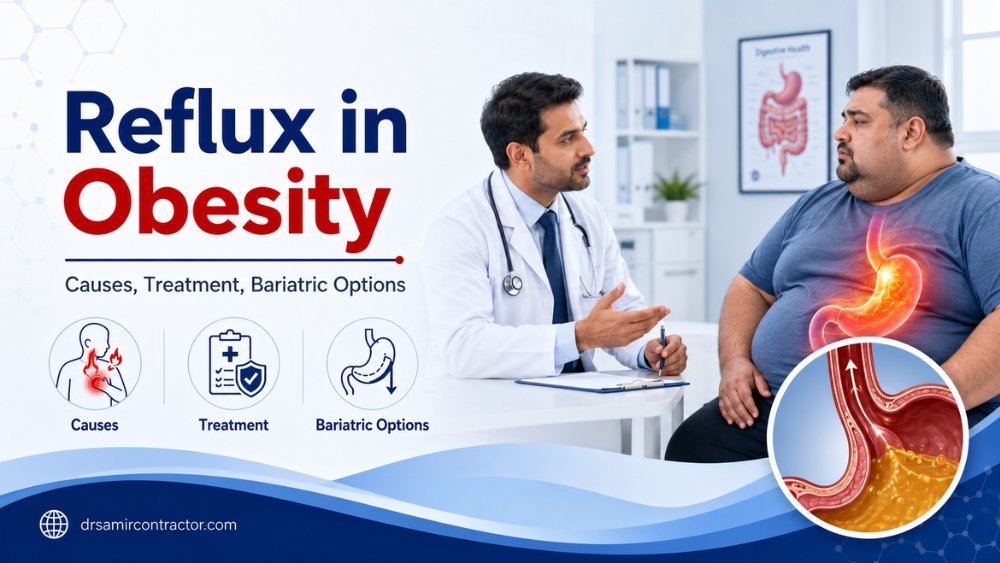
In plain language: If you carry excess weight and suffer from burning in your chest, sour taste in your throat, or constant belching, your body fat is very likely the root cause. Reflux in obesity is extremely common: the higher your BMI, the worse your acid reflux. The good news is that weight loss - through lifestyle changes or bariatric surgery - can dramatically reduce or completely resolve these symptoms. This page explains why it happens, what makes it worse (especially in the Indian dietary context), and which treatments work best.
Quick Answers: Reflux in Obesity
Understanding Reflux in Obesity: The Core Problem
Gastro-oesophageal reflux disease (GERD) is one of the most common gastrointestinal conditions worldwide, and obesity is its single most important modifiable risk factor. While many people experience occasional heartburn, for obese individuals the problem is often chronic, progressive, and significantly impacts quality of life.
The relationship between reflux and body weight is not coincidental. It is driven by multiple mechanical and biochemical mechanisms that worsen as BMI increases. In my practice at Sterling Hospital, Vadodara, I see this pattern daily: patients who have been taking antacids or proton pump inhibitors (PPIs) for years without lasting relief, simply because the underlying cause - their excess weight - has not been addressed.
This page provides a detailed, clinician-authored explanation of why acid reflux in obesity occurs, how it differs from reflux in normal-weight individuals, what red flags to watch for, and how modern treatment options - including bariatric surgery - can offer definitive relief.
The Mechanisms: How Obesity Drives Acid Reflux
There are four primary pathways through which excess body weight promotes gastro-oesophageal reflux. Understanding these helps explain why medications alone often fail to control heartburn in overweight patients.
1. Raised Intra-Abdominal Pressure
The most direct mechanism is mechanical. Visceral fat - the fat stored around your abdominal organs - physically compresses the stomach. This compression raises the pressure inside the abdominal cavity (intra-abdominal pressure), which in turn pushes stomach contents upward against the lower oesophageal sphincter (LOS). When the pressure exceeds the sphincter's ability to stay closed, acid refluxes into the food pipe.
Research shows that intra-abdominal pressure increases in almost direct proportion to BMI. A patient with BMI 40 may have twice the baseline abdominal pressure of someone with BMI 22. This constant upward force is why obese patients often experience reflux even when lying down, bending over, or simply after eating a normal-sized meal.
2. Hiatal Hernia Prevalence
A hiatal hernia occurs when the upper part of the stomach pushes through the diaphragm into the chest cavity. This disrupts the natural anti-reflux barrier that the diaphragm normally provides. In the general population, hiatal hernias affect roughly 15–20% of adults. In obese individuals, the prevalence rises to 40–60%.
The combination of raised abdominal pressure and weakened diaphragmatic tissue in obesity makes hiatal hernia formation far more likely. Once present, a hiatal hernia dramatically increases reflux severity by creating a reservoir of acid above the diaphragm that can reflux freely into the oesophagus.
3. Visceral Fat and Inflammatory Mediators
Visceral fat is not an inert storage depot. It is an active endocrine organ that secretes inflammatory cytokines, including TNF-alpha, interleukin-6, and leptin. These substances create a state of chronic low-grade inflammation throughout the body, including in the tissues of the oesophagus and the lower oesophageal sphincter.
This inflammation weakens the LOS over time, reducing its resting pressure and making it more prone to transient relaxations - brief openings that allow acid to escape upward. Visceral adiposity also promotes insulin resistance, which independently contributes to oesophageal dysfunction.
4. Oesophageal Dysmotility
The oesophagus clears refluxed acid through coordinated muscle contractions called peristalsis. In obese individuals, studies using high-resolution manometry have demonstrated impaired oesophageal motility - meaning the food pipe cannot clear acid as efficiently. This results in prolonged acid exposure, which causes more tissue damage and worse symptoms.
Obese patients are also more likely to have ineffective oesophageal motility (IEM), a condition where more than 50% of swallows produce weak or failed peristaltic contractions. IEM compounds the reflux problem because even when acid enters the oesophagus, the body's natural clearing mechanism is impaired.
Reflux in Obesity vs. Reflux in Normal-Weight Patients
| Feature | Normal-Weight Reflux | Obesity-Related Reflux |
|---|---|---|
| Primary cause | LOS dysfunction, dietary triggers | Raised intra-abdominal pressure + LOS dysfunction |
| Hiatal hernia | Present in ~15–20% | Present in ~40–60% |
| Response to PPIs | Usually good | Often incomplete or requires higher doses |
| Nocturnal reflux | Occasional | Common and often severe |
| Oesophageal motility | Usually normal | Frequently impaired (IEM) |
| Barrett’s oesophagus risk | Baseline | 2–3x increased |
| Best long-term solution | Lifestyle + medication or fundoplication | Weight loss (bariatric surgery if BMI ≥30 with comorbidities) |
Symptoms of Reflux in Obese Patients
The symptoms of acid reflux in obesity are similar to those in normal-weight individuals but tend to be more frequent, more intense, and more resistant to standard treatment. Common symptoms include:
- Heartburn: A burning sensation behind the breastbone, typically worse after meals, when bending over, or when lying down. In obese patients, heartburn may occur even after small meals.
- Acid regurgitation: Sour or bitter fluid rising into the throat or mouth. This is often worse at night and can cause disrupted sleep.
- Chest pain: Non-cardiac chest pain that can mimic heart disease. This symptom requires cardiac evaluation to rule out coronary artery problems.
- Chronic cough and throat clearing: Acid irritating the upper airways causes a persistent dry cough or the constant need to clear the throat, especially in the morning.
- Hoarseness: Laryngopharyngeal reflux (acid reaching the voice box) causes morning hoarseness and a raspy voice.
- Difficulty swallowing (dysphagia): Chronic reflux can cause oesophageal narrowing (stricture) or inflammation that makes swallowing progressively harder.
- Bloating and excessive belching: Obese patients frequently swallow more air (aerophagia) and have slower gastric emptying, leading to persistent bloating alongside reflux.
- Nausea after meals: Particularly common in patients with both obesity and a hiatal hernia.
Red Flags - Seek Immediate Medical Attention
While reflux is common, certain symptoms suggest complications that require urgent evaluation:
- Difficulty swallowing that is worsening over days or weeks (progressive dysphagia)
- Unintentional weight loss alongside reflux symptoms
- Vomiting blood (haematemesis) or passing black, tarry stools (melaena)
- Severe, unrelenting chest pain - always rule out cardiac causes first
- Anaemia (low haemoglobin) with chronic reflux, suggesting occult bleeding
- Persistent vomiting that prevents adequate food or fluid intake
- Reflux symptoms starting after age 55 for the first time
These symptoms may indicate oesophageal stricture, Barrett’s oesophagus, or - rarely - oesophageal malignancy. An upper GI endoscopy is recommended.
Reassuring Signs
- Symptoms improve with weight loss, even as little as 3–5 kg
- Reflux responds well to dietary changes and PPIs
- No difficulty swallowing, no blood in stool or vomit
- Symptoms are meal-related and predictable
- Normal upper GI endoscopy result
- Symptoms improve with elevation of the head of the bed
The BMI–Reflux Connection: What the Evidence Shows
Large epidemiological studies have established a clear, dose-dependent relationship between BMI and GERD. Key findings from the medical literature include:
- A BMI increase from 25 to 30 roughly doubles the risk of weekly reflux symptoms.
- Patients with BMI above 35 are three times more likely to have erosive oesophagitis on endoscopy compared to normal-weight individuals.
- Central obesity (measured by waist circumference) is an even stronger predictor of GERD than BMI alone. A waist circumference above 88 cm in women or 102 cm in men significantly raises reflux risk.
- Each 5 kg/m² increase in BMI raises the risk of oesophageal adenocarcinoma (a cancer linked to chronic reflux) by approximately 50%.
These statistics underscore why treating the obesity - not just the reflux symptoms - is essential for long-term resolution.
Treatment Approaches: From Lifestyle to Surgery
Step 1: Lifestyle and Dietary Modifications
For patients with mild reflux and BMI in the overweight range (25–30), structured lifestyle changes can provide significant relief:
- Target a 5–10% reduction in body weight through calorie control and regular physical activity
- Avoid eating within 3 hours of bedtime
- Elevate the head of the bed by 15–20 cm (using a wedge pillow or bed blocks, not extra pillows)
- Reduce portion sizes - smaller, more frequent meals place less pressure on the stomach
- Limit known reflux triggers: fatty and fried foods, tomato-based sauces, citrus, chocolate, caffeine, carbonated drinks, and alcohol
- Stop smoking - nicotine relaxes the LOS directly
Step 2: Medication
Proton pump inhibitors (PPIs) such as pantoprazole, esomeprazole, or rabeprazole remain the first-line pharmacological treatment. However, in obese patients, PPIs have important limitations:
- They reduce acid production but do not address the mechanical problem (raised abdominal pressure, hiatal hernia).
- Non-acid reflux (bile reflux) is common in obesity and does not respond to PPIs.
- Long-term PPI use (beyond 8 weeks) carries risks including vitamin B12 deficiency, magnesium depletion, and a small increase in fracture risk.
PPIs are valuable for symptom control while patients work toward weight loss, but they are not a permanent solution when obesity is the driving factor.
Step 3: Bariatric Surgery - The Definitive Treatment
For patients with BMI above 30 (with reflux and other comorbidities) or BMI above 35, bariatric surgery addresses the root cause of reflux by producing substantial, sustained weight loss and by altering gastrointestinal anatomy.
Sleeve Gastrectomy vs. Gastric Bypass for Reflux Patients
This is one of the most important clinical decisions in bariatric surgery for patients with GERD. The two procedures have very different effects on reflux.
| Feature | Sleeve Gastrectomy | Roux-en-Y Gastric Bypass |
|---|---|---|
| Effect on reflux | Variable: improves in ~50%, worsens or causes new reflux in ~20–30% | Resolves reflux in 80–90% of patients |
| Mechanism | Weight loss helps, but the tubular stomach shape can increase intragastric pressure | Small pouch reduces acid volume; Roux limb diverts bile away from oesophagus |
| Hiatal hernia repair | Can be done simultaneously | Can be done simultaneously |
| New-onset GERD risk | 15–30% (significant concern) | Less than 5% |
| Best suited for | Obese patients WITHOUT significant pre-existing reflux | Obese patients WITH moderate-to-severe GERD |
| PPI use post-surgery | May still be needed in 20–30% | Most patients stop PPIs within 6–12 months |
In my practice, I always perform a thorough pre-operative assessment including upper GI endoscopy, oesophageal manometry (when indicated), and a detailed symptom history before recommending one procedure over the other. For patients with established GERD, Barrett’s oesophagus, or a large hiatal hernia, gastric bypass is typically the preferred choice.
Suffering From Reflux and Excess Weight?
Dr Samir Contractor offers personalised assessment to determine the best treatment approach for your reflux and weight. Book a consultation at Sterling Hospital, Vadodara.
Post-Bariatric Reflux: When Reflux Appears After Surgery
A small but clinically important subset of patients develops new or worsened reflux after bariatric surgery - most commonly after sleeve gastrectomy. This can occur due to:
- Increased intragastric pressure in the narrow, tubular sleeve
- Disruption of the angle of His (the natural valve mechanism at the junction of the stomach and oesophagus)
- Unrecognised hiatal hernia that was not repaired during the original surgery
- Sleeve dilation over time, creating a reservoir for refluxate
Treatment options for post-sleeve reflux include PPI therapy, endoscopic interventions, and in refractory cases, conversion from sleeve gastrectomy to Roux-en-Y gastric bypass. This conversion surgery is effective in resolving reflux in over 85% of cases.
Long-Term Outcomes: Why Treating Obesity Treats Reflux
Multiple long-term studies following bariatric surgery patients for 5–10 years have confirmed:
- GERD symptom resolution in 70–90% of gastric bypass patients
- PPI discontinuation in 75–85% of patients who were on daily medications pre-operatively
- Regression of Barrett’s oesophagus in some patients following sustained weight loss after bypass
- Significant reduction in oesophageal acid exposure time, as measured by 24-hour pH monitoring
These outcomes are far superior to what lifelong PPI therapy alone can achieve, particularly in patients with BMI above 35.
The Indian Context: Why Reflux in Obesity Is a Growing Crisis
India is experiencing a rapid rise in obesity prevalence, particularly in urban centres. According to the National Family Health Survey (NFHS-5), approximately 24% of Indian women and 23% of Indian men are now overweight or obese. Gujarat, with its rich food culture and increasingly sedentary lifestyles, has obesity rates above the national average in several districts.
This rising obesity prevalence is directly fuelling an increase in GERD and its complications across the country.
Indian Dietary Habits That Worsen Reflux in Obese Patients
Several features of the typical Indian diet can compound the obesity-reflux problem:
- Heavy use of oil and ghee: Traditional Indian cooking often uses generous amounts of oil, ghee, or vanaspati. High-fat meals slow gastric emptying and increase reflux episodes.
- Spicy preparations: While spices alone do not cause GERD, chilli, pepper, and masala in large quantities can irritate an already inflamed oesophagus and worsen symptom perception.
- Fried snacks (farsan, pakoda, samosa, bhajiya): These are calorie-dense, high-fat foods that both promote weight gain and trigger reflux. In Gujarat, farsan consumption is deeply embedded in social and daily eating habits.
- Late-night dinners: Many Indian families eat dinner at 9–10 PM and go to bed by 10:30–11 PM. This leaves insufficient time for gastric emptying, promoting nocturnal reflux.
- Milky chai and coffee: Full-fat milk combined with caffeine relaxes the LOS and stimulates acid secretion. Drinking chai 3–4 times daily - as is common across India - provides repeated reflux triggers.
- Large portion sizes: The cultural emphasis on generous hospitality and finishing everything on the plate often leads to overeating, especially during festivals and family gatherings.
- Post-meal reclining: The habit of lying down or napping after lunch (especially on weekends) directly promotes reflux by removing gravity’s protective effect.
Practical Dietary Adjustments for Indian Patients
- Switch to air-frying or grilling instead of deep-frying farsan and snacks
- Reduce oil and ghee in daily cooking by 30–50% without sacrificing flavour (use non-stick cookware, spice pastes)
- Aim for dinner before 8 PM, and take a short walk after the meal
- Replace full-fat milk chai with green tea or black tea with limited milk
- Choose baked or roasted snacks (khakhra, roasted chana) over fried options
- Use smaller plates to control portions naturally
- Avoid reclining for at least 2–3 hours after any meal
? Desi Patient Questions (Gujarati FAQs)
હા, વજન ઘટાડવાથી એસિડ રિફ્લક્સમાં ઘણો ફાયદો થાય છે. જો તમારું વજન 5-10% પણ ઘટે, તો એસિડિટીની સમસ્યા ઘણી ઓછી થઈ શકે છે. વજન ઘટાડવાથી પેટ પરનું દબાણ ઘટે છે.
હા, ખાસ કરીને ગેસ્ટ્રિક બાયપાસ પછી. મોટાભાગના દર્દીઓમાં 80-90% કિસ્સાઓમાં રિફ્લક્સ મટી જાય છે અને દવાઓ બંધ થઈ શકે છે.
તળેલું ખાવાથી વજન વધે છે, અને તીખું ખાવાથી એસિડિટી વધે છે. પેટ પર ચરબી હોવાથી અને મસાલેદાર ખાવાથી સમસ્યા બેગણી થાય છે.
જો દર્દીને પહેલેથી જ રિફ્લક્સ હોય તો ગેસ્ટ્રિક બાયપાસ વધુ સારું છે. સ્લીવ ગેસ્ટ્રેક્ટોમી ક્યારેક રિફ્લક્સ વધારી શકે છે.
સ્ટર્લિંગ હોસ્પિટલ, વડોદરામાં એપોઇન્ટમેન્ટ માટે અથવા +91-99250 52525 પર કોલ કરો. WhatsApp પર પણ સંપર્ક કરી શકો છો.