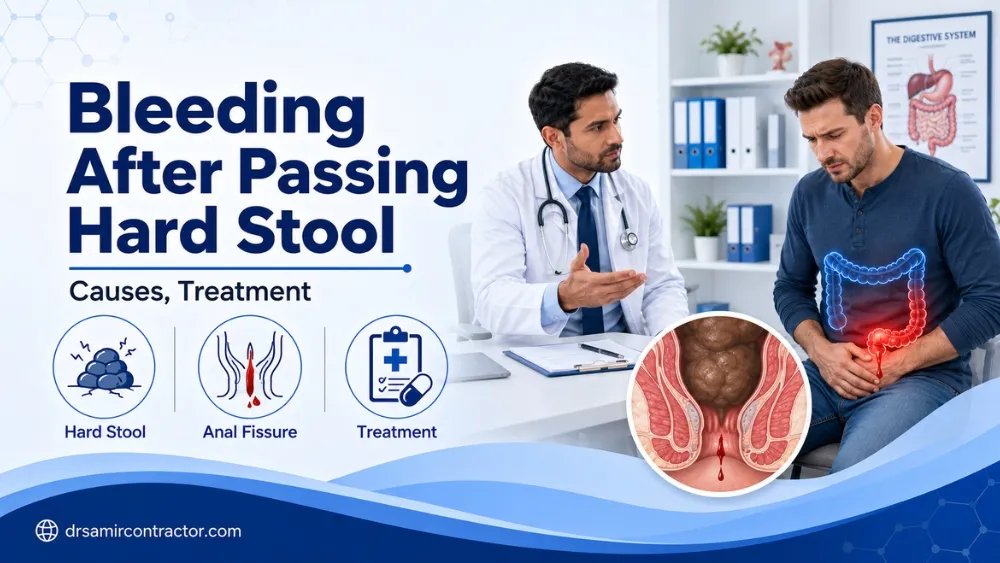
In Simple Terms: Proctitis means the inner lining of your rectum is inflamed. It can make you feel like you constantly need the toilet, even when there is little to pass. You may notice mucus, blood, or a persistent aching discomfort in the rectal area. The causes range from radiation treatment and infections to inflammatory bowel disease - and sometimes no cause is found at all. As a surgeon, my priority is to examine the rectum directly, take a biopsy if needed, rule out anything serious like cancer, and then ensure you get the right treatment - whether that's antibiotics, anti-inflammatory suppositories, or a referral to a gastroenterologist for long-term management.
Quick Answers: Proctitis Symptoms
What Is Proctitis?
Proctitis refers to inflammation confined to the rectal mucosa - the moist inner lining of the rectum. The rectum is the final segment of the large intestine, approximately 12-15 cm in length, sitting just above the anal canal. When this lining becomes inflamed, it swells, becomes fragile, and often produces excess mucus. The result is a cluster of symptoms that significantly affect daily life - frequent trips to the toilet, a constant sense that something needs to pass, and visible mucus or blood.
It is important to understand that proctitis is not a diagnosis in itself - it is a finding. The real diagnostic work lies in determining why the rectum is inflamed. The cause dictates the treatment, and getting the cause wrong means getting the treatment wrong.
Types of Proctitis: Understanding the Cause
From a clinical standpoint, proctitis is grouped by its underlying cause. Each type has a different profile, different risk group, and different treatment path.
1. Radiation Proctitis
This is one of the most common forms encountered in surgical practice. Patients who have received pelvic radiation - typically for cervical, uterine, prostate, or bladder cancer - can develop rectal inflammation weeks to months (acute) or even years (chronic) after treatment. Radiation damages the small blood vessels in the rectal wall, leading to fragile tissue that bleeds easily. Chronic radiation proctitis can cause persistent bleeding, strictures, and in severe cases, fistula formation.
2. Infectious Proctitis
Sexually transmitted infections are a significant cause, particularly gonorrhoea, chlamydia, herpes simplex virus, and syphilis. Non-STI infections such as Clostridioides difficile (after antibiotic use) and certain parasitic infections can also inflame the rectum. Infectious proctitis typically presents with pain, discharge (sometimes purulent), and urgency. It requires specific microbiological testing and targeted antibiotic or antiviral therapy.
3. IBD-Related Proctitis (Ulcerative Proctitis)
Inflammatory bowel disease - specifically ulcerative colitis - can present as inflammation limited to the rectum. This is called ulcerative proctitis and represents the mildest extent of ulcerative colitis. A surgeon's note: While I identify and biopsy this condition, its long-term management falls under gastroenterology. My role is to confirm the diagnosis, rule out cancer or other surgical pathology, and refer appropriately. This page does not cover IBD management in detail - if you have been diagnosed with ulcerative proctitis, your gastroenterologist is your primary care lead for that condition.
4. Idiopathic Proctitis
In some patients, the rectal lining is clearly inflamed on examination, biopsies show non-specific inflammation, cultures are negative, and there is no history of radiation or IBD. This is labelled idiopathic - meaning the cause is not identified. It can be frustrating for patients, but it is a real clinical entity that often responds to topical anti-inflammatory treatment.
5. Other Causes
- Diversion proctitis: Occurs in the rectal stump after a colostomy or ileostomy, due to lack of nutrient flow to the rectal mucosa
- Medication-related: Certain medications and rectal preparations can cause chemical irritation
- Allergic proctitis: Rare, but seen in infants with cow's milk protein allergy
| Type | Common Cause | Key Feature | Who's at Risk? |
|---|---|---|---|
| Radiation Proctitis | Pelvic radiotherapy | Bleeding, telangiectasia on scope | Cancer patients post-radiation |
| Infectious Proctitis | STIs (gonorrhoea, chlamydia, herpes) | Pain, purulent discharge | Sexually active adults |
| IBD-Related (Ulcerative) | Autoimmune (ulcerative colitis) | Chronic, relapsing bloody mucus | Young adults, family history of IBD |
| Idiopathic | Unknown | Non-specific inflammation on biopsy | Any age group |
| Diversion Proctitis | Post-colostomy/ileostomy | Inflammation of unused rectal stump | Patients with stomas |
Symptoms of Proctitis: What You Actually Feel
Regardless of the underlying cause, inflamed rectal mucosa produces a recognisable pattern of symptoms. Not every patient has all of these, but most will have several:
Rectal Urgency
A sudden, compelling need to pass stool - sometimes with very little warning. Patients describe it as a feeling that they cannot hold on, even though the volume passed may be small. This happens because inflamed rectal tissue is hypersensitive to any distension.
Tenesmus
This is the persistent sensation that you need to pass stool even after you have just been. You sit on the toilet, strain, and either pass nothing or only a small amount of mucus. It can be deeply uncomfortable and distressing - many patients describe it as the most bothersome symptom.
Mucus Discharge
Inflamed rectal mucosa produces excess mucus. Patients may notice mucus on the stool, on wiping, or on their undergarments. The mucus may be clear, white, or blood-tinged. In infectious proctitis, the discharge can be yellowish or purulent.
Rectal Bleeding
Bleeding in proctitis is typically bright red, mixed with mucus, and associated with bowel movements. In radiation proctitis, bleeding can be significant and persistent. In infectious forms, blood may be mixed with pus. The bleeding pattern can overlap significantly with hemorrhoids, polyps, and even rectal cancer - which is why clinical examination matters.
Rectal Pain and Discomfort
A dull ache, soreness, or sensation of pressure in the rectal area is common. In infectious proctitis - particularly herpes - pain can be severe. Some patients also experience left-sided lower abdominal cramping, especially if inflammation extends slightly above the rectum.
Frequent Small Stools
Instead of a normal bowel pattern, patients with active proctitis may pass small, frequent stools - sometimes 10 to 15 times a day. This is not true diarrhoea (the stool consistency may be normal) but rather a consequence of the inflamed rectum being unable to store stool properly.
The Surgeon's Perspective: Why Differential Diagnosis Matters
When a patient presents with rectal bleeding, mucus, and urgency, my first task is not to treat - it is to determine what we are actually dealing with. The symptoms of proctitis overlap with several other conditions that require very different management:
- Rectal cancer: Can cause bleeding, mucus, tenesmus, and a feeling of incomplete evacuation - identical to proctitis. A rectal mass may be palpable on digital examination, but early cancers can be flat and easily missed without proctoscopy.
- Hemorrhoids: Cause painless bleeding but generally not mucus or tenesmus. However, patients often self-diagnose "piles" when the actual problem is proctitis or something more serious.
- Rectal polyps: Can bleed and cause mucus. Large villous adenomas of the rectum, in particular, produce copious mucus discharge that mimics proctitis.
- Solitary rectal ulcer syndrome: Causes bleeding, mucus, and straining - often confused with proctitis on symptoms alone.
- Anal fissure: Causes pain and bleeding but usually has a different symptom pattern (sharp pain during defecation).
The point is straightforward: you cannot safely treat rectal symptoms without first looking inside the rectum. A proctoscopy takes minutes, is done in the outpatient clinic, and provides direct visual information that no amount of symptom description can replace.
How Proctitis Is Diagnosed
Diagnosis follows a logical sequence. Each step adds information that narrows down the cause.
Step 1: Clinical History
I ask about the duration and pattern of symptoms, history of pelvic radiation, sexual history (relevant for STI-related proctitis), antibiotic use, family history of IBD or colorectal cancer, and any associated symptoms like weight loss or joint pain.
Step 2: Digital Rectal Examination (DRE)
A gloved finger examination of the rectum assesses for masses, tenderness, mucus, blood, and the tone of the anal sphincter. It is quick, provides immediate clinical information, and helps guide the next step.
Step 3: Proctoscopy
A rigid or flexible proctoscope allows direct visualisation of the rectal mucosa. Inflamed tissue appears red, swollen, granular, and may bleed on contact (friability). Radiation proctitis shows characteristic telangiectasia - abnormally dilated blood vessels on the mucosal surface. Ulceration, if present, raises concern for IBD, infection, or malignancy.
Step 4: Biopsy
Tissue samples from the inflamed area are sent for histopathological examination. Biopsy findings help distinguish between IBD-related inflammation, infectious causes, radiation damage, and malignancy. This is not optional in persistent or atypical cases - biopsy is the gold standard.
Step 5: Additional Investigations
- Stool cultures and PCR: For suspected infectious proctitis
- Full colonoscopy: If IBD is suspected (to assess the extent of inflammation beyond the rectum) or if cancer needs to be ruled out
- Blood tests: Inflammatory markers (CRP, ESR), full blood count, and in some cases, specific antibody tests
Treatment of Proctitis: Matched to the Cause
Treatment must be cause-specific. There is no single "proctitis tablet" - the right treatment depends entirely on the underlying diagnosis.
Radiation Proctitis
- Mild: Sucralfate enemas, topical formalin application, or mesalamine suppositories to reduce bleeding
- Moderate to severe: Argon plasma coagulation (APC) - an endoscopic procedure that cauterises the abnormal blood vessels causing bleeding. This is the most effective treatment for chronic radiation proctitis with persistent bleeding.
- Refractory cases: Hyperbaric oxygen therapy or, rarely, surgical intervention (proctectomy) in severe, complicated cases
Infectious Proctitis
- Targeted antibiotics based on culture results - ceftriaxone and azithromycin for gonorrhoeal proctitis, doxycycline for chlamydia, antivirals for herpes
- Partner notification and treatment to prevent reinfection
- C. difficile proctitis: Oral vancomycin or fidaxomicin
IBD-Related Proctitis
Initial management typically involves mesalamine (5-ASA) suppositories or enemas - these deliver anti-inflammatory medication directly to the inflamed rectum. Steroid suppositories may be used for flares. Long-term management - including immunomodulators and biologics if needed - is coordinated by a gastroenterologist. The surgeon's role here is in diagnosis, biopsy surveillance, and management of complications (strictures, refractory disease).
Idiopathic Proctitis
- Trial of mesalamine suppositories
- Dietary modifications - reducing irritants like caffeine, alcohol, and spicy food
- Follow-up proctoscopy to monitor response
Red Flags: See a Doctor Urgently
- Rectal bleeding with unexplained weight loss
- Progressive worsening of symptoms despite treatment
- Severe rectal pain with fever - may indicate abscess or severe infection
- Large volume bleeding or passage of blood clots
- New onset of proctitis symptoms in a patient over 50 without a clear cause
- Any palpable mass felt in the rectal area
- Symptoms persisting beyond 4 weeks without diagnosis
Reassuring Signs (But Still Get Checked)
- Mild mucus discharge that resolves after a brief illness
- Symptoms clearly linked to a recent course of antibiotics that improve after stopping
- Known radiation history with stable, mild symptoms already under medical follow-up
- Symptoms that respond quickly to prescribed topical treatment
- Young patient with a clear infectious cause confirmed by testing, responding to antibiotics
What Happens If Proctitis Is Ignored?
Untreated proctitis does not simply remain static. Depending on the underlying cause, ignoring it can lead to increasingly serious consequences:
- Chronic bleeding: Ongoing blood loss, even in small amounts, leads to iron-deficiency anaemia - fatigue, weakness, breathlessness, and reduced quality of life
- Stricture formation: Chronic inflammation, particularly from radiation, can cause the rectal wall to scar and narrow. This leads to difficulty passing stool, worsening constipation, and may eventually require surgical dilation or diversion
- Fistula development: Severe radiation proctitis or IBD-related inflammation can erode through the rectal wall, forming abnormal connections (fistulae) to the vagina, bladder, or skin - requiring complex surgical repair
- Missed malignancy: The greatest risk of ignoring proctitis symptoms is that they may not be proctitis at all. Rectal cancer produces identical symptoms, and every month of delay reduces the chances of cure
- Spread of infection: Untreated STI-related proctitis can spread systemically and to sexual partners
- Psychological impact: Persistent urgency, frequent toilet visits, and mucus discharge significantly affect work, travel, social life, and mental health
Proctitis in India: What You Should Know
Several factors make proctitis particularly relevant in the Indian context:
- Radiation proctitis is common: India has a high burden of cervical and uterine cancer, and radiation therapy is widely used. Many patients develop proctitis symptoms months to years after treatment but do not connect the two - or are not warned about this possibility.
- STI-related proctitis is under-reported: Stigma around sexually transmitted infections means many patients delay seeking help or do not disclose relevant history. This leads to misdiagnosis and inappropriate treatment.
- Self-medication is widespread: Patients commonly treat rectal symptoms with over-the-counter hemorrhoid creams or Ayurvedic preparations for months before seeking specialist evaluation. This delays proper diagnosis.
- Limited awareness of proctoscopy: Many patients - and some general practitioners - are not aware that a quick outpatient proctoscopy can differentiate proctitis from cancer, polyps, or hemorrhoids within minutes.
- Tuberculosis: Intestinal TB can occasionally involve the rectum and mimic IBD-related proctitis. In India, TB must always be considered in the differential diagnosis of rectal inflammation.
Proctitis Evaluation in Vadodara
At Sterling Hospital, Vadodara, Dr Samir Contractor provides complete evaluation for proctitis symptoms, including:
- Detailed clinical assessment and digital rectal examination
- In-clinic proctoscopy with biopsy where indicated
- Colonoscopy under sedation for cases requiring full-length evaluation
- Argon plasma coagulation (APC) for radiation proctitis
- Coordinated referral to gastroenterology for IBD-related proctitis management
- Surgical management for complications - strictures, fistulae, and refractory disease
If you have been experiencing rectal urgency, mucus, bleeding, or persistent discomfort - do not self-treat. A 10-minute examination can provide clarity and a clear treatment path.
Experiencing Rectal Urgency, Mucus, or Bleeding?
Do not self-diagnose proctitis. A 10-minute proctoscopy can distinguish inflammation from cancer and guide you to the right treatment.
Book ConsultationNot Sure If Your Symptoms Are Proctitis?
Describe your symptoms on WhatsApp and Dr Contractor's team will guide you on the next steps - no obligation, no delay.
Message on WhatsAppFrequently Asked Questions About Proctitis
Proctitis વિશે ગુજરાતીમાં / Hinglish FAQs
Proctitis એટલે ગુદા (rectum) ની અંદરની ચામડી - mucosa - માં સોજો (inflammation). આને લીધે toilet જવાની ઉતાવળ, mucus, લોહી, અને ગુદામાં દુખાવો થાય છે. આ piles (hemorrhoids) કરતાં અલગ condition છે - proper examination વગર ફરક ખબર ન પડે.
Sabse common symptoms hain: baar baar toilet jaane ki urgency, toilet jaake bhi satisfaction nahi milna (tenesmus), stool ke saath mucus aana, rectal bleeding, aur guda mein dull pain ya pressure. Agar ye symptoms 2 hafton se zyada rahen, toh doctor ko zaroor dikhayen.
Proctitis direct cancer nathi thatu, pan long-term IBD-related proctitis ma thodu risk vadhe che - etla mate regular follow-up jaruri che. Sabathi important vaat aa che ke proctitis na symptoms ane rectal cancer na symptoms bilkul sarkha hoy che, etla mate biopsy laine confirm karvu jaruri che.
Pelvic radiation (cervical cancer, prostate cancer, bladder cancer ke liye) ke baad proctitis bahut common hai. Kuch patients mein treatment ke dauraan hota hai (acute), aur kuch mein mahino ya saalo baad (chronic). Agar aapne pelvic radiation liya hai aur rectal bleeding ya mucus aa raha hai, toh turant surgeon se milein.
Proctoscopy ma thodi discomfort ane pressure feel thay, pan generally anesthesia vagar pan saari rite tolerate thay che. Aadiyu procedure 3-5 minute nu hoy che ane directly rectum ni lining jova male che - aa diagnosis mate bahuj important step che.
Bilkul nahi - pehle diagnosis zaruri hai. Proctitis ke symptoms cancer, polyps, aur infections jaisi conditions se milte-julte hain. Pehle specialist se milkar proctoscopy aur biopsy karwayen, diagnosis confirm karen, phir doctor ki prescribed treatment follow karen. Self-medication se time waste hota hai aur serious conditions miss ho sakti hain.