whatsapp  Book Appointment
Why Hernia Surgery is Important What is Laparoscopic Hernia Surgery? Benefits of laparoscopic hernia treatment Who is a candidate for laparoscopic hernia treatment? What to Expect During Surgery Recovery & Aftercare Risks & Complications Why Choose Us for Inguinal Hernia Surgery? FAQs About Laparoscopic Inguinal Hernia Surgery People also like to read about

Advanced Laparoscopic Surgery for Inguinal Hernia

Vadodara laparoscopic hernia repair Banner

Laparoscopic Inguinal Hernia Surgery

Consult Dr. Samir Contractor for Laparoscopic Inguinal Hernia Surgery.

Book a Consultation

A hernia occurs when part of an internal organ or fatty tissue pushes through a weak spot in the abdominal wall. While small hernias may start as a harmless bulge, they rarely resolve on their own and can gradually worsen over time. In some cases, a hernia can lead to serious complications such as incarceration (trapped tissue) or strangulation (cut-off blood supply), which are medical emergencies. At our surgical practice, we specialize in advanced laparoscopic hernia treatment. With over 25 years of surgical expertise, more than 8,000 successful laparoscopic surgeries, and cutting-edge technology, we provide safe, effective, and minimally invasive solutions for all major types of hernias.

Whether you are struggling with an inguinal hernia in the groin, a ventral hernia in the abdominal wall, or an incisional hernia at the site of a previous operation, our compassionate, patient-first approach ensures that you get the best possible care.

Symptoms of Inguinal hernia

Why Hernia Surgery is Important

Many patients live with hernias for months or even years, hoping they will “settle down.” Unfortunately, hernias do not heal without surgery. Over time, the bulge often grows larger and more uncomfortable. In rare but dangerous cases, a loop of intestine can get trapped inside the hernia, cutting off blood supply—a life-threatening situation requiring emergency surgery.

Early surgical repair is the safest choice to avoid these risks and to restore your quality of life.

 Laparoscopic Inguinal Hernia Surgery in Vadodara

What is Laparoscopic Hernia Surgery?

Laparoscopic surgery (also called keyhole or minimally invasive surgery) is the modern, gold-standard technique for hernia treatment. Instead of making one large incision, the surgeon makes 3–4 tiny incisions and uses a thin camera called a laparoscope to view the hernia on a high-definition screen. The hernia is repaired from inside the abdomen, and a surgical mesh is placed to strengthen the weak area, greatly reducing the risk of recurrence.

Benefits of Laparoscopic Inguinal hernia treatment

Benefits of laparoscopic hernia treatment:

  • Smaller incisions with minimal scarring.
  • Less postoperative pain.
  • Faster recovery and quicker return to daily activities.
  • Lower risk of wound infections.
  • Ability to repair bilateral (both sides) or recurrent hernias in one procedure.
  • Safe and highly effective with long-term success.
Vadodara laparoscopic hernia repair Treatment

Who is a candidate for laparoscopic hernia treatment?

Most patients are eligible for laparoscopic surgery, but suitability depends on:

  • Type and size of the hernia
  • Overall health condition
  • History of previous abdominal surgeries

Our team will conduct a thorough evaluation, including medical history, physical examination, and imaging if required, to decide the best approach for you.

What to Expect During Surgery

Step 1: Preoperative Preparation

  • Routine blood tests, ECG, and other checks are performed. Patients usually fast for 6–8 hours before surgery.

Step 2: Anesthesia

  • General anesthesia ensures comfort throughout the procedure.

Step 3: Small Incisions

  • 3–4 tiny incisions are made in the abdomen.

Step 4: Repair

  • The hernia sac is repositioned, and mesh is placed to reinforce the abdominal wall.

Step 5: Closure

  • Small stitches or surgical glue is used to seal the cuts. The surgery usually takes 45–90 minutes, depending on the type and size of the hernia.
 Recovery and Aftercare after Inguinal Hernia Surgery

Recovery & Aftercare

  • Hospital Stay: Most patients go home the same day or after 24–48 hours.
  • Pain: Mild discomfort managed with medications.
  • Mobility: Walking is encouraged within hours after surgery.
  • Return to Work: Light duties in 1 week, full routine in 2–3 weeks.
  • Restrictions: Avoid heavy lifting and strenuous activity for 4–6 weeks.
Benefits of Laparoscopic Inguinal hernia treatment in Vadodara

Risks & Complications

Laparoscopic hernia surgery is safe, but possible risks include:

  • Bleeding or infection (rare)
  • Mesh-related issues (very rare with modern techniques)
  • Hernia recurrence (low rate with expert surgeons)
  • Urinary retention or temporary bloating

Our team’s 25+ years of surgical expertise and strict safety protocols ensure excellent outcomes and minimal complications

Why trust this content

Experience · Expertise · Authority · Trust

Every page on this site is written and medically reviewed by Dr Samir Contractor — a practising fellowship-trained surgeon — not by a content agency. Here is the evidence behind that claim.

E

Experience

Over 25 years of continuous surgical practice at Sterling Hospitals, Vadodara. Every claim on this page is drawn from direct clinical experience — not textbook paraphrasing.

25+ years in active surgical practice
8,000+ total procedures performed
5,000+ laparoscopic procedures
400+ bariatric procedures (sleeve & bypass)
1,500+ anorectal procedures
Senior Consultant, Sterling Hospitals since 2000
E

Expertise

Fellowship-trained at the Royal College of Surgeons of Edinburgh with subspecialty MIS training at Sir Ganga Ram Hospital, New Delhi. Board-certified in multiple countries.

MBBS — Medical College Baroda
MS (General Surgery) — Medical College Baroda
FRCS — Royal College of Surgeons, Edinburgh (UK)
FMAS — Fellow in Minimal Access Surgery
FACS — American College of Surgeons (USA)
PN1 Certified Exercise & Nutrition Coach
A

Authoritativeness

Affiliated with Sterling Hospitals — a leading multi-specialty hospital in Vadodara. Active member of recognised surgical bodies in India, the United Kingdom and the United States.

Senior Consultant, Sterling Hospitals, Vadodara
Indian Medical Association (IMA)
Indian Assoc. of GI Endo Surgeons (IAGES)
Obesity Surgery Society of India (OSSI)
Association of Surgeons of India (ASI)
General Medical Council, United Kingdom
T

Trustworthiness

Transparent pricing published on every procedure page. Surgery recommended only when clinically indicated. 4.9★ patient rating from named, verified patient reviews.

★ 4.9 average verified patient rating
Transparent package pricing on all pages
Medical disclaimer on every page
Content last reviewed: May 2026
Sterling Hospitals, Vadodara — established institution
Surgery discussed only when clinically appropriate
Qualifications
MBBS MS — General Surgery FRCS (Edinburgh, UK) FMAS FACS (USA) PN1 Certified
Memberships & Registrations
IMA IAGES ASI OSSI GMC, United Kingdom Royal College of Surgeons, Edinburgh American College of Surgeons

FAQs About Laparoscopic Inguinal Hernia Surgery

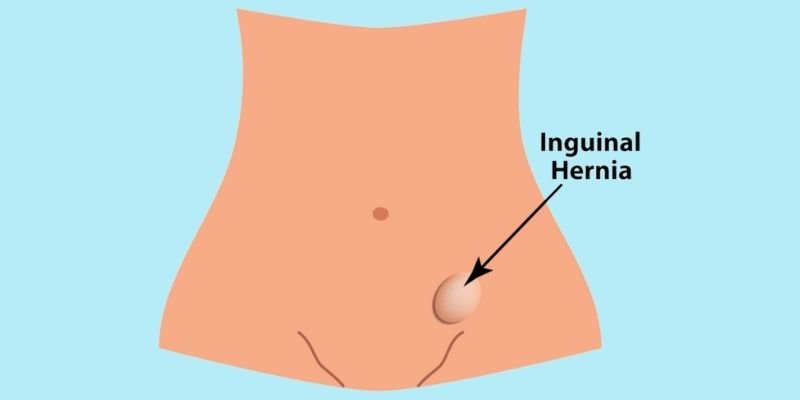
An inguinal hernia occurs when tissue, usually part of the intestine, protrudes through a weak spot in the lower abdominal wall in the groin area. It may cause pain or a visible bulge, especially when coughing or lifting.

Surgery is recommended if you experience pain, increasing size of the bulge, discomfort during daily activities, or symptoms like nausea, vomiting, or a non-reducible swelling.

Most patients are suitable candidates for laparoscopic repair. However, very large, complicated, or recurrent hernias may sometimes require open surgery. A proper surgical evaluation will determine the best option.

Yes, in most cases a surgical mesh is used to reinforce the weakened area and significantly reduce the risk of recurrence.

Most inguinal hernia surgeries are performed as daycare procedures. Many patients go home the same day or within 24 hours.

You can usually return to light work within 1 week. Heavy lifting and strenuous activities should be avoided for about 4–6 weeks.

Recurrence rates are very low with modern mesh repair techniques. If a hernia does recur, it can be successfully treated with revision surgery.

Mild to moderate discomfort is expected after surgery, but it is well controlled with medications. Laparoscopic surgery typically causes less pain than open repair.

Yes, elderly patients can safely undergo inguinal hernia surgery if they are medically fit for anesthesia. Minimally invasive techniques are often beneficial for quicker recovery.

Laparoscopic surgery offers less postoperative pain, faster recovery, smaller scars, and quicker return to normal activities, while maintaining excellent long-term outcomes.


People also like to read about


Laparoscopic Surgery Ebook Mockup
Free Instant Access

Inguinal Hernia Surgery

Patient Information Guide

Back to top