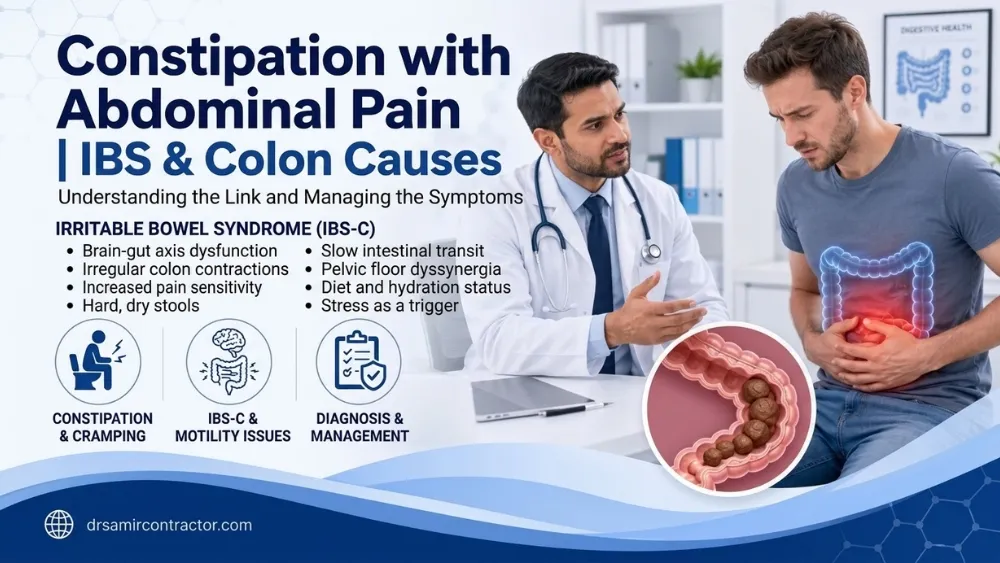
Constipation that does not respond to dietary changes and laxatives indicates either a wrong diagnosis, an inadequate treatment approach, or an underlying cause that has not been identified. A systematic evaluation - checking for medications, hypothyroidism, colorectal disease, and pelvic floor dysfunction - almost always identifies a specific, treatable cause.
✦ Quick Answers
Four Reasons Constipation Treatment Fails
? Wrong or Insufficient Treatment
- Fibre increased without adequate water (worsens constipation)
- Too little fibre increase - not reaching 25-35g/day
- Laxative dose too low for severity
- Stimulant laxative used alone without fibre
- No lifestyle changes accompanying medication
Underlying Cause Not Identified
- Hypothyroidism - slows entire gut; TSH test
- ODS/pelvic floor dysfunction - laxatives don't fix outlet obstruction
- Medication side effect - opioids, iron, calcium channel blockers
- Colorectal stricture or cancer - structural obstruction
- Slow transit constipation - needs specific motility treatment
Systematic Evaluation for Non-Responding Constipation
Decision Pathway
- 1Review medicationsCheck for opioids, iron supplements, calcium channel blockers, antidepressants, antihistamines. These directly cause constipation. Adjust or substitute where possible.
- 2Blood testsTSH (hypothyroidism), blood glucose (diabetes), calcium (hypercalcaemia), full blood count (anaemia). All are reversible causes of constipation that respond to specific treatment.
- 3Confirm dietary change adequacyIs fibre truly 25-35g/day? Is water 2-3L/day? Fibre without water makes constipation worse. A food diary for one week often reveals that dietary changes are less than the patient believes.
- 4ColonoscopyIf above 45 or with red flags - excludes colorectal polyps, cancer, and stricture. Also allows assessment of colonic mucosa (melanosis coli from stimulant laxative overuse).
- 5Anorectal manometryIf incomplete evacuation, straining, and sensation of blockage are prominent - identifies ODS subtypes (paradoxical contraction, rectocele) that laxatives cannot address.
- 6Colonic transit studyIf slow transit is suspected - infrequent bowel movements (once weekly or less), no defecation urge, not responding to maximum laxatives. Markers confirm transit rate.
Treatment Options for Refractory Constipation
- Treat hypothyroidism: Thyroxine replacement resolves constipation as thyroid function normalises - often completely
- Change offending medications: Switch from opioids (where possible), iron alternatives, different antihypertensive class
- Escalate laxative regimen: Higher-dose osmotic laxatives (PEG 1-2 sachets daily), add stimulant laxative for short-term rescue
- Newer motility agents: Prucalopride (a serotonin receptor agonist) - highly effective for slow transit; specialist prescription
- Biofeedback therapy: For ODS/paradoxical contraction - 60-80% response rate
- Surgical options: Subtotal colectomy for refractory slow transit (rare, selected cases); STARR or mesh rectopexy for ODS
Desi Patient Questions
Systematic evaluation zaruri chhe: TSH (thyroid check), blood tests, ane colonoscopy. Jyaré straining + incomplete evacuation hoy - anorectal manometry. ODS hoi shake chhe je laxatives thi fix nahi thatu. Doctor pase jao - specific cause = specific treatment. "Just laxatives" indefinitely = not correct management.
Frequently Asked Questions
Related Pages
Constipation Not Improving for Years? Find the Cause in Vadodara
Systematic evaluation, colonoscopy, anorectal manometry - Dr Samir Contractor at Sterling Hospital, Vadodara.
Medical Disclaimer: For patient education only. Not a replacement for medical consultation.