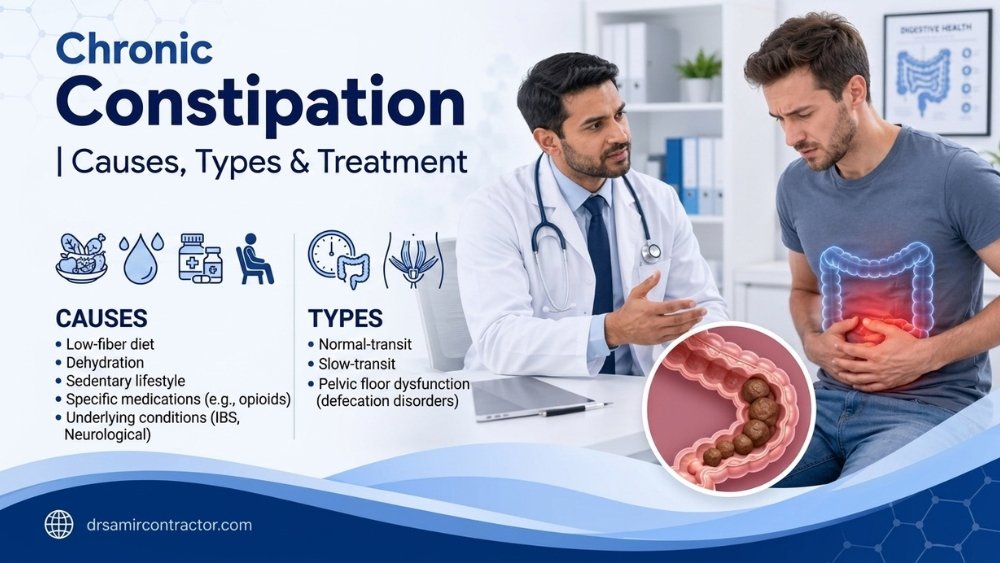
Chronic constipation - constipation lasting 3 months or more - has three distinct physiological subtypes that require different approaches. Most cases are functional (no structural cause) and respond to dietary and lifestyle changes. Persistent chronic constipation that does not respond to treatment needs anorectal evaluation and colonoscopy to identify structural, motility, or functional causes.
✦ Quick Answers
Chronic constipation is not a single condition - it is a symptom complex with multiple physiological subtypes. The distinction between these subtypes matters because treatment differs significantly. A patient with slow transit constipation needs a different management approach from one with obstructed defecation syndrome, even though both present with chronic difficulty with bowel movements.
Three Subtypes of Chronic Constipation
? Normal Transit (Functional)
- Most common - 50-60% of cases
- Colon transit is normal on study
- Patient perceives stool as hard or difficult
- Often linked to diet and stress
- Responds to dietary fibre and osmotic laxatives
- Colonoscopy usually normal
Slow Transit
- Colonic motor activity reduced
- Stool moves very slowly through colon
- Infrequent bowel movements (1-2/week or less)
- Does not feel urge to defecate
- Colonic transit study shows delayed markers
- Needs stimulant laxatives + prokinetics
Obstructed Defecation
- Structural or functional pelvic floor problem
- Stool reaches rectum but cannot be expelled
- Excessive straining, incomplete evacuation
- Sensation of blockage at anus
- May require manual assistance
- Needs anorectal manometry + biofeedback
How Each Subtype Presents
Normal transit constipation
Patient complains of hard or lumpy stools that require effort to pass, even though bowel movements may occur 3-4 times per week. Adequate fibre and water intake typically resolves this. Often linked to stress, irregular meals, and insufficient dietary fibre.
Slow transit constipation
Patient has very infrequent bowel movements - sometimes just once or twice per week or less. They do not feel the urge to defecate. Abdominal bloating is prominent. Even high-dose laxatives may have limited effect. This subtype is more common in women and may require specialist assessment including colonic transit study and possibly stimulant laxative regimens or newer motility agents.
Obstructed defecation syndrome (ODS)
Patient strains excessively at stool, has a sensation of blockage or obstruction at the anal passage, and often achieves only partial evacuation. They may need to press around the perineum, splint the vagina, or use digital assistance. ODS is commonly caused by paradoxical puborectalis contraction (the muscle contracts instead of relaxing during defecation), rectocele (a bulging of the rectum into the vagina), or enterocele. Diagnosed by anorectal manometry, defecography, and examined by colorectal specialist.
Red Flags
Escalate evaluation when chronic constipation is associated with:
- Blood in stool - hemorrhoids, fissure, or colorectal cancer
- Weight loss
- New onset above age 45 - colonoscopy needed
- Pencil-thin stools - rectal stricture or cancer
- Inability to respond to maximum laxative doses
- Passage of only gas and mucus - possible fecal impaction
Investigations for Chronic Constipation
- Blood tests: TSH (hypothyroidism), blood glucose (diabetes), calcium, full blood count (anaemia)
- Colonoscopy: Essential when red flags present or above age 45. Excludes colorectal polyps, cancer, stricture, and inflammatory bowel disease.
- Anorectal manometry: Measures sphincter pressures, rectal sensation, and the defecation reflex. Diagnoses paradoxical puborectalis contraction (ODS), Hirschsprung's disease, and sphincter dysfunction.
- Defecography (proctography): Dynamic X-ray or MRI study of defecation. Identifies rectocele, enterocele, rectal intussusception, and pelvic floor weakness.
- Colonic transit study: Patient swallows radio-opaque markers; X-rays at day 3 and day 5 show how quickly markers move through the colon. Diagnoses slow transit constipation.
Treatment by Subtype
Normal transit constipation
- High-fibre diet (25-35g/day) and 2-3L water per day
- Regular exercise
- Osmotic laxatives (lactulose, PEG) for short-medium term
- Isabgol (psyllium husk) as a daily supplement
Slow transit constipation
- High-dose osmotic laxatives
- Stimulant laxatives (bisacodyl, senna) - under medical supervision
- Newer prokinetic agents (prucalopride, linaclotide) - specialist prescription
- Surgery (subtotal colectomy) - only for highly refractory cases after full evaluation
Obstructed defecation syndrome
- Biofeedback therapy - retraining paradoxical puborectalis contraction; highly effective for functional ODS
- Pelvic floor physiotherapy
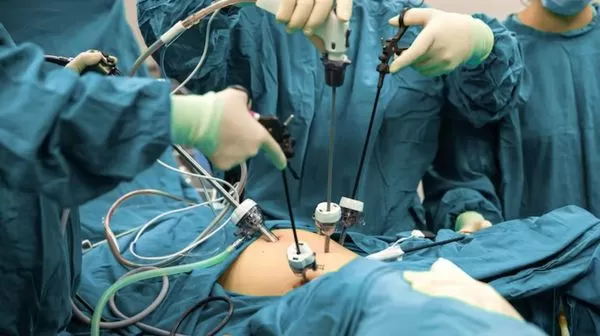
- Surgical correction for rectocele when large and symptomatic - laparoscopic or transanal approach
Desi Patient Questions
Chronic constipation not responding to laxatives = specialist evaluation zaruri chhe. Colonoscopy (structural causes exclude karvanu) + anorectal manometry (pelvic floor assessment) zaruri hoi shake chhe. Obstructed defecation syndrome hoi shake chhe - jene biofeedback therapy thi treat thay chhe. Doctor pase jao - correct diagnosis = correct treatment.
Frequently Asked Questions
Related Pages
Chronic Constipation Lasting Years? Get Properly Evaluated in Vadodara
Colonoscopy, anorectal manometry, and expert colorectal evaluation at Sterling Hospital, Vadodara. Dr Samir Contractor.
Medical Disclaimer: For patient education only. Not a replacement for medical consultation.