Functional constipation is chronic constipation without an identifiable structural, metabolic, or medication-related cause. It is the most common form of constipation - affecting the majority of patients presenting with this complaint. Understanding its three subtypes (normal transit, slow transit, and obstructed defecation) determines the correct treatment, because each subtype responds differently to dietary and pharmacological interventions.
✦ Quick Answers
Functional constipation is diagnosed by exclusion - after structural causes (colorectal cancer, stricture, polyps), metabolic causes (hypothyroidism, diabetes, hypercalcaemia), and medication causes (opioids, iron, anticholinergics) have been excluded. The diagnosis is clinical, supported by Rome IV criteria, and the treatment approach is determined by identifying which of the three functional subtypes is responsible.
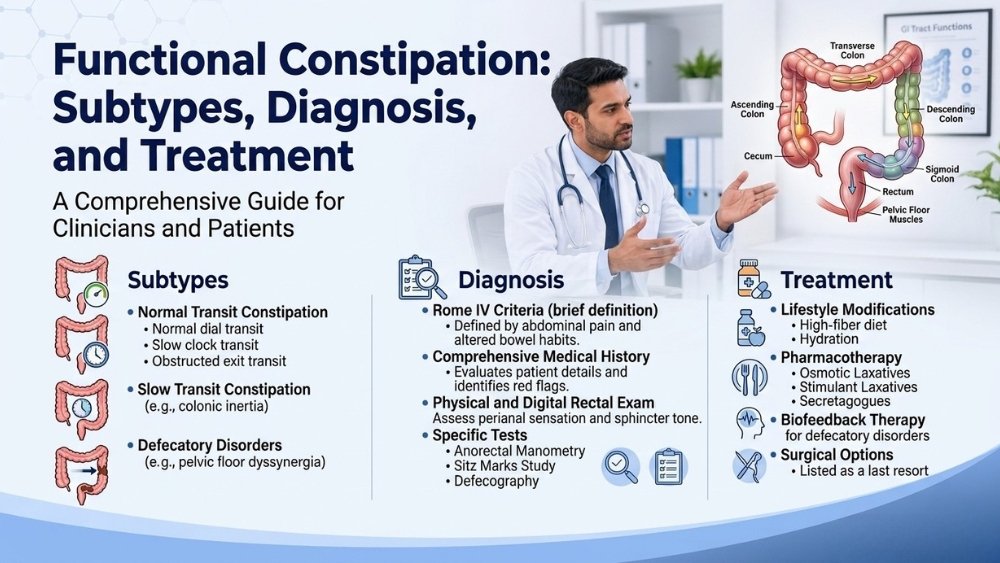
Three Subtypes of Functional Constipation
? Normal Transit (50-60%)
- Stool moves at normal speed
- Patients perceive stool as hard or difficult
- Often dietary + stress-related
- First-line dietary changes highly effective
- Colonic transit study: normal
- Responds well to fibre + water + lifestyle
Slow Transit (15-30%)
- Reduced colonic motor activity
- Very infrequent bowel movements
- No defecation urge
- Resistant to standard laxatives
- Colonic transit study: delayed
- Needs prokinetics (prucalopride)
Obstructed Defecation (20-30%)
- Stool reaches rectum normally
- Cannot be efficiently expelled
- Excessive straining, incomplete evacuation
- Sensation of rectal blockage
- Anorectal manometry + defecography
- Biofeedback or surgery
Diagnosis of Functional Constipation
Functional constipation is diagnosed by Rome IV criteria (≥2 of: fewer than 3 SBMs/week, hard stools >25%, straining >25%, incomplete evacuation >25%, anorectal obstruction >25%, or manual manoeuvres >25%) for 3+ months, with no clear structural or metabolic cause.
Diagnostic workup
- Blood tests: TSH, blood glucose, calcium, full blood count - exclude secondary causes
- Colonoscopy: Exclude structural pathology before diagnosing functional; essential above 45 or with alarm features
- Anorectal manometry: When ODS is suspected - measures defecation reflex, sphincter pressures, and rectal compliance
- Colonic transit study: Distinguishes normal transit from slow transit when history is unclear
- Defecography: Dynamic imaging of defecation - identifies rectocele, intussusception, pelvic floor descent
Red Flags - When It May Not Be Functional
Consider non-functional cause and investigate urgently:
- Blood in stool
- Unintended weight loss
- New onset above age 45
- Pencil-thin stools
- Constipation not responding to maximum laxatives
- Anaemia on blood tests
- Family history of colorectal cancer
Treatment by Subtype
All Subtypes - Dietary Foundation
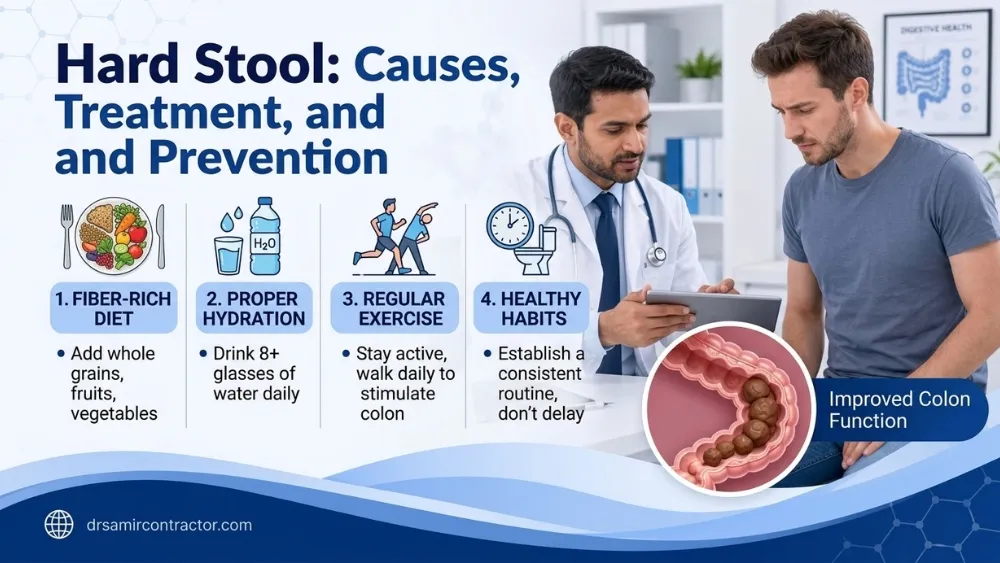
- Fibre 25-35g/day: whole grain atta roti/bhakri, vegetables, fruits, isabgol
- Water 2-3L/day
- Regular physical activity - 30 minutes walking daily
- Toilet routine - 15 minutes after breakfast; do not rush or suppress urge
- Footstool - raises feet to improve anorectal angle
Normal transit constipation
Dietary changes alone resolve most cases. Osmotic laxative (lactulose or PEG) for initial relief while dietary changes take effect. Stress management. Most patients do not need long-term medication after sustained dietary change.
Slow transit constipation
High-dose osmotic laxatives. Prokinetics: domperidone, itopride. Prucalopride (5-HT4 receptor agonist) - the most effective agent for slow transit, requiring specialist prescription. Very refractory cases: colonic transit study + specialist colorectal surgery assessment for subtotal colectomy (rare).
Obstructed defecation syndrome
Biofeedback physiotherapy (for paradoxical puborectalis contraction). Pelvic floor physiotherapy. Structural repair for rectocele, rectal prolapse, or enterocele - laparoscopic or transanal approaches by specialist colorectal surgeon.
?? Functional Constipation in India
India-specific context
- Functional constipation is extremely common in urban India - driven by low-fibre refined food diets, sedentary lifestyles, and chronic stress
- Obstructed defecation syndrome is under-diagnosed in Indian women - many with ODS have been managed only with laxatives for years without anorectal manometry
- The transition from traditional high-fibre Indian diet (whole grains, legumes, vegetables) to urban low-fibre diet is a primary driver of increasing functional constipation rates
- Prucalopride - the most effective agent for slow transit constipation - is available in India but requires specialist prescription and awareness
Desi Patient Questions
Normal colonoscopy = structural cause excluded. Now identify the subtype: Jyaré straining + incomplete evacuation hoy - anorectal manometry (ODS check). Jyaré bhaviya nathi lagtu + khaali 1-2 vaar week ma stool - colonic transit study (slow transit check). Correct subtype = correct treatment.
Frequently Asked Questions
Related Pages
Functional Constipation? Get Properly Subtyped and Treated in Vadodara
Colonoscopy, anorectal manometry, and targeted treatment at Sterling Hospital, Vadodara. Dr Samir Contractor.
Medical Disclaimer: For patient education only. Not a replacement for medical consultation.