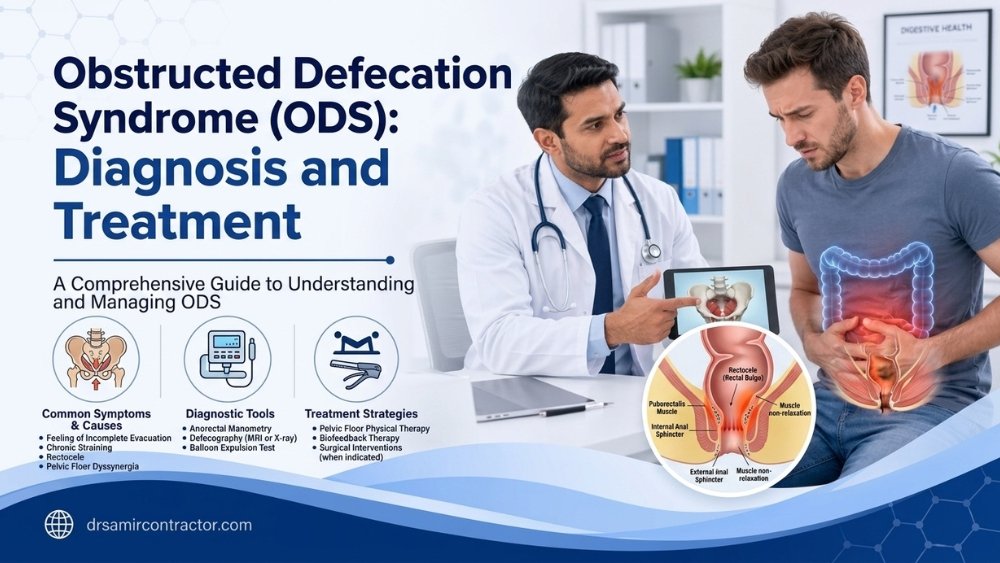
Obstructed defecation syndrome (ODS) is a condition where stool reaches the rectum normally but cannot be efficiently expelled - due to either functional pelvic floor dysfunction (paradoxical puborectalis contraction) or structural causes (rectocele, rectal prolapse, enterocele). It is one of the most important and most undertreated causes of chronic constipation in India, particularly in women. Correct diagnosis by anorectal manometry and defecography is essential - laxatives alone are insufficient.
✦ Quick Answers
ODS is defined by the Rome IV criteria as the symptom cluster of difficult defecation from the rectum, with sensation of rectal or anal blockage, the need for manual assistance, and at least 2 other chronic constipation symptoms - in the absence of structural mechanical obstruction.
It is important because it does not respond adequately to standard constipation management (dietary fibre and laxatives) - these measures may soften the stool but cannot overcome the outlet obstruction. Patients with ODS who have been managed with laxatives alone for years achieve only partial, unsatisfying relief.
Symptoms of ODS
- Chronic excessive straining at defecation - taking 20-30+ minutes per attempt
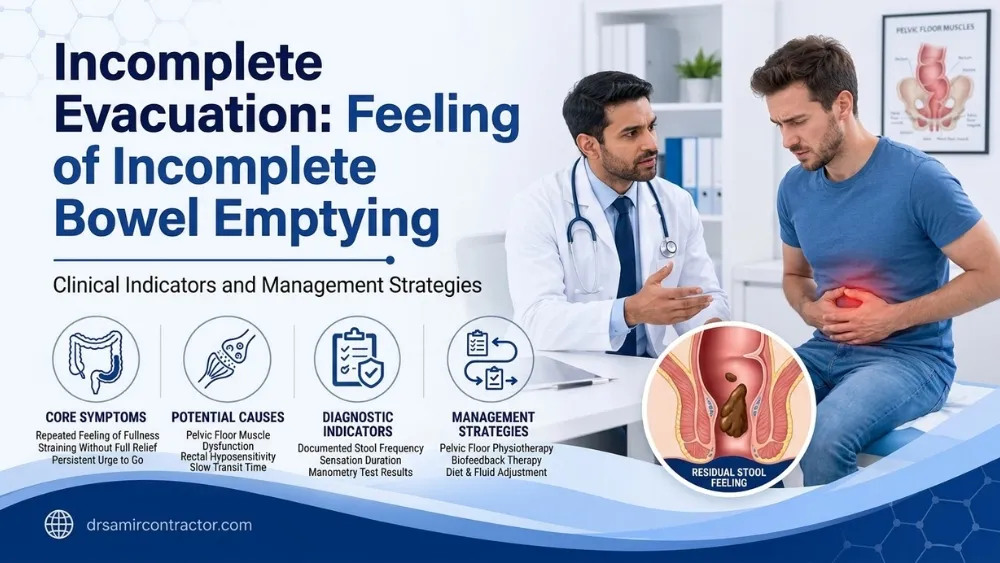
- Persistent sensation of incomplete evacuation after defecation
- Sensation of anorectal blockage or obstruction - "something is in the way"
- Digital assistance - pressing around the perineum, inserting a finger into the vagina (splinting the rectocele) or rectum to assist defecation
- Frequent fruitless visits to the toilet
- Minimal or no benefit from dietary fibre or laxatives
- Chronic fatigue and reduced quality of life from the effort required
ODS Score - Clinical Severity Assessment
- The ODS Score is a validated questionnaire assessing: frequency of defecation, straining, incomplete evacuation, pain, use of laxatives, need for digital assistance, and constipation-related quality of life
- Scores above 8 indicate clinically significant ODS
- Scores above 16 indicate severe ODS warranting specialist intervention
- Used to guide treatment intensity and monitor outcomes after biofeedback or surgery
Causes of ODS
? Functional (Anismus)
- Paradoxical puborectalis contraction - the puborectalis muscle contracts (rather than relaxes) during defecation, narrowing the anorectal angle and creating a functional obstruction
- Diagnosed by anorectal manometry
- Treated by biofeedback physiotherapy - retrains muscle coordination
- 60-80% success with biofeedback in trained hands
Structural
- Rectocele - forward bulging of rectum into posterior vaginal wall; traps stool in the pocket
- Internal rectal intussusception - internal telescoping of rectal wall during straining
- Enterocele - small bowel loops prolapsing into rectovaginal space
- Excessive perineal descent - pelvic floor descends excessively during straining
- Diagnosed by defecography
- Treated surgically (STARR, mesh rectopexy)
Investigations
Anorectal manometry - essential
Measures sphincter pressures, rectal sensation, and the defecation reflex. In paradoxical puborectalis contraction: during simulated defecation, the sphincter pressure increases (contracts) instead of decreasing (relaxing). This is the hallmark finding of functional ODS and confirms the diagnosis. Also identifies Hirschsprung's disease (absent rectoanal inhibitory reflex).
Defecography (proctography or MRI defecography)
Dynamic imaging of the defecation process. The patient is asked to defecate with contrast in the rectum, while fluoroscopy or MRI captures the images. Identifies: rectocele (size and whether it empties), rectal intussusception, enterocele, excessive perineal descent, and failure of anorectal angle to open during defecation.
Colonoscopy
To exclude structural colonic or rectal causes before diagnosing functional ODS.
Colonic transit study
To confirm normal colonic transit (distinguishes ODS from slow transit constipation, which may coexist).
Treatment
Functional ODS - Biofeedback Therapy
The treatment of choice for paradoxical puborectalis contraction. A pelvic floor physiotherapist uses visual (surface EMG) or manometric feedback to teach the patient to correctly coordinate the pelvic floor muscles - relaxing the puborectalis and external sphincter during defecation rather than contracting them. Requires 4-8 sessions over 8-12 weeks. Success rate: 60-80% symptom improvement in well-selected patients. No medications or surgery needed for purely functional ODS.
Structural ODS - Surgery
- STARR (Stapled TransAnal Rectal Resection): Removes redundant rectal tissue using a circular stapler - effective for internal intussusception and mild-moderate rectocele
- Laparoscopic ventral mesh rectopexy (LVMR): Addresses multiple structural causes simultaneously - internal prolapse, rectocele, enterocele - with low recurrence and good functional outcomes; preferred for complex or recurrent structural ODS
- Transvaginal or transanal rectocele repair: For isolated symptomatic rectocele - reinforces the rectovaginal wall; good results for rectocele-predominant ODS
Supportive measures alongside specific treatment
- High-fibre diet and adequate hydration - softens stool to reduce straining effort
- Correct toilet posture (footstool) - optimises anorectal angle
- Osmotic laxatives - maintains soft stool consistency while awaiting biofeedback results
- Pelvic floor awareness - avoiding voluntary breath-holding and abdominal muscle over-exertion during defecation
Desi Patient Questions
Aa obstructed defecation syndrome (ODS) nu classic presentation chhe. Laxatives insufficiently help kartu chhe because problem is at the outlet, not in transit. Anorectal manometry + defecography necessary investigations chhe. Functional ODS: biofeedback physiotherapy highly effective. Structural (rectocele etc): surgery available. Please get properly evaluated - years of suffering ho saktu avoidable chhe.
Frequently Asked Questions
Related Pages
ODS - Years of Struggling? Get Properly Evaluated in Vadodara
Anorectal manometry, defecography, biofeedback therapy, and surgical repair - comprehensive ODS management at Sterling Hospital, Vadodara under Dr Samir Contractor.
Medical Disclaimer: For patient education only. Not a replacement for medical consultation.