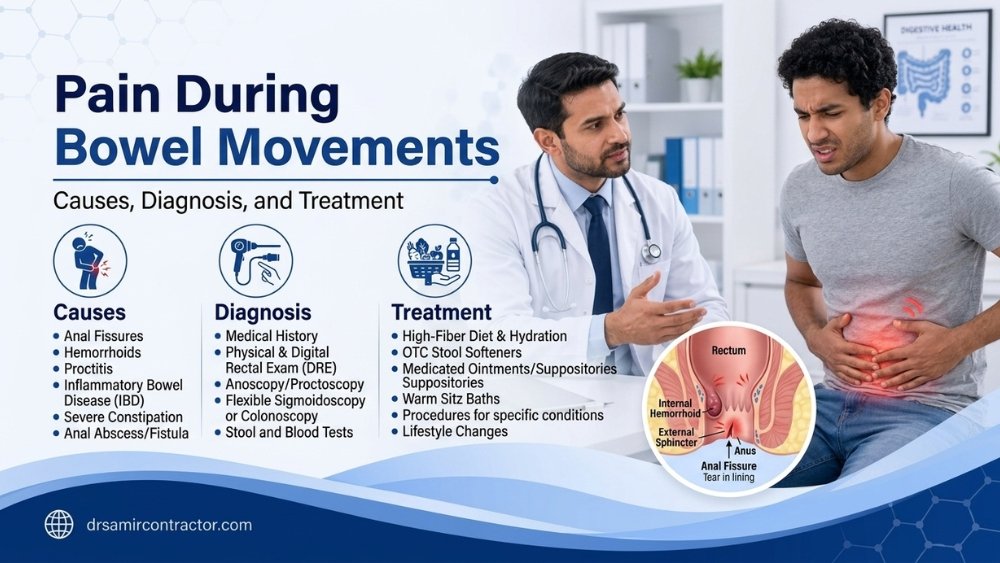
Pain during bowel movements - from sharp cutting pain at the anus (anal fissure) to deep rectal aching - is one of the most common anorectal complaints in India. It is also one of the most feared, leading patients to suppress defecation and worsen constipation, creating a vicious cycle. Understanding the cause is the key to breaking this cycle. Most causes are very treatable.
✦ Quick Answers
Pain during bowel movements is one of the most distressing anorectal symptoms. For many patients, the anticipation of pain leads to deliberate avoidance of defecation - which causes harder, drier stools, which cause more pain, which causes more avoidance. Breaking this cycle requires addressing both the pain cause directly and the underlying constipation simultaneously.
Causes of Pain During Bowel Movements
| Cause | Pain Character | Associated Features |
|---|---|---|
| Anal fissure | Sharp, cutting, burning pain during defecation + persists 30-60 min after | Bright red blood on toilet paper; crack visible at anal opening; constipation |
| Thrombosed external hemorrhoid | Sudden onset constant severe pain; swelling at anus | Visible, tender bluish lump at anus; recent constipation or straining |
| Perianal abscess | Constant throbbing pain; worse on sitting; not specifically related to defecation | Swelling and redness near anus; fever; tender to touch |
| Internal hemorrhoids (symptomatic) | Dragging or aching; less sharp than fissure | Bright red blood, mucus, prolapse of tissue |
| Anal fistula (acute episode) | Intermittent pain; discharge from fistula opening | History of perianal abscess; discharge near anus |
| Proctalgia fugax | Sudden severe rectal pain; wakes from sleep; resolves in minutes | No anal pathology on examination; functional cause |
Red Flags
Seek evaluation if pain during bowel movements is associated with:
- Fever and anal swelling - perianal abscess needs urgent drainage
- Deep penetrating pain with mucus or pus discharge - anal fistula
- Blood mixed with stool (not just on paper) - rectal bleeding needs colonoscopy
- Pain that has not improved with conservative measures after 4-6 weeks
- Inability to sit comfortably - severe thrombosed hemorrhoid or abscess
Treatment by Cause
Anal fissure
- Increase fibre and water to soften stools
- Topical anaesthetic ointment (lidocaine) for immediate pain relief
- Topical glyceryl trinitrate (GTN) or diltiazem ointment - relaxes the internal sphincter, improves blood supply, promotes healing
- Botulinum toxin injection - for chronic fissures not responding to topical treatment
- Lateral internal sphincterotomy (LIS) - surgical treatment for chronic, non-healing fissures; very effective with quick recovery
Thrombosed external hemorrhoid
- If within 72 hours of onset: excision under local anaesthesia - immediate relief
- After 72 hours: conservative management with sitz baths, fibre, and pain relief; thrombosis resolves over 2-3 weeks
Perianal abscess
- Urgent incision and drainage - always surgical; antibiotics alone are inadequate for abscess
- Performed under local or general anaesthesia depending on size
Desi Patient Questions
Ha - sharp pain during + 30-60 min after defecation = anal fissure classic presentation. Bright red blood on paper pan hoy chhe commonly. Doctor examination confirm karshe. Treatment: fibre vadharo, GTN ointment, ane jyaré chronic hoy to botox ya surgery. Very treatable - do not avoid defecation - it worsens the cycle.
Frequently Asked Questions
Related Pages
Pain During Bowel Movements? Get Examined and Treated in Vadodara
Dr Samir Contractor at Sterling Hospital, Vadodara provides anorectal examination and treatment for fissure, hemorrhoids, and all causes of defecation pain.
Medical Disclaimer: For patient education only. Not a replacement for medical consultation.