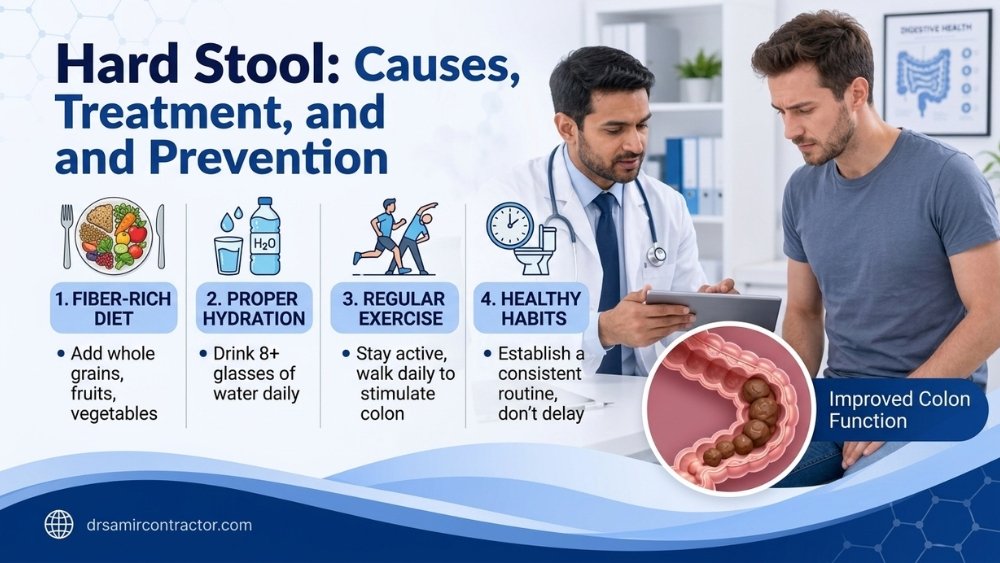
Hard, dry, lumpy, or pellet-like stools (Bristol Stool Chart types 1 and 2) indicate that stool has spent too long in the colon and too much water has been absorbed. Hard stool is both a symptom of constipation and a direct cause of straining, anal fissures, and hemorrhoids. The vast majority of cases respond rapidly to dietary fibre and hydration.
✦ Quick Answers
? The Bristol Stool Chart - Understanding Your Stool
| Type | Description | Meaning |
|---|---|---|
| Type 1 | Separate hard lumps, like nuts - difficult to pass | Severe constipation - very slow transit |
| Type 2 | Sausage-shaped but lumpy - hard | Constipation - slow transit |
| Type 3 ✓ | Sausage-shaped with cracks on surface - normal | Normal - ideal |
| Type 4 ✓ | Smooth, soft sausage - passes easily | Normal - ideal |
| Type 5 | Soft blobs with clear-cut edges - easy to pass | Tending loose - some people's normal |
| Type 6 | Fluffy pieces with ragged edges - mushy | Loose stool/mild diarrhoea |
| Type 7 | Watery, no solid pieces - entirely liquid | Diarrhoea |
Hard stool (types 1 and 2) indicates the stool is spending too long in the colon and excess water is being absorbed. The goal of treatment is to achieve types 3 and 4 consistently.
Causes of Hard Stool
- Insufficient dietary fibre - the most common cause. Fibre acts as a sponge, retaining water in the stool to keep it soft. Low-fibre Indian diets (white rice, maida) produce hard, small stools.
- Dehydration - the colon reabsorbs water from stool; if water intake is inadequate, stool becomes dry and hard
- Slow colonic transit - stool spends more time in the colon; more water is absorbed regardless of diet
- Fear-avoidance from anal pain - patients with anal fissures defer defecation; stool becomes harder; harder stool causes more pain; cycle continues
- Medications - opioids, iron tablets, calcium supplements, antihistamines, antidepressants
- Hypothyroidism - slows gut motility; stool moves slowly through the colon
Treatment
Dietary Changes to Soften Stool - Starting Today
- Fibre target: 25-35g per day. Most Indians consume only 10-15g. Double or triple vegetable and fruit intake.
- Best fibre sources in Indian diet: Bajri (pearl millet) roti, jowar bhakri, whole wheat atta roti, methi (fenugreek), bhindi (okra), guar (cluster beans), raw carrots, guava, papaya, banana
- Water: 2-3 litres per day. Warm water first thing in the morning (250ml) stimulates the gastrocolic reflex and often produces a spontaneous urge to defecate within 30 minutes
- Prunes (dried plums): One of the most effective natural stool softeners; 4-6 prunes per day produces significant improvement in stool consistency within days
- Isabgol (psyllium husk): 1-2 teaspoons in a glass of water at night - a safe, effective bulk-forming supplement that softens stool by retaining water
If dietary changes are insufficient
- Osmotic laxatives: Lactulose (15-30ml twice daily) or polyethylene glycol - draw water into the colon, softening stool. Safe for regular use.
- Stool softeners: Docusate sodium - mild, reduces stool hardness
- Short-term stimulant laxatives: Bisacodyl or senna - for acute relief, not for daily prolonged use
Desi Patient Questions
Pehla dietary change try karo: bhakri/atta roti, vadhare vegetables ane fruits, 2-3 litre paani, ane raat ne isabgol. Subeh uthine warm water ek glass. Most cases ma 3-5 days ma improvement milshe. Jyaré 2 weeks ma nahi sudhartu hoy ya blood pan aavé - doctor pase jao.
Frequently Asked Questions
Related Pages
Hard Stool Not Improving? Get Dietary Guidance and Evaluation in Vadodara
Dr Samir Contractor at Sterling Hospital, Vadodara provides expert evaluation for chronic constipation and its complications.
Medical Disclaimer: For patient education only. Not a replacement for medical consultation.