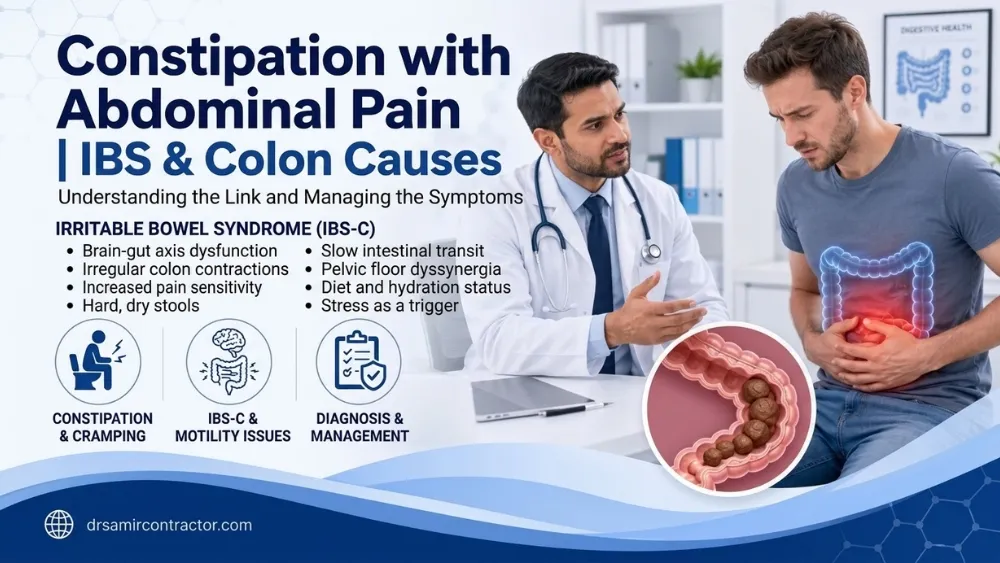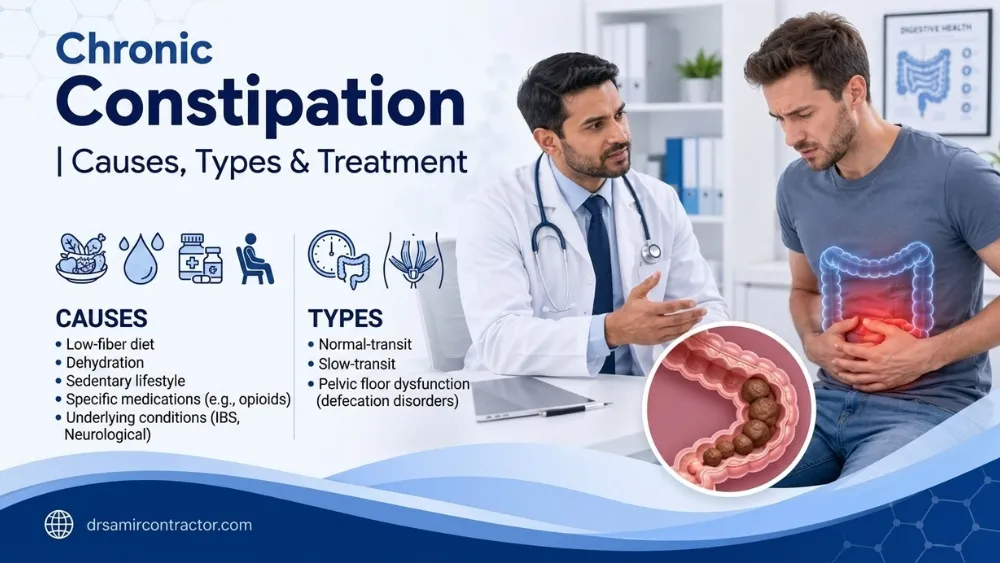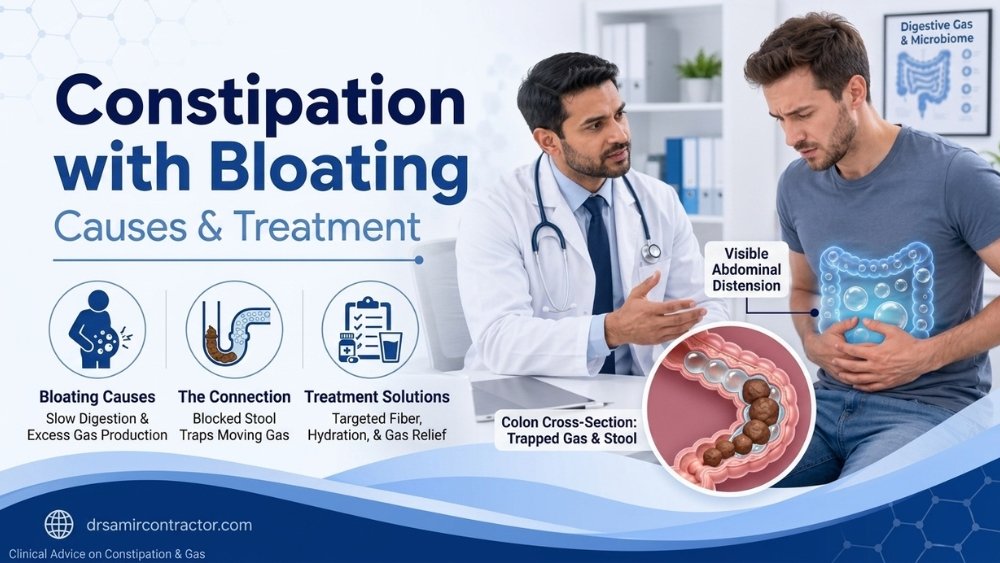
Constipation combined with abdominal bloating and distension is one of the most common and most troublesome symptom clusters in GI medicine. The combination significantly affects quality of life and is a core feature of irritable bowel syndrome (IBS-C). Understanding the cause determines the most effective treatment, and identifying when this cluster indicates something more serious beyond functional causes.
✦ Quick Answers
Constipation with bloating creates a miserable quality of life for many patients. The combination is the hallmark of IBS-C - where slowed gut transit leads to both infrequent, difficult bowel movements and excessive gas production from bacterial fermentation of undigested food residue. The good news is that targeted dietary management is highly effective for most patients.
Why Constipation Causes Bloating
When stool moves slowly through the colon, there is prolonged exposure to gut bacteria. These bacteria ferment undigested food residues - particularly carbohydrates - producing gas (hydrogen, carbon dioxide, methane). The gas accumulates in the colon, causing distension, bloating, and discomfort. Additionally, a distended colon from hard, accumulated stool pushes on the abdominal wall, adding to the sensation of bloating.
This explains why treating the constipation - by increasing fibre, water, and motility - typically resolves the bloating simultaneously.
Common Causes
- IBS-C (irritable bowel syndrome, constipation predominant) - the most common cause; slow transit + visceral hypersensitivity + gas hypersensitivity
- Functional constipation with dietary factors - inadequate fibre, gas-forming foods (rajma, chole, whole urad dal, cabbage, cauliflower)
- Hypothyroidism - slows gut motility, producing both constipation and bloating
- Medications - opioids, iron, calcium channel blockers
- Bowel obstruction (rare but serious) - constipation + bloating + inability to pass gas; progressive distension; needs emergency evaluation
Red Flags
Seek evaluation when constipation + bloating includes:
- Inability to pass stool AND gas - possible bowel obstruction (emergency)
- Progressively worsening over weeks - not settling with dietary changes
- Weight loss with the cluster - needs colonoscopy
- Visible abdominal distension - assessment for obstruction or ascites
- New onset above age 45
Treatment
Dietary Changes for Constipation + Bloating
- Increase soluble fibre: Isabgol, oats, ripe banana - softens stool AND reduces excess fermentation (unlike insoluble fibre which may worsen bloating initially)
- Reduce gas-forming foods: Rajma, chole, whole urad dal, cabbage, cauliflower, carbonated drinks - the most common dietary triggers for this cluster in Indian diet
- Low-FODMAP foods: For IBS-C - reduce high-fermentation carbohydrates (onion, garlic, wheat in large amounts); rice is better tolerated than wheat for IBS bloating
- Water 2-3L/day and regular physical activity - both reduce colonic transit time and gas production
- Eat slowly, chew well - reduces swallowed air (aerophagia) which directly contributes to bloating
Medical treatment
- Osmotic laxatives (lactulose or PEG) - soften stool and stimulate motility
- Prokinetics (domperidone, itopride) - for motility component of IBS-C
- Peppermint oil capsules - antispasmodic; specifically helps IBS bloating and spasm
- Low-dose tricyclic antidepressants (amitriptyline) - for visceral hypersensitivity in IBS
- Probiotics - mixed evidence; Lactobacillus and Bifidobacterium strains may help some IBS-C patients
Desi Patient Questions
Ha - constipation + bloating worse with rajma-chole = IBS-C ya functional constipation with gas-forming food triggers. Reduce those foods, increase soluble fibre (isabgol), water vadharo, ane regular walk karo. Jyaré 4-6 weeks ma nahi sudhartu hoy - doctor pase jao for formal evaluation.
Frequently Asked Questions
Related Pages
Constipation + Bloating Not Improving? Get Evaluated in Vadodara
Dr Samir Contractor at Sterling Hospital, Vadodara provides dietary guidance, colonoscopy, and specialist management for IBS and chronic constipation.
Medical Disclaimer: For patient education only. Not a replacement for medical consultation.