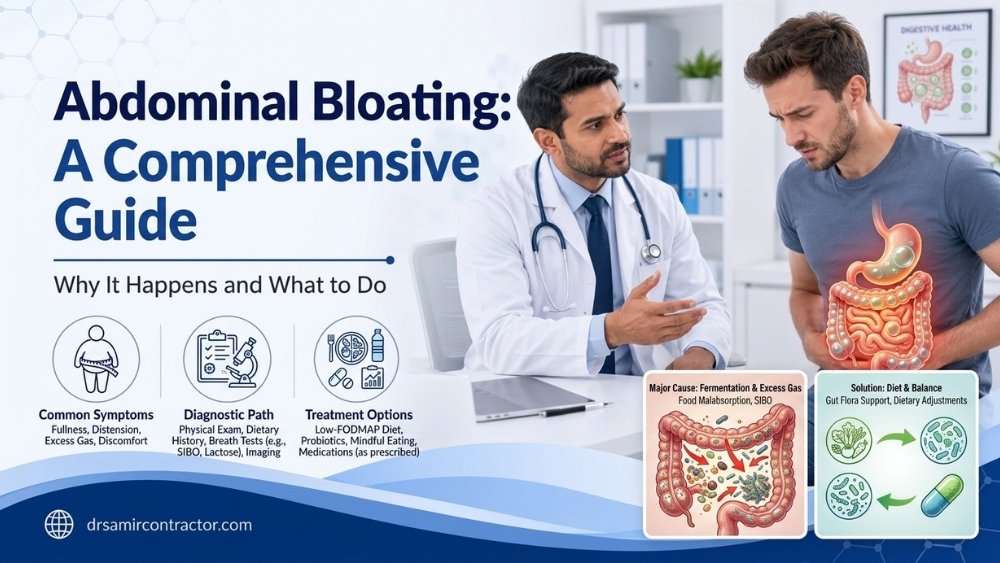
Abdominal bloating is a sensation of fullness, tightness, or swelling in the belly. It is one of the most common digestive complaints, usually caused by dietary habits, trapped gas, or a functional gut disorder - and in most cases, it can be managed effectively with the right approach.
✦ Quick Answers
What Is Abdominal Bloating?
Abdominal bloating is one of the most frequent complaints I hear in my outpatient clinic at Sterling Hospital, Vadodara. Patients describe it in many ways - "my stomach feels full," "I feel like a balloon after eating," "my belly is tight even when I have not eaten much." Some patients report visible swelling; others feel bloated but their abdomen looks normal from outside.
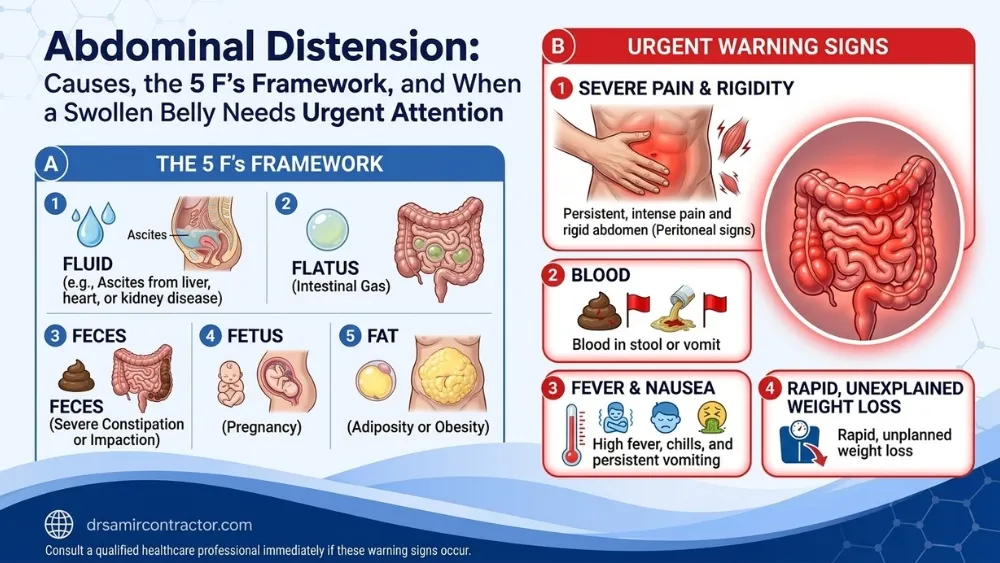
This distinction matters. In medical terms, bloating refers to the subjective sensation of abdominal fullness or pressure. Distension refers to a measurable, visible increase in abdominal girth. The two often overlap, but they are not identical. A patient can feel intensely bloated without any visible swelling - and this is actually the more common pattern, especially in functional gut disorders.
Understanding this difference is the first step toward accurate diagnosis. This page covers the full spectrum of abdominal bloating - from mild post-meal discomfort to persistent symptoms that need investigation. If your primary concern is visible abdominal swelling with a measurable increase in belly size, our dedicated page on abdominal distension covers the organic causes in greater detail.
Bloating vs. Distension: Why the Difference Matters
| Feature | Bloating (Subjective) | Distension (Objective) |
|---|---|---|
| What the patient feels | Fullness, pressure, tightness | Belly visibly enlarges |
| What the doctor sees | Abdomen may look normal | Measurable increase in girth |
| Common causes | Functional (IBS, dyspepsia), dietary | Ascites, obstruction, tumour, severe constipation |
| Timing | Often worse after meals, better in morning | Progressive; may not fluctuate with meals |
| Urgency | Usually not urgent | New-onset progressive distension needs prompt evaluation |
Common Causes of Abdominal Bloating
The causes of bloating range from completely harmless dietary factors to conditions that require medical or surgical treatment. Here is how I categorize them in clinical practice.
1. Dietary and Lifestyle Causes
This is by far the largest group. In my experience, 60 to 70 percent of patients who present with bloating in Vadodara have a dietary or lifestyle explanation.
- Gas-producing foods: Rajma, chole, whole urad dal, chana dal, cabbage, cauliflower, broccoli, raw onion, and beans are rich in fermentable carbohydrates (FODMAPs) that gut bacteria break down into gas.
- Carbonated drinks: Soft drinks, soda water, and beer introduce carbon dioxide directly into the stomach.
- Eating too fast: Rapid eating causes air swallowing (aerophagia), which contributes directly to upper abdominal bloating and belching.
- Large portion sizes: A heavy Gujarati thali eaten in one sitting distends the stomach mechanically and slows gastric emptying.
- Late-night eating: Meals eaten within two hours of lying down promote acid reflux and delayed gastric emptying, both of which worsen bloating.
- Excess salt intake: Pickles, papad, and processed snacks cause fluid retention, adding to the sensation of abdominal fullness.
- Low physical activity: Sedentary work - common among IT professionals, office workers, and students - slows gut motility and promotes gas retention.
2. Functional Gut Disorders
When bloating is chronic, recurrent, and not explained by diet alone, a functional gut disorder is the most likely cause. These are conditions where the gut looks structurally normal but does not function normally.
- Functional bloating: Defined by the Rome IV criteria as recurrent bloating or distension without other predominant symptoms. The gut is hypersensitive to normal amounts of gas. This is the most common formal diagnosis for chronic bloating.
- Irritable bowel syndrome (IBS): Bloating accompanied by abdominal pain and altered bowel habits - either constipation-predominant, diarrhoea-predominant, or mixed. IBS is extremely common in Indian urban populations.
- Functional dyspepsia: Bloating centred in the upper abdomen, with early fullness after meals and sometimes nausea. Often overlaps with what patients call "chronic acidity."
3. Constipation
Chronic constipation is one of the most underappreciated causes of bloating in Indian patients. When stool sits in the colon for too long, bacterial fermentation produces excess gas, and the retained stool itself creates a mechanical feeling of fullness. Many patients I see in Vadodara eat low-fibre diets dominated by refined flour (maida) and polished rice, drink too little water - especially in summer - and have irregular bowel habits. Correcting the constipation often resolves the bloating completely.
4. Food Intolerances
- Lactose intolerance: Extremely common in Indian adults. Studies suggest that 60 to 70 percent of South Asian adults have some degree of lactose malabsorption. Milk, paneer, kheer, and rabdi can trigger bloating, cramps, and loose stools in these individuals.
- Fructose malabsorption: High-fructose fruits (mango, grapes, honey) and processed foods with added fructose can cause bloating in sensitive individuals.
- Wheat sensitivity: Distinct from celiac disease, non-celiac wheat sensitivity can cause bloating after chapati or bread in a small subset of patients.
5. Small Intestinal Bacterial Overgrowth (SIBO)
SIBO occurs when bacteria that normally reside in the large intestine colonize the small intestine. These misplaced bacteria ferment food prematurely, producing hydrogen and methane gas that causes significant bloating, often within 30 to 60 minutes after eating. SIBO is increasingly recognized as a common cause of chronic unexplained bloating, especially after abdominal surgery, in patients with diabetes, or those who have taken repeated courses of proton pump inhibitors.
6. Organic (Structural) Causes
These are less common but important to rule out, especially when bloating is new, progressive, or associated with red-flag symptoms.
- Gallstones and gallbladder dysfunction: Gallstones can cause post-meal bloating, upper abdominal heaviness, and nausea - symptoms often mistaken for "gas" or "acidity." This is particularly common in women over 40.
- Chronic dyspepsia with H. pylori: Helicobacter pylori infection causes chronic gastric inflammation, slow gastric emptying, and persistent bloating.
- Intestinal obstruction: Partial obstruction from adhesions (after previous surgery), hernias, or tumours causes bloating with colicky pain, vomiting, and inability to pass gas or stool. This is a surgical emergency.
- Ovarian pathology: In women, persistent bloating with pelvic pressure can occasionally be the first symptom of an ovarian cyst or, rarely, ovarian cancer. This is why new-onset persistent bloating in women over 50 deserves evaluation.
- Ascites: Fluid accumulation in the abdomen due to liver disease, heart failure, or peritoneal disease causes progressive distension with a heavy, full sensation.
- Post-surgical bloating: Patients who have undergone bariatric surgery, gallbladder removal, or other abdominal procedures can develop altered gut motility and bloating in the months following surgery.
Indian Dietary Triggers: A Closer Look
The standard Indian diet - while nutritious - contains several potent bloating triggers that Western medical literature often overlooks. In my practice in Vadodara, I find it essential to discuss these specifically.
| Food / Habit | Why It Causes Bloating | Practical Tip |
|---|---|---|
| Rajma / chole / whole urad dal | High in oligosaccharides (raffinose, stachyose) that gut bacteria ferment into gas | Soak overnight, pressure-cook well, add hing (asafoetida) while tempering |
| Cabbage / cauliflower | Rich in sulphur compounds and fermentable fibre | Cook thoroughly; avoid raw salads in large quantities if symptomatic |
| Milk / paneer / rabdi | Lactose triggers gas in 60-70% of Indian adults who are lactose-intolerant | Switch to curd, chaas, or lactose-free milk; curd has less lactose due to bacterial fermentation |
| Carbonated drinks / soda | CO2 gas enters the stomach directly | Replace with nimbu pani, coconut water, or plain water |
| Heavy thali eaten at once | Mechanical distension slows gastric emptying | Eat smaller, more frequent meals; stop before feeling full |
| Late dinner (after 9 PM) | Gut motility slows at night; food sits longer | Finish dinner by 7:30 to 8:00 PM; take a short walk after eating |
| Excessive tea / coffee on empty stomach | Stimulates acid secretion and can cause gastric distress | Have tea after breakfast, not on an empty stomach |
How Bloating Is Diagnosed
When a patient comes to me with bloating, my approach is systematic. The goal is to distinguish functional bloating - which is common and manageable - from organic causes that need specific treatment.
Step 1: Detailed History
I ask about the timing of bloating (after meals, all day, worse in the evening), associated symptoms (pain, constipation, diarrhoea, weight loss), dietary habits, medications, surgical history, and menstrual history in women. A careful food diary for one week often reveals the trigger without any tests.
Step 2: Clinical Examination
I examine the abdomen for visible distension, tenderness, masses, fluid (ascites), and bowel sounds. A pelvic examination in women may be needed if ovarian pathology is suspected. In most functional bloating, the examination is entirely normal.
Step 3: Investigations (When Needed)
Not every patient with bloating needs tests. A young, otherwise healthy patient with clear dietary triggers and no red flags often needs only dietary advice and reassurance. When investigations are indicated, I typically order:
- Blood tests: Complete blood count, thyroid function, liver function, blood sugar - to rule out anaemia, hypothyroidism, liver disease, and diabetes
- Ultrasound abdomen: A quick, non-invasive scan to check for gallstones, liver abnormalities, ascites, ovarian cysts, and kidney problems
- Upper GI endoscopy: If upper abdominal bloating is prominent, or if there is associated heartburn, vomiting, or weight loss - to check the stomach and duodenum directly
- Colonoscopy: If bloating is associated with change in bowel habits, blood in stool, weight loss, or if the patient is over 45 with new symptoms - to examine the entire large intestine
- Breath tests: Hydrogen and methane breath tests can diagnose lactose intolerance and SIBO
- Stool tests: For chronic diarrhoea with bloating - to check for infection, inflammation, or malabsorption
- CT scan: Reserved for cases where obstruction, tumour, or complex pathology is suspected
Red Flags: When Bloating Needs Urgent Attention
Most bloating is benign, but see a doctor promptly if your bloating is accompanied by any of the following:
- Unintentional weight loss (more than 3 to 5 kg without trying)
- Progressive increase in abdominal girth that does not fluctuate
- Vomiting - especially if you cannot keep liquids down
- Complete inability to pass gas or stool (possible obstruction)
- Blood in stool or black, tarry stool
- Jaundice (yellow eyes or skin)
- Severe abdominal pain that does not come and go
- New-onset ascites (fluid in the abdomen)
- Fever with abdominal bloating
- Persistent bloating in a woman over 50 - especially with pelvic pressure or early fullness
- Loss of appetite lasting more than two weeks
- Bloating after recent abdominal surgery with increasing pain
Reassurance: When Bloating Is Likely Harmless
If your bloating comes and goes, is clearly related to specific foods, is not progressive, and you have no weight loss, no vomiting, and normal bowel movements - it is very likely functional or dietary. This is the pattern I see in 7 out of 10 bloating patients in my clinic. Dietary adjustment and lifestyle changes often bring significant relief within two to four weeks.
Treatment of Abdominal Bloating
Treatment depends entirely on the cause. Here is the approach I follow at Sterling Hospital.
Dietary and Lifestyle Modification (First Line)
For the majority of patients, these changes are the most effective treatment - more so than any medication.
- Identify and reduce triggers: Keep a food diary. Common culprits in Indian diets: rajma, chole, cabbage, milk, carbonated drinks. You do not need to eliminate them permanently - reduce quantity and frequency.
- Eat smaller, more frequent meals: Four to five moderate meals are better than two large ones.
- Eat slowly and chew thoroughly: Rapid eating increases air swallowing significantly.
- Finish dinner early: Allow at least two to three hours between your last meal and lying down.
- Stay hydrated: Aim for 2.5 to 3 litres of water daily. Dehydration worsens constipation and slows gut motility.
- Walk after meals: Even a 10 to 15 minute walk after dinner helps gastric emptying and reduces gas retention.
- Increase fibre gradually: If you are constipated, increase fibre through whole grains, vegetables, and fruits - but do so gradually, since a sudden increase in fibre itself causes temporary bloating.
- Limit artificial sweeteners: Sorbitol, mannitol, and xylitol in sugar-free products are poorly absorbed and cause bloating.
Medical Treatment
- Antispasmodics: Medications such as mebeverine, dicyclomine, or drotaverine reduce gut spasm and cramping associated with bloating.
- Prokinetics: Drugs like domperidone or itopride improve gut motility and help the stomach empty faster, particularly useful in functional dyspepsia.
- Simethicone: An over-the-counter anti-foaming agent that helps break up large gas bubbles. Safe and widely used, though its effectiveness varies.
- Probiotics: Specific strains (such as Lactobacillus and Bifidobacterium species) can restore gut bacterial balance and reduce gas production. Not all probiotics are equal - the choice should be guided by the clinical picture.
- Rifaximin: A non-absorbable antibiotic used in confirmed SIBO. It reduces bacterial overgrowth in the small intestine and can produce dramatic improvement in bloating.
- Laxatives and fibre supplements: When constipation is the root cause, osmotic laxatives (lactulose, polyethylene glycol) or psyllium husk (isabgol) with adequate water relieve both constipation and bloating.
- PPIs or H2 blockers: If bloating is associated with acid reflux or H. pylori gastritis, acid suppression along with H. pylori eradication can be beneficial.
Treating the Underlying Cause
- Gallstones: If gallstones are causing post-meal bloating, nausea, and pain, laparoscopic cholecystectomy (gallbladder removal) provides definitive relief.
- Lactose intolerance: Confirmed by breath test - treated by reducing dairy or switching to lactose-free alternatives. Curd and buttermilk (chaas) are usually well tolerated.
- SIBO: Treated with targeted antibiotics and dietary modification. Recurrence is possible and may require repeat courses.
- Intestinal obstruction: Requires urgent surgical intervention - typically laparoscopic adhesiolysis or resection depending on the cause.
- Post-bariatric bloating: Common after sleeve gastrectomy or gastric bypass. Managed with dietary counselling, prokinetics, and occasionally endoscopic evaluation.
What Happens If Bloating Is Ignored?
Functional bloating itself is not dangerous - but ignoring persistent bloating can mean missing an underlying condition that is.
- Chronic constipation: Untreated, leads to fecal impaction, worsening bloating, and rectal problems such as hemorrhoids and fissures.
- Gallstones: Recurrent bloating and pain after meals may be the only symptom for months before an acute cholecystitis episode that requires emergency surgery.
- Ovarian pathology: Persistent bloating in women can occasionally be the earliest warning of an ovarian mass. Early detection makes a significant difference in outcomes.
- Intestinal obstruction: Partial obstruction causes intermittent bloating before progressing to a complete block - which is a surgical emergency.
- Colon cancer: In rare cases, chronic bloating with change in bowel habit and blood in stool is the first presentation. A colonoscopy can detect this early.
- Quality of life: Even when the cause is functional, persistent untreated bloating significantly affects daily life - eating habits, social confidence, work productivity, and mental well-being.
Struggling with chronic bloating? A focused consultation can identify the cause and start you on the right treatment.
Why Bloating Is So Common in India
Bloating is arguably the most frequently reported GI symptom across India, and several factors specific to Indian populations drive this.
- High-legume diet: The Indian vegetarian diet relies heavily on dal, rajma, chole, and other legumes for protein. These are excellent nutritionally but are among the most gas-producing foods known. Proper soaking, pressure-cooking, and adding hing (asafoetida) during tempering reduce but do not eliminate gas production.
- Widespread lactose intolerance: Studies from Indian gastroenterology centres estimate that 60 to 70 percent of Indian adults have some degree of lactose malabsorption. Many patients consume milk, paneer, and sweets daily without realizing that their bloating is lactose-driven.
- Irregular meal patterns: Skipping breakfast, eating a heavy lunch under time pressure, and having a late, large dinner is a pattern I see daily in working professionals in Vadodara. This irregular pattern worsens bloating significantly.
- Dehydration and heat: Gujarat summers with temperatures above 40 degrees Celsius lead to chronic mild dehydration, which slows gut transit and worsens constipation-related bloating.
- Self-medication culture: Many patients take antacids, digestive enzymes, or ayurvedic churnas for years without a proper diagnosis. This delays identification of treatable conditions like gallstones, SIBO, or lactose intolerance.
- Stress and urban lifestyle: Increasing work pressure, sedentary jobs, and poor sleep hygiene in Indian cities directly contribute to functional gut disorders including IBS and functional bloating.
તમારી ભાષામાં સવાલો · Questions in Gujarati / Hinglish
Ghanu badhu pet fulvu diet-related hoy chhe - rajma, chole, cabbage, milk jeva gas-producing foods na lidhe. Pan jyare diet saru hoy ane toi pet fule to functional bloating, constipation, ke lactose intolerance check karvanu joiye. Ek consultation ma cause clear thai jay chhe.
Haa, possible chhe. Gallstones ma jaman pachhithi - khas karine oily khavanu khaidhiya pachhithi - upper pet ma heaviness, bloating, ane nausea aave chhe. Simple ultrasound thi confirm thai jay chhe. Jaldi check karavo jethithi acute attack na aave.
Over-the-counter gas tablets ek symptom treat kare chhe, cause nahi. Jyare cause different hoy - jeva ke SIBO, constipation, ke food intolerance - tyare tablet thi permanent relief nahi male. Root cause identify karvanu important chhe.
Bahuj possible chhe. India ma 60-70% adults ma lactose puri rite digest nathi thatu. Jyo dudh pivathi bloating, gas, ke loose motion ave to dahi ke chaas try karo - jema lactose ochhu hoy chhe. Breath test thi confirm thai shake chhe.
Constipation j bloating nu sabauthi common cause chhe. Fibre vadharo - whole wheat roti, sabzi, fruits. Paani 2.5-3 litre pivo. Dinner vahelu karo. Isabgol paani sathe raate lyo. Jyo improvement na aave to doctor pase jao - kabjiaat ni sachi dava alag hoy chhe.
Haa, hing ma carminative properties chhe - gas ne todvama madad kare chhe. Jeera paani pan gut motility vadhare chhe. Aa desi upchar mild bloating ma kaam kare chhe. Pan chronic ke severe bloating ma ayurveda ki desi upchar akela enough nathi - proper evaluation jaruri chhe.
Frequently Asked Questions
Related Pages
Book your consultation with Dr. Samir
Contractor
Sterling Hospital, Vadodara