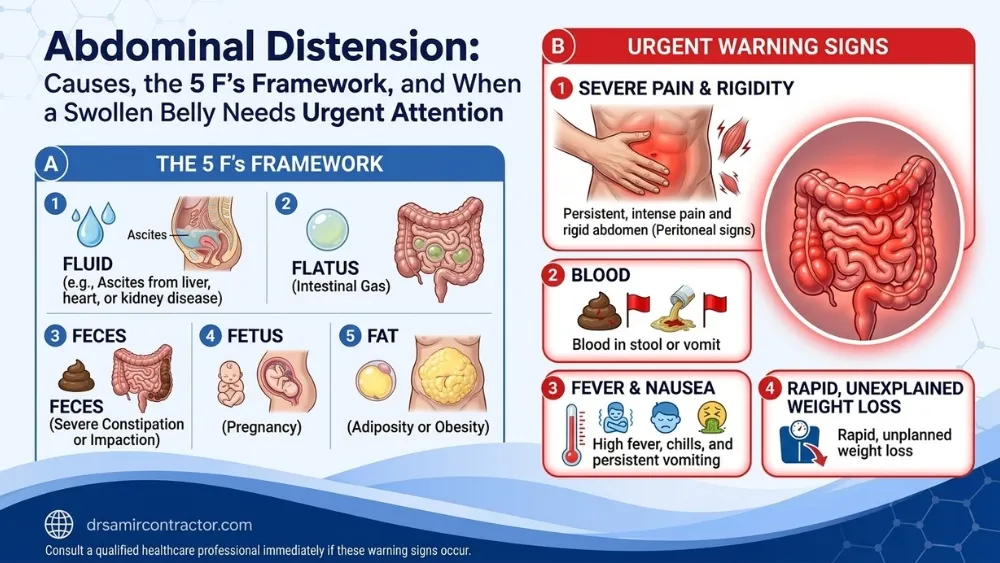
Everyone passes gas - it is a normal part of digestion. The average person passes gas 14 to 23 times a day, most of it unnoticed. But when gas becomes excessive, painful, foul-smelling, or socially embarrassing, it deserves attention. This guide covers what is normal, what causes excess gas in the Indian diet, and when you should consult a specialist.
✦ Quick Answers
Few topics in gastroenterology are as universally experienced yet as rarely discussed as gas and flatulence. Almost every patient who walks into a clinic with abdominal complaints mentions gas at some point. Yet many feel hesitant to bring it up directly because of the social embarrassment associated with passing wind.
This hesitation is understandable, but it is worth setting aside. Gas is a completely normal byproduct of digestion. Your gut bacteria produce it. You swallow it. Your body needs to expel it. The question is never whether you have gas - everyone does - but whether the amount, frequency, odour, or associated discomfort has crossed the threshold from normal physiology into something that needs investigation.
In Indian households, where meals are centred around dal, sabzi, roti, and rice - many of which are fibre-rich and gas-producing - the issue is even more common. Understanding which foods contribute, why they do so, and what practical modifications are available can make a genuine difference in daily comfort and confidence.
What Is Intestinal Gas and Where Does It Come From?
Intestinal gas is a mixture of nitrogen, oxygen, carbon dioxide, hydrogen, and sometimes methane. A small amount of hydrogen sulphide gives it the characteristic unpleasant odour. Gas enters and forms in the gut through two main pathways:
1. Swallowed Air (Aerophagia)
Every time you eat, drink, or swallow saliva, you take in small amounts of air. Most of this is expelled upward as a burp (eructation). But some passes further into the small bowel and eventually the colon. Swallowed air is mostly odourless and composed of nitrogen and oxygen. Habits that increase air swallowing include:
- Eating too fast or talking while eating
- Chewing gum or sucking on hard candy
- Drinking through a straw
- Smoking
- Anxiety or mouth-breathing
- Loose-fitting dentures
- Drinking carbonated beverages (soda, sparkling water)
2. Bacterial Fermentation in the Colon
The larger share of intestinal gas - and the share responsible for odour - comes from bacterial fermentation. When your small intestine cannot fully absorb certain carbohydrates, fibre, or sugars, they pass into the colon. The trillions of bacteria in your large intestine break them down (ferment them), producing hydrogen, methane, and carbon dioxide as byproducts. Sulphur-containing compounds produce the smell.
This is a normal and healthy process. Fibre is essential for gut health, and fermentation is how your body processes it. The volume of gas produced depends on:
- The type and amount of undigested food reaching the colon
- The composition of your gut microbiome (bacterial population)
- Transit time - how fast or slow food moves through your gut
- Specific food intolerances (lactose, fructose, gluten)
Normal vs Excessive Gas: How Do You Know?
Research consistently shows that healthy adults pass gas between 14 and 23 times per day, with a total volume of roughly 500 to 1,500 ml. Most of these episodes go unnoticed - they happen during sleep, physical activity, or in private.
| Parameter | Normal Range | Potentially Excessive |
|---|---|---|
| Frequency of passing gas | 14-23 times/day | More than 25-30 times/day |
| Total gas volume | 500-1,500 ml/day | Above 2,000 ml/day |
| Odour | Mild or absent most times | Consistently foul or sulphurous |
| Associated pain | Rare or brief | Frequent cramping or sharp pain |
| Social impact | Minimal - manageable | Avoiding social situations, work anxiety |
| Timing | Related to meals, resolves quickly | Constant or worsening pattern regardless of food |
The important point is this: having gas is not the problem. Having gas that causes pain, interferes with daily life, or comes with other symptoms is what needs attention. Many patients feel something is seriously wrong simply because they pass gas frequently. In most cases, they are well within the normal range.
Common Causes of Excessive Gas - Indian Diet Focus
The Indian diet is one of the richest in the world in terms of fibre, complex carbohydrates, and plant-based proteins. This is nutritionally excellent - but it also means more substrate for colonic fermentation and therefore more gas production. Understanding the specific triggers allows you to make targeted adjustments rather than eliminating entire food groups.
Top Gas-Producing Foods in Indian Kitchens
High-Gas Indian Foods and Why They Cause Gas
- Dal (all varieties - toor, moong, masoor, chana, urad): Contain oligosaccharides (raffinose, stachyose) that humans cannot digest; bacteria ferment them in the colon
- Rajma (kidney beans) and chole (chickpeas): Highest oligosaccharide content among all pulses - the most gas-producing foods in the Indian diet
- Cabbage, cauliflower (gobi), broccoli: Contain raffinose and sulphur compounds, producing both volume and odour
- Onion (raw and cooked): Contains fructans that are poorly absorbed in the small intestine
- Garlic: Similar fructan content to onion; also contributes to sulphurous odour
- Milk and milk products (dahi, paneer, chai with milk): Lactose intolerance affects an estimated 60-70% of Indian adults; undigested lactose ferments rapidly in the colon
- Carbonated drinks (cold drinks, soda): Directly introduce carbon dioxide gas into the stomach
- Wheat (roti, chapati): Some individuals have non-coeliac gluten or fructan sensitivity, leading to gas
- Root vegetables (potatoes, sweet potatoes, yams): High starch content; some starch resists digestion and is fermented
Aerophagia-Related Causes (Swallowed Air)
- Eating hurriedly - very common in working professionals and students in India
- Talking during meals - culturally embedded in Indian family dining
- Chewing paan, gutka, or tobacco - all increase air swallowing
- Sipping hot chai repeatedly in small sips - introduces air with each swallow
- Drinking water immediately after meals in large gulps
- Stress-related habits such as mouth breathing, teeth clenching, or sighing
Medical Causes of Excessive Gas
Common & Usually Manageable
- Lactose intolerance
- Irritable bowel syndrome (IBS)
- Functional bloating
- Constipation (slowed transit = more fermentation)
- Fructose malabsorption
- Post-antibiotic gut flora disruption
Less Common but Need Evaluation
- Small intestinal bacterial overgrowth (SIBO)
- Coeliac disease
- Chronic pancreatitis (enzyme deficiency)
- Inflammatory bowel disease (Crohn's, UC)
- Intestinal obstruction (partial)
- Colorectal malignancy (rare, with other red flags)
Gas Pain: Why Does Trapped Gas Hurt?
Gas pain can be surprisingly intense. Patients sometimes describe it as sharp, stabbing, or squeezing - raising concern about the heart, appendix, or other serious conditions. The explanation is mechanical: when a pocket of gas gets trapped in a bend of the colon (the hepatic flexure under the right ribs or the splenic flexure under the left ribs), it stretches the bowel wall, triggering pain receptors.
Gas pain tends to be:
- Colicky - comes in waves, then eases when gas passes
- Location-shifting - may move from one part of the abdomen to another
- Worse after meals, particularly gas-producing meals
- Relieved by passing gas, burping, or having a bowel movement
- Worse when sitting still for long periods (desk work, travel)
Splenic flexure syndrome - gas trapped under the left rib cage - is a specific pattern that can mimic chest pain and cause unnecessary alarm. If pain is always left-sided, relieved by passing gas, and occurs after meals, this is a likely explanation. However, any new or severe left-sided chest pain should always be evaluated to rule out cardiac causes first.
The Social and Psychological Impact of Excessive Gas
It is important to acknowledge something that medical textbooks rarely emphasize: excessive flatulence takes a real toll on quality of life. Patients describe avoiding social gatherings, dreading meetings at work, feeling anxious in closed spaces like lifts or cars, and even avoiding intimacy with their partner.
This is not a trivial concern. If gas is affecting your social life, work productivity, or emotional well-being, that alone is a valid reason to seek help - regardless of whether the underlying cause is medically "serious." Effective dietary changes, targeted treatment, and sometimes a short course of investigation can resolve the problem and restore confidence. You do not need to simply live with it.
When to Worry: Red Flags vs Reassuring Signs
Red Flags - See a Doctor Promptly
- Unintentional weight loss alongside increased gas
- Blood in stool or black tarry stools
- Persistent change in bowel habits (new diarrhoea or constipation lasting more than 4 weeks)
- Severe or worsening abdominal pain not relieved by passing gas
- Vomiting with abdominal distension (may suggest obstruction)
- Night sweats or unexplained fever
- Gas symptoms starting after age 50 with no prior history
- Family history of colorectal cancer or inflammatory bowel disease
- Progressive inability to pass gas or stool (possible obstruction - emergency)
Reassuring Signs - Likely Dietary or Functional
- Gas clearly related to specific foods (improves when food is avoided)
- No weight loss, no blood in stool, no fever
- Symptoms have been present for months or years without worsening
- Gas is worse after large or heavy meals but absent on lighter eating days
- Normal appetite and energy levels
- No family history of bowel disease or cancer
- Pain resolves completely after passing gas or having a bowel movement
How Is Excessive Gas Diagnosed?
Not everyone with excessive gas needs tests. If your symptoms are clearly linked to diet and there are no red flags, dietary modification is the first step - and often the only step needed. However, when gas is persistent, associated with other symptoms, or not improving with dietary changes, investigation is warranted.
Clinical History and Examination
A careful history is the most important diagnostic tool. Your doctor will ask about the timing of gas (after which meals, which foods), associated symptoms (pain, bloating, diarrhoea, constipation), medications, and dietary habits. A physical examination of the abdomen checks for tenderness, distension, or masses.
Investigations That May Be Recommended
| Test | What It Checks | When Recommended |
|---|---|---|
| Blood tests (CBC, thyroid, coeliac screen) | Anaemia, thyroid dysfunction, coeliac antibodies | Persistent symptoms, weight loss, diarrhoea |
| Stool tests | Infections, inflammation markers (calprotectin), fat malabsorption | Altered stool consistency, suspected IBD |
| Lactose hydrogen breath test | Lactose intolerance | Gas worsens with milk/dairy |
| Glucose/lactulose breath test | Small intestinal bacterial overgrowth (SIBO) | Persistent gas, bloating, diarrhoea despite diet changes |
| Colonoscopy | Structural colon disease, polyps, cancer, IBD | Red flags present, age over 45-50, family history |
| Upper GI Endoscopy | Upper GI causes of gas - coeliac disease, H. pylori, malabsorption | Upper abdominal symptoms, suspected malabsorption |
| Abdominal X-ray or CT scan | Gas distribution, obstruction, masses | Acute distension, suspected obstruction |
Struggling with persistent gas, pain, or embarrassing flatulence that isn't improving?
Treatment: Practical Gas Problem Solutions
Treatment depends on the underlying cause. For the majority of patients, the cause is dietary, and modifications bring significant relief. Here is a structured approach.
Step 1: Identify and Modify Dietary Triggers
The goal is not to eliminate all gas-producing foods - many of them are highly nutritious. Instead, the aim is to reduce the total gas load while maintaining a balanced diet.
Indian Food Swaps and Preparation Tips for Gas Reduction
- Soak pulses (dal, rajma, chole) overnight and discard the soaking water before cooking - this removes a significant portion of oligosaccharides
- Prefer moong dal and masoor dal over urad, chana, and toor dal - moong produces the least gas among common Indian dals
- Add hing (asafoetida) and jeera (cumin) while tempering dal - both have traditional carminative (gas-reducing) properties with some supporting evidence
- Cook cabbage and cauliflower thoroughly rather than eating them lightly cooked - prolonged cooking breaks down some gas-producing compounds
- Replace raw onion with cooked onion in salads and garnishes - cooking reduces fructan content
- Try curd (dahi) instead of milk if you suspect lactose intolerance - fermentation in curd partially digests lactose
- Avoid carbonated drinks entirely - they add gas directly and serve no nutritional purpose
- Eat fruits separately from heavy meals - combining high-fibre fruit with heavy cooked food increases fermentation
- Limit portions of gas-producing foods rather than avoiding them completely - smaller amounts produce less gas
Step 2: Modify Eating Habits
- Eat slowly and chew thoroughly - reduces air swallowing and improves digestion
- Avoid talking excessively during meals
- Do not lie down immediately after eating - wait at least 30-45 minutes
- Take a short walk (10-15 minutes) after meals - promotes gastric motility and gas passage
- Avoid drinking large amounts of water during meals - small sips are fine
- Eat at regular intervals rather than one or two very large meals
Step 3: Medications and Supplements
Medications are second-line - used when dietary changes are insufficient or while waiting for the effect of dietary modifications.
| Medication / Supplement | How It Helps | Notes |
|---|---|---|
| Simethicone (Gas-O-Fast, Gellusil) | Breaks up gas bubbles in the gut, easing passage | Safe, OTC, provides quick relief; does not reduce gas production |
| Digestive enzymes (alpha-galactosidase) | Breaks down oligosaccharides before they reach the colon | Take before meals containing beans/dal; reduces fermentation gas |
| Activated charcoal | May adsorb gas in the intestine, reducing odour | Evidence is mixed; may interfere with other medications |
| Probiotics | Rebalance gut bacteria, potentially reducing gas production | Strain-specific; not all probiotics help gas; some may worsen it initially |
| Rifaximin (prescription) | Treats SIBO - a specific cause of excessive gas | Prescribed after breath testing confirms SIBO; short course |
| Antispasmodics (Mebeverine, Dicyclomine) | Reduce colonic spasm and gas-related cramping | Useful when gas pain is the primary complaint; short-term use |
Step 4: Address the Underlying Condition
If an underlying cause is identified - lactose intolerance, SIBO, coeliac disease, chronic constipation, or IBS - treating that condition is the definitive solution. Gas reduction is a result of fixing the root cause, not just masking the symptom.
Physical Activity and Gas Relief
Regular physical activity is one of the most underrated remedies for excessive gas. Movement stimulates peristalsis (the natural contractions of the bowel), helping gas move through and out of the digestive tract more efficiently. Sedentary lifestyles - long hours at a desk, prolonged sitting during travel - are associated with increased gas retention and discomfort.
- A 10-15 minute walk after meals is the simplest and most effective measure
- Yoga postures that involve gentle abdominal compression (Pawanmuktasana, Vajrasana) have traditional use and some clinical support for gas relief
- Avoid intense exercise immediately after heavy meals - this can worsen symptoms
- Regular daily activity (30 minutes of walking, cycling, or swimming) helps normalize bowel transit over time
Aerophagia Gas vs Fermentation Gas: How They Differ
Understanding the source of your gas helps target treatment. The two types behave differently:
| Feature | Aerophagia (Swallowed Air) | Fermentation (Colonic Gas) |
|---|---|---|
| Main exit route | Upward - burping, belching | Downward - flatulence (rectal gas) |
| Odour | Usually odourless (nitrogen, oxygen) | Often malodorous (hydrogen sulphide, methane) |
| Timing | During or soon after eating/drinking | 1-4 hours after eating; may persist longer |
| Volume | Can be large per episode | Smaller per episode but more frequent |
| Key triggers | Fast eating, carbonated drinks, anxiety, gum chewing | Dal, beans, dairy, cabbage, high-fibre foods |
| Treatment focus | Behavioural - slow eating, reduce carbonation, manage anxiety | Dietary modification, enzymes, treat underlying condition |
Many patients have a combination of both. If you are burping excessively and also passing gas frequently, both pathways need attention.
Special Situations
Gas After Starting a High-Fibre Diet
If you have recently increased fibre intake - perhaps for weight loss, cholesterol, or constipation - a temporary increase in gas is expected. Your gut bacteria need 2-3 weeks to adjust to the increased fibre load. The solution is to increase fibre gradually (add one new high-fibre food every few days) rather than switching suddenly to a high-fibre diet.
Gas During Pregnancy
Progesterone slows gut motility during pregnancy, increasing fermentation time and gas production. Dietary modification and gentle physical activity are the mainstays. Medications should be discussed with the treating obstetrician.
Gas in Elderly Patients
With age, digestive enzyme production declines, transit time increases, and the gut microbiome changes. Elderly patients may notice increased gas even without dietary changes. A clinical evaluation is advisable in older patients with new-onset gas, particularly if accompanied by weight loss or altered bowel habits, to exclude colonic pathology.
Gas and Anxiety: The Gut-Brain Connection
Stress and anxiety directly affect gut motility. Anxious individuals swallow more air, have altered bowel transit, and may perceive normal amounts of gas as excessive. When gas is clearly linked to stress, addressing the anxiety through behavioural techniques, exercise, or professional help is as important as dietary changes.
What Should You Do? A Step-by-Step Decision Guide
Follow this pathway based on your symptoms:
- 1️⃣Gas clearly linked to specific foods, no red flags Start with dietary modification: soak pulses, reduce trigger foods, eat slowly, add hing/jeera. Try for 2-3 weeks.
- 2️⃣Dietary changes not helping after 3-4 weeks See a doctor. Basic blood tests, stool tests, and a lactose breath test may clarify the cause.
- 3️⃣Gas with diarrhoea, constipation, or bloating Clinical evaluation needed. May indicate IBS, SIBO, food intolerance, or another functional disorder.
- 4️⃣Any red flag present (weight loss, blood in stool, severe pain) Prompt specialist evaluation. Colonoscopy or upper GI endoscopy may be needed.
Gas and Flatulence in India - What Makes It Different Here
Why Excessive Gas Is Especially Common in Indian Patients
- Dal-centric diet: Pulses are the primary protein source for millions of Indians, and all varieties produce significant colonic gas. Rajma-chawal and chole-bhature, while beloved, are among the highest gas-producing combinations in any cuisine
- High lactose intolerance prevalence: An estimated 60-70% of Indian adults have some degree of lactose intolerance, often undiagnosed. Daily chai with milk, paneer, and dahi all contribute to fermentation gas in these individuals
- Fibre-rich vegetarian diets: India has one of the world's largest vegetarian populations. While plant-based diets are excellent for health, they inherently produce more gas than meat-heavy diets
- Eating habits and social dining: Talking during meals, eating quickly during work breaks, and large family meals with multiple courses all increase aerophagia
- Carbonated drink consumption: Rising consumption of sodas and cold drinks, particularly in younger populations, adds a direct gas load
- Late heavy dinners: The cultural pattern of eating the heaviest meal at night - when gut motility is slowest - increases overnight gas accumulation and morning discomfort
- Self-medication culture: Many patients take antacids or home remedies for gas for months or years without proper evaluation, missing underlying conditions like SIBO or coeliac disease
- Reluctance to discuss: Social taboo around flatulence means patients delay seeking help, often arriving at the doctor only when pain or distension becomes intolerable
Desi Patient Questions (Gujarati / Hinglish)
Joh gas varsoh thi chhe ane weight loss, blood, ya fever nathi to mostly dietary cause hoy chhe. Pan ek vaakhat doctor ne batavo - basic check-up karvi levo joiye ke koi underlying issue nathi.
Band karva ni zarur nathi. Rajma ane chole ne raatbhar palaadi ne rakhjo, pachi paani feki do, ane navu paani maa raandho. Hing ane jeeru vaghaar maa nakhjo. Portion nanu rakhjo. Aa changes thi gas ghano orcho thay chhe.
Bahut se Indian logon mein lactose intolerance hota hai. Doodh ki jagah dahi try kijiye - usme lactose kam hota hai. Lactose-free milk bhi available hai. Agar dahi se bhi gas ho to doctor se ek baar check karaiye.
Daily gas medicine leva chhataan farak na pade to dietary changes jaruri chhe. Ane ek vaakhat doctor pase jao - lactose intolerance, SIBO, ya IBS nu testing karvi shakay chhe. Root cause fix thase to medicine ni zarur j nahi padse.
Yeh bahut common concern hai. Pehle apna diet review kijiye - trigger foods identify karke reduce kijiye. Subah walk kijiye, meals slowly khaiye. Agar phir bhi problem hai to doctor se miliye - testing ke baad targeted treatment se 80-90% logon ko significant improvement milti hai.
Gas sathe pain common chhe ane mostly dietary cause hoy chhe. Pan joh weight loss, blood in stool, ya bowel habit change hoy, ya umar 45-50 thi upar hoy, to doctor colonoscopy recommend kari shake chhe. Red flags vagar mostly dietary treatment thi manage thay chhe.
Frequently Asked Questions
Related Pages
Get Expert Help for Gas and Digestive Problems in Vadodara
Persistent or embarrassing gas that is not responding to home measures deserves professional evaluation. Dr Samir Contractor provides thorough GI assessment - from clinical consultation to endoscopy and targeted treatment - at Sterling Hospital, Vadodara.
Medical Disclaimer: This page is for patient education and general awareness. It should not replace a medical consultation, particularly if symptoms are persistent, worsening, or associated with warning signs. Please consult a qualified medical professional for diagnosis and treatment.