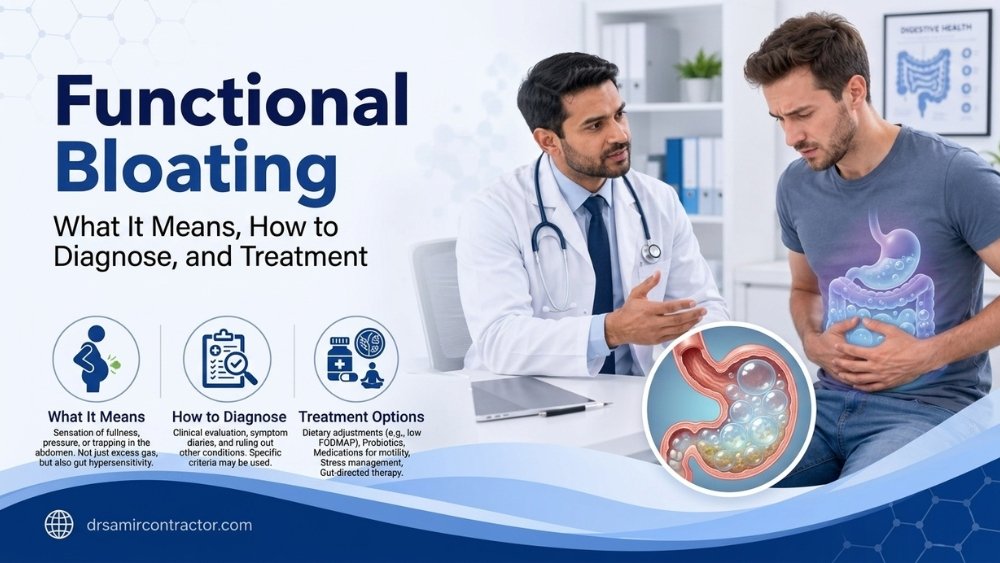
Functional bloating is a formally recognised gastrointestinal condition in which you experience persistent, troublesome bloating - yet every test comes back normal. It is not imaginary. The problem lies in how your gut nerves and brain communicate, and it responds well to targeted treatment once correctly identified.
✦ Quick Answers
What Is Functional Bloating?
Functional bloating is one of the most common yet most misunderstood conditions I encounter at Sterling Hospital, Vadodara. Patients typically arrive after months - sometimes years - of investigations. They have had blood tests, ultrasounds, endoscopies, and sometimes even CT scans. Every report comes back normal. Yet their bloating is real, persistent, and genuinely distressing.
The term functional in medicine means that the organ in question - here, the gastrointestinal tract - has no visible structural damage, no tumour, no ulcer, no inflammation, and no biochemical abnormality. Instead, the problem lies in how the gut works: how it processes signals, how its nerves communicate with the brain, and how its muscles coordinate movement. Think of it as a software issue rather than a hardware defect.
Functional bloating is formally classified under the Rome IV system, the international standard for diagnosing functional gastrointestinal disorders. It is not a diagnosis you give when you cannot find anything - it is a specific, evidence-based diagnosis with defined criteria, understood mechanisms, and effective treatments.
The single most important thing I tell patients with functional bloating is this: functional does not mean imaginary. Your symptoms are real. The science behind them is well-established. And treatment works.
Rome IV Diagnostic Criteria for Functional Bloating
The Rome IV classification system, updated most recently in 2016 and widely used in gastroenterology worldwide, provides clear diagnostic criteria for functional abdominal bloating. All four of the following must be met:
- Recurrent bloating or distension occurring on average at least one day per week.
- Bloating or distension is the predominant symptom - it is not secondary to pain or altered bowel habits.
- There are insufficient criteria to diagnose irritable bowel syndrome (IBS), functional constipation, functional diarrhoea, or functional dyspepsia.
- Symptoms have been present for the last three months, with symptom onset at least six months before diagnosis.
The second criterion is critical and is what separates functional bloating from IBS. In IBS, abdominal pain related to defecation is the dominant feature, and bloating accompanies it. In functional bloating, the bloating itself is what bothers the patient most - with little or no significant pain and no major change in stool pattern.
| Feature | Functional Bloating | IBS with Bloating | Functional Dyspepsia |
|---|---|---|---|
| Predominant symptom | Bloating or distension | Abdominal pain linked to defecation | Upper abdominal fullness, early satiety |
| Bowel habit changes | Absent or minimal | Present (constipation, diarrhoea, or mixed) | Usually absent |
| Pain pattern | Not predominant | Central; improves or worsens with bowel movements | Epigastric; meal-related |
| Rome IV category | C1 - Functional Abdominal Bloating/Distension | C2 - Irritable Bowel Syndrome | B1 - Functional Dyspepsia |
| Overlap | May coexist with IBS or dyspepsia over time | Bloating present in 80%+ of IBS patients | Bloating common but not predominant |
Why Does Functional Bloating Happen? The Science Behind It
Functional bloating is not caused by one single factor. Research over the past two decades has identified several overlapping mechanisms that, together, explain why some people experience persistent bloating despite normal test results.
1. Visceral Hypersensitivity
This is arguably the most important mechanism. In patients with functional bloating, the nerves lining the gut are hypersensitive. A normal amount of gas - the same volume that a person without the condition would not even notice - triggers a disproportionate sensation of fullness, pressure, or bloating. Studies using barostat devices (which inflate a balloon inside the intestine at measured pressures) have confirmed that patients with functional bloating report discomfort at significantly lower pressures than healthy controls.
In simple terms: the gas is not excessive. Your gut simply feels it more intensely than it should.
2. Altered Gut-Brain Axis Communication
The gut and the brain are in constant two-way communication through a network called the gut-brain axis. This involves the vagus nerve, the enteric nervous system (often called the "second brain" in the gut wall), the immune system, and the gut microbiome. In functional bloating, this communication becomes dysregulated. The brain receives amplified signals from the gut and interprets normal digestive activity as abnormal.
This is why stress, anxiety, and sleep deprivation so often worsen functional bloating - they alter brain-to-gut signalling, which in turn increases gut sensitivity. It is also why treatments that target the brain side of the axis (neuromodulators, cognitive behavioural therapy) are genuinely effective for a gut condition.
3. Abdominophrenic Dyssynergia
This is a fascinating and relatively recently described mechanism. In healthy individuals, when gas accumulates in the intestine after a meal, the diaphragm relaxes upward and the anterior abdominal wall muscles relax outward to accommodate the gas without visible distension. In many patients with functional bloating, the opposite happens: the diaphragm contracts downward and the abdominal muscles tighten, pushing the abdominal contents forward and creating visible distension even when gas volumes are normal.
This abnormal reflex - where the muscles of the abdomen and diaphragm work in opposition - has been demonstrated in controlled studies using CT imaging and electromyography. It explains why some patients with functional bloating show genuine, measurable distension despite having normal amounts of intestinal gas.
4. Gut Microbiome Alterations
Emerging research shows that the composition of gut bacteria differs in patients with functional bloating compared to healthy individuals. Certain bacterial populations produce more gas (hydrogen, methane, hydrogen sulphide) during fermentation, while others affect gut motility and the integrity of the intestinal lining. Microbiome-directed treatments, including specific probiotics and the antibiotic rifaximin, show benefit in some patients.
5. Subtle Motility Disturbances
While functional bloating is, by definition, not caused by a structural problem, subtle disturbances in how the gut moves food and gas along have been documented. Impaired gas transit - where gas moves through the intestine more slowly than normal - can cause it to pool in certain segments, creating localized bloating. This is distinct from the major motility disorders but contributes to the overall symptom burden.
Struggling with unexplained bloating?
Get a
structured evaluation from Dr. Samir Contractor
at Sterling Hospital, Vadodara.
How Is Functional Bloating Diagnosed?
Functional bloating is a diagnosis of exclusion combined with pattern recognition. This means two things must happen: (1) organic causes of bloating must be ruled out through appropriate testing, and (2) the symptom pattern must fit the Rome IV criteria described above.
Step 1: Detailed Clinical History
A careful history is the most valuable diagnostic tool. I ask about the onset, duration, and pattern of bloating. Does it worsen after meals? Is it better in the morning and worse by evening? Is there associated pain, and if so, is the pain related to bowel movements? Are there red-flag symptoms? What is the patient's diet, stress level, sleep pattern, and medication history?
Patients with functional bloating typically describe bloating that has been present for many months, worsens through the day, is somewhat related to meals but not to any specific food group, and is not accompanied by significant pain or bowel habit changes. This pattern, when consistent, strongly suggests the diagnosis even before investigations begin.
Step 2: Targeted Investigations to Exclude Organic Disease
The investigations I recommend depend on the clinical picture, the patient's age, and the presence or absence of alarm features. Not every patient needs every test.
| Investigation | What It Rules Out | When I Recommend It |
|---|---|---|
| Blood tests (CBC, ESR/CRP, liver function, thyroid, celiac serology) | Anaemia, inflammation, celiac disease, hypothyroidism, liver disease | All patients with chronic bloating |
| Ultrasound abdomen | Gallstones, ascites, ovarian pathology, liver disease | All patients; essential first-line imaging |
| Upper GI endoscopy | Celiac disease, H. pylori gastritis, peptic ulcer, gastroparesis | Patients with upper abdominal symptoms, weight loss, or age >45 with new symptoms |
| Colonoscopy | Inflammatory bowel disease, colorectal neoplasia, chronic colitis | Patients with red-flag symptoms, age >45, or family history of colorectal disease |
| Breath tests (hydrogen/methane) | Lactose intolerance, fructose malabsorption, SIBO | When diet history suggests intolerance or when SIBO is clinically suspected |
| Stool tests (calprotectin, ova and parasites) | Inflammatory bowel disease, parasitic infection | When diarrhoea is present or in younger patients with atypical features |
Step 3: Applying the Rome IV Criteria
Once organic causes have been excluded and the symptom pattern fits - recurrent bloating as the predominant symptom, present for at least three months with onset six months prior, without qualifying for IBS or functional dyspepsia - the diagnosis of functional bloating is made with confidence. It is not a "we cannot find anything" label. It is a specific clinical entity with specific criteria.
Red-Flag Symptoms That Require Urgent Evaluation
Functional bloating is benign. However, the following symptoms suggest an organic cause and need prompt investigation:
- Unintentional weight loss (more than 5% of body weight in 6 months)
- Progressive abdominal distension that does not fluctuate
- Blood in stool or black tarry stools
- Persistent vomiting or inability to keep food down
- New-onset bloating after age 50 with no prior history
- Jaundice (yellowing of eyes or skin)
- Palpable abdominal mass
- Family history of ovarian cancer, colorectal cancer, or inflammatory bowel disease
- Fever or night sweats accompanying the bloating
- Inability to pass gas or stool (suggests obstruction)
If any of these apply to you, do not assume functional bloating. Seek evaluation with a qualified specialist.
Reassurance: What Functional Bloating Is Not
- It is not cancer. By definition, structural disease has been excluded.
- It is not dangerous. Functional bloating does not damage the gut or progress to a serious condition.
- It is not imaginary. Visceral hypersensitivity and abdominophrenic dyssynergia are objectively measurable.
- It is not your fault. Gut-brain dysregulation is not caused by weakness, overthinking, or poor habits.
- It is treatable. Multiple evidence-based therapies exist and work well in combination.
Treatment of Functional Bloating
Treatment is multimodal - meaning that the best results come from combining dietary, pharmacological, and behavioural approaches rather than relying on any single intervention. Here is the structured approach I follow with patients at Sterling Hospital.
1. Dietary Modification: The Low-FODMAP Approach
FODMAPs (Fermentable Oligosaccharides, Disaccharides, Monosaccharides, and Polyols) are short-chain carbohydrates that are poorly absorbed in the small intestine and rapidly fermented by gut bacteria. A low-FODMAP diet, developed at Monash University, is the best-studied dietary intervention for functional bloating.
The diet works in three phases:
- Elimination phase (2 to 6 weeks): Remove high-FODMAP foods - wheat, onion, garlic, legumes (rajma, chole, urad dal), milk, cauliflower, apple, mango, honey, and sugar-free gums.
- Reintroduction phase (6 to 8 weeks): Systematically reintroduce one FODMAP group at a time to identify your specific triggers.
- Personalisation phase (long-term): Follow a modified diet that avoids only your confirmed triggers while keeping everything else.
In my Indian patients, the most common high-FODMAP triggers are whole legumes (rajma, chole, chana), raw onion and garlic in large quantities, milk and paneer in lactose-sensitive individuals, and cauliflower. A dietitian experienced with Indian diets is invaluable during this process.
2. Antispasmodic Medications
Antispasmodics reduce gut smooth muscle contractions and can relieve the crampy, tight sensation that accompanies bloating. Commonly used agents include mebeverine, dicyclomine, hyoscine butylbromide, and peppermint oil capsules (enteric-coated). These are generally well-tolerated and can be used on an as-needed basis or as a short course during flare-ups.
3. Prokinetic Agents
Prokinetics improve gut motility and gas transit. In patients whose bloating worsens after meals and is accompanied by a sense of food "sitting" in the stomach, prokinetics such as domperidone, itopride, or prucalopride (for associated constipation) can be helpful. They are particularly useful when functional bloating overlaps with features of functional dyspepsia.
4. Neuromodulators
This is where treatment for functional bloating differs most from treatment for ordinary digestive complaints. Because visceral hypersensitivity and altered gut-brain signalling are central to the condition, medications that modulate nerve signalling can be highly effective.
- Low-dose tricyclic antidepressants (amitriptyline 10 to 25 mg at night): At these low doses, far below antidepressant doses, tricyclics reduce visceral pain signalling and improve gut motility. They are not prescribed for depression - they are prescribed because they act directly on gut nerve sensitivity.
- SSRIs or SNRIs (e.g., escitalopram, duloxetine): Used when anxiety or psychological distress significantly amplifies symptoms, or when tricyclics are not tolerated.
I explain to every patient that these medications are being used as gut neuromodulators, not as psychiatric drugs. This distinction matters enormously for treatment acceptance and compliance.
5. Gut-Directed Cognitive Behavioural Therapy (CBT) and Hypnotherapy
Gut-directed CBT is a structured psychological intervention that specifically targets the gut-brain axis. It teaches patients to recognise and modify the thought patterns, behaviours, and stress responses that amplify gut symptoms. Multiple randomised controlled trials have shown that gut-directed CBT significantly reduces bloating severity and improves quality of life in patients with functional GI disorders.
Gut-directed hypnotherapy, though less widely available in India, has also shown strong evidence in international trials. Both approaches work by retraining the brain's response to gut signals.
6. Probiotics and Rifaximin
Specific probiotic strains - particularly Bifidobacterium infantis 35624 and certain multi-strain formulations - have shown modest benefit in reducing bloating in clinical trials. Rifaximin, a non-absorbable antibiotic, can reduce bloating by modifying the gut microbiome and has been shown to be effective in patients with functional bloating, particularly those with features suggestive of SIBO overlap.
7. Lifestyle Measures
- Regular physical activity: 30 minutes of moderate exercise (walking, cycling, yoga) daily improves gut motility and reduces gas retention.
- Stress management: Deep breathing exercises, meditation, and adequate sleep directly influence gut-brain axis function.
- Eating habits: Eat slowly, chew thoroughly, avoid talking while eating (reduces air swallowing), and eat smaller, more frequent meals rather than two or three large ones.
- Avoid triggers: Carbonated drinks, sugar-free chewing gum (contains polyols), and excessive caffeine can worsen bloating.
Treatment Strategy Summary
| Intervention | Target Mechanism | Expected Timeline |
|---|---|---|
| Low-FODMAP diet | Reduces fermentable substrate | 2 to 6 weeks for initial response |
| Antispasmodics | Smooth muscle relaxation | Days to 1 week |
| Prokinetics | Improved gas transit and motility | 1 to 2 weeks |
| Neuromodulators | Visceral hypersensitivity, gut-brain axis | 4 to 8 weeks for full effect |
| Gut-directed CBT | Brain-to-gut signalling, stress response | 8 to 12 weeks (course duration) |
| Probiotics / Rifaximin | Microbiome modulation | 2 to 4 weeks |
| Exercise and lifestyle | Motility, stress, overall regulation | Ongoing; benefits within 2 weeks |
Functional Bloating and Overlap Conditions
In clinical practice, functional bloating rarely exists in complete isolation. It commonly overlaps with other functional GI conditions:
- IBS overlap: Over time, some patients with functional bloating develop features that meet IBS criteria, or vice versa. The conditions share underlying mechanisms (visceral hypersensitivity, gut-brain dysregulation) and treatment approaches overlap significantly.
- Functional dyspepsia overlap: Upper abdominal bloating with early fullness after meals can straddle the boundary between functional bloating and chronic dyspepsia. When both are present, treatment targets both conditions.
- Constipation-related bloating: Some patients with functional bloating also have slow-transit constipation that contributes to their symptoms. When constipation is present, addressing it - through fibre, hydration, and prokinetics - often reduces the bloating. See our page on constipation-related bloating for more detail.
Living with Functional Bloating: Practical Advice
Functional bloating is a chronic condition that waxes and wanes. Here is what I tell my patients about managing it in daily life:
- Know your triggers. Keep a food and symptom diary for two to four weeks. Patterns almost always emerge.
- Expect good days and bad days. Stress, travel, sleep disruption, and dietary lapses can trigger flares. This is normal - not a sign of treatment failure.
- Stay physically active. Regular walking after meals is one of the simplest and most effective measures.
- Communicate with your doctor. If your current treatment is not working adequately, say so. There are multiple treatment options, and the right combination is different for every patient.
- Avoid doctor-shopping and unnecessary repeat investigations. Once organic disease has been excluded, repeating the same tests adds cost and anxiety without changing the diagnosis.
- Take the diagnosis seriously. Functional bloating has defined criteria, understood mechanisms, and proven treatments. Treat it like any other medical condition - because it is one.
Functional Bloating in India: The Clinical Reality
Functional GI disorders are extremely common in India. A large multi-centre study found that functional bloating and IBS together affect an estimated 15 to 20 percent of the Indian adult population. Yet awareness remains low, both among patients and among many general practitioners.
Several factors make functional bloating particularly challenging in the Indian context:
- The traditional Indian diet is inherently high in FODMAPs. Legumes (dal, rajma, chole), wheat, onion, garlic, and milk products are staples. Eliminating all of these is neither practical nor desirable - the low-FODMAP approach must be adapted to Indian dietary patterns.
- The "gas" problem is often dismissed. Patients are told to "eat less spicy food" or given antacids and enzyme tablets without proper evaluation. Many patients self-medicate for years before seeking specialist opinion.
- Stigma around functional diagnoses. Many patients feel that being told their condition is "functional" means the doctor thinks they are exaggerating. This perception is a barrier to treatment acceptance.
- Limited access to gut-directed psychological therapy. Gut-directed CBT and hypnotherapy, which have strong evidence in functional GI disorders, are not widely available in Indian cities. Awareness of these treatments is growing, but access remains limited outside major metropolitan centres.
- Neuromodulator acceptance. Prescribing low-dose amitriptyline for a gut condition often alarms Indian patients who look up the drug and find it classified as an antidepressant. Careful counselling about the gut-specific mechanism is essential.
Despite these challenges, functional bloating is highly treatable in the Indian setting. Dietary modification adapted to Indian cuisine, antispasmodics, prokinetics, and - when needed - neuromodulators and structured stress management together provide excellent symptom control for most patients.
તમારી ભાષામાં સવાલો · Questions in Gujarati / Hinglish
Aa functional bloating chhe - jema pet ni nerves vadhare sensitive hoy chhe ane normal gas ne pan bahuj strongly feel kare chhe. Reports ma koi kharabi nathi karanke structure normal chhe, pan function - yane kem kaam kare chhe e - alag chhe. Aa real condition chhe ane sari treatment available chhe.
IBS ma main problem pet no dard hoy chhe ane stool sathe related hoy chhe - constipation ke loose motion sathe. Functional bloating ma fakt bloating j main complaint hoy chhe - dard ane stool problem ghanakh ochhu ke nathi hotu. Doctor Rome IV criteria thi distinguish kare chhe.
Shruaat ma haa - 2 thi 6 week mate high-FODMAP foods band karvana. Pan pachhithi ek ek food fari thi try karine check karo ke kyu food tumne trigger kare chhe. Ghanakh patients ne moong dal ane toor dal chaltu hoy chhe. Permanent ma badha legumes chhodvana nathi - fakt tumara specific triggers.
Aa dava high dose ma depression mate vapray chhe, pan bahuj low dose ma (10-25 mg) gut ni nerves ni sensitivity ghataadva mate vapray chhe. Functional bloating ma gut nerves ne calm karva mate aa internationally recommended chhe. Depression sathe koi leva-deva nathi aa dose ma.
Haa, aa functional bloating nu classic pattern chhe. Savare pet khali hoy chhe ane nerves shant hoy chhe. Divas ma jyem jyem khaiye tyem fermentation vadhay chhe, gas bane chhe, ane saanjy sudhi bloating peak par hoy chhe. Raate suta pachhi fari set thai jay chhe.
Haa, bilkul. Gut ane brain vachchhe direct connection chhe - gut-brain axis. Jyare stress vadhay chhe tyare brain gut ne vadhare sensitive banave chhe. Yoga, meditation, saras neend, ane CBT therapy thi aa signalling improve thay chhe ane bloating genuinely ochhu thay chhe. Science proved chhe.
Frequently Asked Questions
Related Pages
Book your consultation with Dr. Samir
Contractor
Sterling Hospital, Vadodara