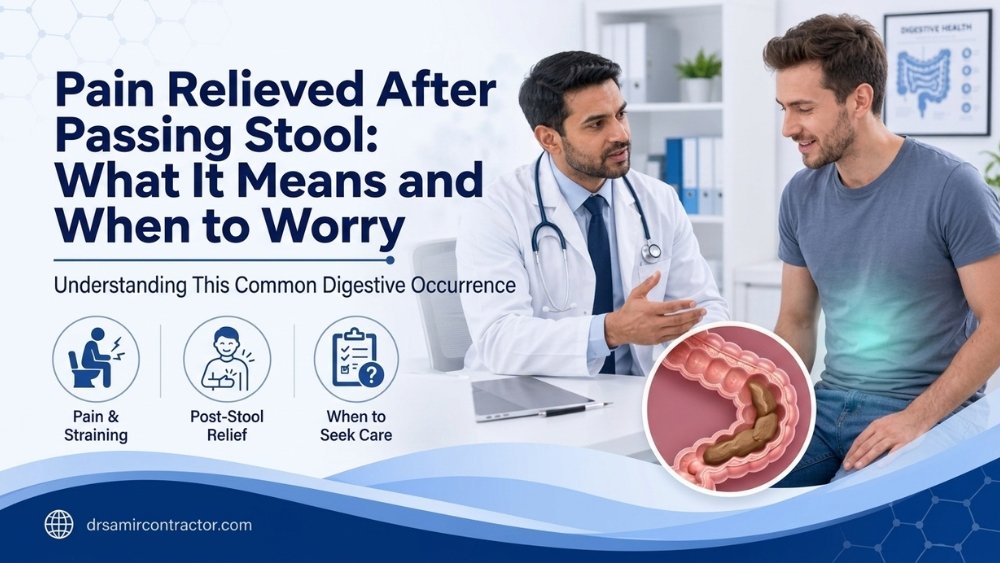
Abdominal pain or cramping that consistently improves after you pass stool is one of the most recognisable patterns in gastroenterology. This symptom is a hallmark of irritable bowel syndrome (IBS) and forms a core diagnostic criterion under the Rome IV classification. While the pattern is usually a sign of a functional bowel disorder rather than a dangerous condition, certain red flags warrant investigation. This page explains why this pain-relief pattern occurs, what it means diagnostically, and when you should see a doctor.
✦ Quick Answers
Understanding Pain That Resolves After a Bowel Movement
One of the most common questions patients ask is: "Why does my stomach hurt before I go to the bathroom, and then feel completely fine afterwards?" This is not a coincidence, and it is not something you are imagining. This specific pattern - abdominal cramping or pain that builds, peaks, and then resolves with the passage of stool - has a clear physiological explanation and important diagnostic significance.
The large intestine (colon) moves its contents forward through rhythmic muscular contractions called peristalsis. When stool or gas accumulates, it stretches the bowel wall. The intestinal wall is lined with visceral nerve endings that detect stretch. In a normal gut, moderate stretch produces the sensation of "needing to go." In a sensitised gut - as occurs in IBS - even normal amounts of stretch cause significant pain or cramping. Once you pass stool and the colon partially empties, the wall relaxes, the stretch signals stop, and the pain resolves.
This mechanism explains why the pain often builds gradually, sometimes reaching a peak just before the bowel movement, and why relief can be almost immediate once stool has passed. The relationship between the pain and defecation is so consistent and characteristic that the Rome Foundation - the international body responsible for classifying functional gastrointestinal disorders - made it the first diagnostic criterion for IBS.
The Rome IV Criteria for IBS
The Rome IV criteria, published in 2016, are the internationally accepted standard for diagnosing irritable bowel syndrome. Under these criteria, IBS is defined as:
1. Related to defecation (pain improves or worsens with bowel movement)
2. Associated with a change in frequency of stool
3. Associated with a change in form (appearance) of stool
Symptom onset must be at least 6 months before diagnosis.
Notice that criterion number one is "related to defecation." This is precisely the symptom described on this page - pain that improves after passing stool. It is so central to IBS that many gastroenterologists consider this single feature highly suggestive even before the other criteria are formally assessed.
IBS Subtypes
Based on the predominant stool pattern, IBS is classified into four subtypes:
| Subtype | Predominant Pattern | Typical Presentation |
|---|---|---|
| IBS-C (Constipation) | Hard or lumpy stools in >25% of bowel movements | Cramping before stool, straining, incomplete evacuation, pain relieved once stool is finally passed |
| IBS-D (Diarrhoea) | Loose or watery stools in >25% of bowel movements | Urgency, cramping before loose stool, rapid relief after passing stool |
| IBS-M (Mixed) | Both hard and loose stools | Alternating constipation and diarrhoea, pain patterns variable but still linked to defecation |
| IBS-U (Unclassified) | Does not fit above categories | Meets pain criteria but stool form does not fit neatly into C, D, or M |
In all four subtypes, the core feature remains the same: abdominal pain that is related to defecation. Whether the stool is hard or loose, the fundamental mechanism of colonic distension causing pain and defecation providing relief remains consistent.
Causes of Pain Relieved by Defecation
While IBS is by far the most common cause, other conditions can produce a similar pattern. It is important to understand both functional (non-structural) and organic (structural) causes.
Functional Causes (Most Common)
- IBS (all subtypes) - visceral hypersensitivity causes exaggerated pain response to normal colonic distension
- Functional bloating - trapped gas distends the colon, causing pain that resolves when gas or stool passes
- Functional constipation - accumulated hard stool causes colonic stretch and cramping
- Stress-related gut dysfunction - the brain-gut axis amplifies pain signals during stress; defecation provides temporary reset
- Dietary triggers - high-FODMAP foods cause fermentation, gas production, distension, and pain
Organic Causes (Need Evaluation)
- Mild inflammatory bowel disease (IBD) - early Crohn's or ulcerative colitis can initially mimic IBS patterns
- Colorectal polyps or early cancer - partial obstruction can cause cramping relieved by stool passage
- Diverticular disease - sigmoid diverticula cause left-sided cramping, sometimes relieved by defecation
- Endometriosis (bowel involvement) - cyclical pain in women, sometimes related to bowel function
- Chronic mesenteric ischaemia - rare; pain with eating, sometimes with altered bowel habits
How to Distinguish IBS Pain from Organic Causes
The following table helps differentiate the typical IBS pain pattern from pain patterns that suggest an organic or structural cause requiring investigation.
| Feature | IBS Pattern (Functional) | Organic Pattern (Needs Investigation) |
|---|---|---|
| Pain timing | Builds before stool, resolves after | May persist after bowel movement or occur independent of bowel habits |
| Blood in stool | Absent | Present (red or dark blood) |
| Weight loss | Absent | Unintentional weight loss present |
| Fever | Absent | May be present (IBD, infection) |
| Night-time symptoms | Very rare - IBS pain seldom wakes you from sleep | Pain that wakes you at night suggests organic cause |
| Age of onset | Usually under 45; longstanding pattern | New onset above 45 or progressive worsening |
| Family history | IBS may run in families | Colorectal cancer or IBD in first-degree relatives raises concern |
| Lab results | Normal blood tests, normal inflammatory markers | Anaemia, elevated CRP/ESR, abnormal calprotectin |
Red Flags - When to Seek Immediate Evaluation
See a doctor urgently if abdominal pain is associated with:
- Blood in stool - whether fresh red blood or dark/black stools (melena)
- Unintentional weight loss - losing weight without trying, even a few kilograms over weeks
- Pain that wakes you from sleep - IBS does not typically cause nocturnal pain
- Fever with abdominal pain - suggests infection or inflammation
- Progressive worsening - pain becoming more severe or frequent over weeks to months
- New onset after age 45 - first-time symptoms in middle age or older warrant colonoscopy
- Family history of colorectal cancer or IBD - increases the need for screening
- Anaemia - found on blood tests; suggests chronic blood loss even if not visible
- Pain that does NOT resolve with defecation - persistent, constant pain is not an IBS feature
Reassuring Features - Signs This Is Likely Functional
- Pain consistently improves or disappears after a bowel movement
- Symptoms have been present for months or years without progressive worsening
- No blood in stool, no weight loss, no fever
- Symptoms worsen with stress, certain foods, or before exams/meetings
- You have been previously evaluated with normal results
- Pain does not occur during sleep
- Bloating and gas accompany the pain and resolve together with defecation
- Age under 45 with no alarming family history
How This Symptom Is Evaluated
When you visit a gastroenterologist or GI surgeon with this complaint, the evaluation typically follows a structured approach:
Step 1: Detailed Clinical History
The doctor will ask about the character of pain (crampy, dull, sharp), its location (lower abdomen, left side, diffuse), relationship to eating and bowel movements, stool consistency (using the Bristol Stool Chart), associated symptoms (bloating, gas, nausea), and any red-flag features. The pattern of pain consistently resolving after stool is itself a strong diagnostic clue.
Step 2: Physical Examination
Abdominal examination in IBS typically shows a soft abdomen, sometimes with mild tenderness over the descending or sigmoid colon, but no guarding, rigidity, or palpable masses. A per-rectal examination may be performed if rectal pathology is suspected.
Step 3: Targeted Investigations (When Indicated)
- Blood tests: Complete blood count (to check for anaemia), ESR/CRP (inflammatory markers), thyroid function, coeliac screening (anti-tTG antibodies)
- Stool tests: Faecal calprotectin (to distinguish IBS from inflammatory bowel disease - normal in IBS, elevated in IBD)
- Colonoscopy: Recommended when red flags are present, age is above 45, there is a family history of colorectal cancer, or the symptom pattern is atypical. A colonoscopy directly visualises the colon and can identify polyps, cancer, inflammatory bowel disease, or diverticular disease
- Abdominal ultrasound or CT scan: If non-colonic pathology is suspected
Treatment: Managing Pain Related to Defecation
Once a functional bowel disorder (IBS) is confirmed, treatment focuses on reducing pain episodes, regulating bowel function, and addressing triggers.
1. Dietary Modification
- Increase soluble fibre: Psyllium husk (isabgol), oats, and fruits like banana and papaya add bulk and regulate stool consistency without excessive gas production
- Low-FODMAP trial: FODMAPs (fermentable oligosaccharides, disaccharides, monosaccharides, and polyols) are short-chain carbohydrates that are poorly absorbed and cause gas, bloating, and pain in IBS patients. A 4-6 week elimination trial under dietetic guidance can identify personal triggers
- Common Indian dietary triggers: Rajma (kidney beans), chole (chickpeas), raw onion, cauliflower, cabbage, dairy (especially if lactose intolerant), carbonated drinks, and excess wheat (in some patients)
- Regular meal timing: Eating at consistent times regulates the gastrocolic reflex and promotes predictable bowel patterns
- Adequate hydration: 2-3 litres of water daily supports stool consistency
2. Medications
- Antispasmodics: Mebeverine, dicyclomine, or hyoscine reduce colonic spasm and cramping - taken before meals or when cramping begins
- Peppermint oil capsules: Enteric-coated peppermint oil relaxes smooth muscle in the colon and reduces IBS pain in clinical studies
- For IBS-C: Osmotic laxatives (lactulose, polyethylene glycol) or lubiprostone/linaclotide for refractory cases
- For IBS-D: Loperamide for urgency; rifaximin for bloating-predominant IBS-D
- Probiotics: Certain strains (Bifidobacterium infantis, Lactobacillus plantarum) show modest benefit in IBS - not all probiotics are equal
3. Lifestyle and Stress Management
- Regular physical activity: 30 minutes of moderate exercise (walking, cycling, yoga) daily improves gut motility and reduces IBS symptom severity
- Stress reduction: The brain-gut axis means that psychological stress directly amplifies visceral pain. Meditation, deep breathing, and cognitive behavioural therapy (CBT) have proven benefit in IBS management
- Sleep hygiene: Poor sleep worsens IBS symptoms; maintaining 7-8 hours of consistent sleep is important
- Toilet routine: Establishing a consistent time for bowel movements (typically after breakfast) trains the colon and reduces unpredictable cramp episodes
4. When to Consider Colonoscopy
A colonoscopy is not required in every patient with this symptom pattern. It is indicated when red flags are present, when the patient is above 45 years, when symptoms are worsening or changing character, when there is a family history of colorectal cancer, or when initial treatments fail to provide improvement. The colonoscopy provides definitive structural assessment and is the gold standard for excluding organic bowel disease.
Why Does Stress Make This Worse?
Many patients notice that their cramping-before-stool pattern intensifies during periods of emotional stress, before important events (exams, meetings, travel), or during anxiety episodes. This is not a psychological weakness - it is a well-documented physiological phenomenon.
The gut and the brain communicate through the vagus nerve and a network of neurotransmitters called the enteric nervous system (sometimes called the "second brain"). Stress hormones - particularly cortisol and corticotropin-releasing factor (CRF) - increase colonic motility, amplify visceral sensitivity, and alter the gut microbiome. The result is more frequent, more intense colonic contractions, lower pain thresholds, and increased cramping before bowel movements.
This brain-gut connection also explains why IBS symptoms often improve during vacations, relaxed periods, or after starting stress-management techniques. Addressing stress is therefore not optional - it is a core component of treatment, as effective as dietary modification in many patients.
Pain Before Stool vs. Pain During Stool vs. Pain After Stool
It is important to distinguish where in the defecation process the pain occurs, as each pattern points to different conditions:
| Timing | Typical Causes | Key Distinguishing Feature |
|---|---|---|
| Pain BEFORE stool (relieved after) | IBS, functional bloating, constipation | Crampy, colicky pain in lower abdomen; resolves with passage of stool or gas |
| Pain DURING stool passage | Anal fissure, hemorrhoids, perianal abscess | Sharp, tearing pain at the anus during and immediately after passing stool |
| Pain AFTER stool (persists) | Proctitis, IBD, rectal pathology | Aching, burning, or cramping that continues for minutes to hours after defecation |
This page specifically addresses the first pattern - cramping or abdominal pain that resolves with defecation. If your pain is primarily during stool passage (sharp anal pain), that suggests an anal fissure or anorectal condition, which is a different clinical scenario.
Who Gets This Symptom?
The IBS-pattern of pain relieved by defecation is extremely common worldwide and shows clear demographic patterns:
- Women are affected 1.5-2 times more often than men - hormonal fluctuations influence gut motility and visceral sensitivity; many women report worsening of symptoms around menstruation
- Peak onset in the 20s and 30s - IBS typically starts in young adulthood, though it can present at any age
- Higher prevalence in urban populations - associated with dietary changes (refined food, low fibre), sedentary work, and higher stress levels
- Strong association with anxiety and depression - bidirectional; mental health conditions worsen IBS and chronic IBS worsens mental health
- IT professionals, students, shift workers - irregular eating patterns, high stress, and disrupted sleep are common triggers in the Indian context
- Post-infectious IBS - some patients develop this pattern after a bout of gastroenteritis ("stomach flu"), with the gut remaining sensitised for months to years afterwards
This Symptom in India
India-Specific Context
- IBS affects an estimated 4-5% of the Indian population, though under-diagnosis is significant - many patients self-medicate with antacids, ayurvedic preparations, or over-the-counter laxatives for years without seeking a proper diagnosis
- The rapid dietary transition in urban India - from traditional high-fibre, home-cooked meals to refined, processed, fast-food diets - is a major contributor to rising IBS prevalence
- There is significant cultural reluctance to discuss bowel habits openly, leading to patients suffering in silence or attributing their symptoms to "acidity" or "gas" without identifying the specific IBS pattern
- Lactose intolerance, which is very common in India (estimated 60-70% of adults), can mimic or co-exist with IBS and must be considered in the differential
- Work-related stress among young professionals in Indian cities - long commutes, irregular meals, performance pressure - closely correlates with IBS symptom flares
- Access to specialist gastroenterology care is concentrated in urban centres; patients in smaller towns often receive generic treatment without proper Rome IV-based diagnosis
Desi Patient Questions (Gujarati)
Aa pattern IBS (Irritable Bowel Syndrome) nu classic lakshan chhe. Jyaré stool ane gas colon ma jam-e thay, tyaré bowel wall stretch thay ane pain thay. Stool pass thay etle pressure ocho thay ane pain jaay. Aa pattern consistent hoy to IBS nu diagnosis thay shke chhe. Red flags na hoy (blood, weight loss, fever) to dangerous nathi.
IBS functional condition chhe - colon ma koi structural damage nathi. IBS thi cancer nu risk vadhtu nathi. Parantu - jyaré blood aave, weight ocho thay, 45 varshe upar nu hoy to colonoscopy karavi ne confirm karvu. Normal colonoscopy pachhi IBS diagnosis pakku thay ane worry bandh thavu joiye.
Gut ane brain vagus nerve thi connected chhe. Stress ma cortisol vadhé, colon ni motility vadhé, ane pain sensitivity vadhé. Etlé stress ma IBS cramping vadhu thay - aa normal IBS behavior chhe, koi navi bimari nathi. Stress management (exercise, meditation, sufficient sleep) IBS treatment no important part chhe.
Antacid stomach acid neutralise karé chhe - GERD ane gastritis ma kaam karé. IBS ma pain acid thi nathi aavtu - colon na spasm ane distension thi aavé chhe. Antacid IBS ma kaam kartu nathi. Antispasmodic medicines (mebeverine, dicyclomine), dietary changes, ane fibre IBS ma proper treatment chhe. Doctor pase jaav proper diagnosis ane treatment mate.
Banne alag condition chhe pan lakshan similar hoy shke chhe. Lactose intolerance ma ONLY dairy pachhi symptoms aave. IBS ma dairy vagar pan aave. India ma 60-70% adults lactose intolerant chhe. Simple test: 2-3 weeks dairy bandh karo - jyo symptoms ocha thay ke nahi. Jyo dairy bandh karya pachhi pan symptoms rahe to IBS chhe. Banne saathe pan hoy shke chhe.
45 varshe neeche, red flags na hoy (blood, weight loss, family history), ane IBS criteria fit thata hoy to colonoscopy zaruri nathi. Doctor clinical diagnosis kari shke chhe. 45+ upar, blood aave, weight ocho thay, ya treatment thi farak na padé to colonoscopy karavvi joiye - cancer ane IBD exclude karva mate. Sterling Hospital Vadodara ma Dr Samir Contractor pase colonoscopy available chhe.
Frequently Asked Questions
Related Pages
Abdominal Pain That Only Goes Away After Passing Stool?
Get a proper clinical assessment and diagnosis. Dr Samir Contractor at Sterling Hospital, Vadodara provides expert evaluation including colonoscopy when indicated.
Medical Disclaimer: The information on this page is intended for general patient education and does not constitute medical advice. Individual symptoms may vary and require personalised evaluation. Do not use this content to self-diagnose or delay seeking professional medical care. Always consult a qualified medical professional for diagnosis and treatment decisions. Dr Samir Contractor and Sterling Hospital are not liable for actions taken based solely on information provided here.