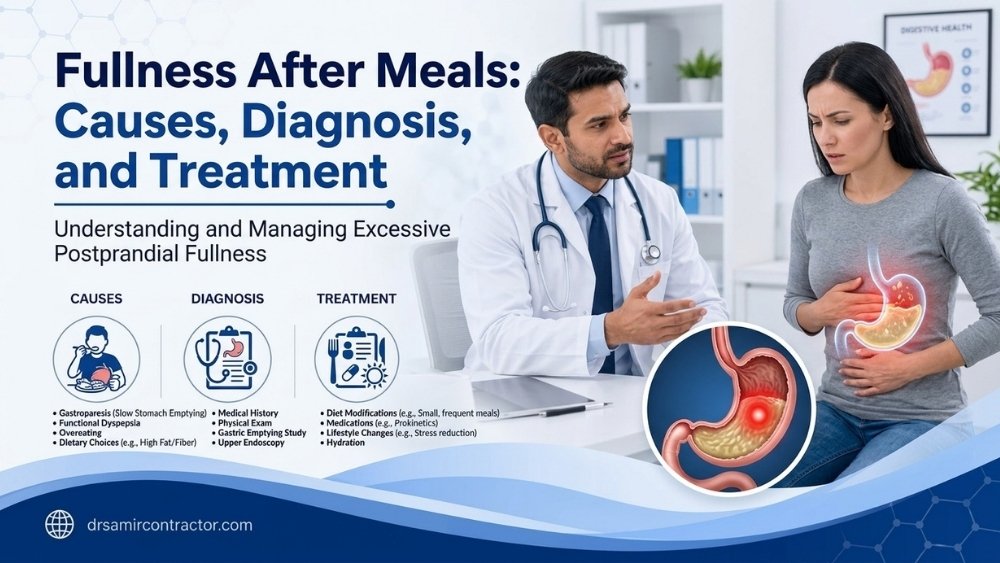
Feeling uncomfortably full after eating - or feeling heavy and bloated long after a meal has ended - is one of the most common upper GI complaints in India. It is usually caused by functional dyspepsia, GERD, gastritis, or slow stomach emptying. Most cases improve with dietary changes and medication. When fullness is associated with weight loss or very rapid onset of fullness after small amounts of food, it needs evaluation.
✦ Quick Answers
Feeling full after eating is something most people experience occasionally - after a large festival meal, a heavy thali, or a celebratory dinner. This is normal. What is not normal is feeling uncomfortably, persistently full after regular meals - the kind of fullness that lingers for hours, that makes you reluctant to eat the next meal, that slowly affects what and how much you eat each day.
In India, this pattern is extremely common, often managed with digestive tonics and home remedies for months before being evaluated. Understanding what drives it - and when it signals something more serious - allows patients to get the right treatment faster and avoid unnecessary self-medication.
What Is Fullness After Meals?
Medically, the uncomfortable sensation of food remaining in the stomach after eating - lasting longer than expected - is called postprandial fullness or postprandial distress syndrome. It is one of the two main symptom patterns of functional dyspepsia (the other being epigastric pain or burning).
The stomach is designed to receive food, begin digestion, and then move the food into the small intestine within 2-4 hours. When this process is delayed, impaired, or when the stomach is hypersensitive to normal filling, the result is persistent, uncomfortable fullness.
Two important patterns to recognise
Postprandial Fullness (After Normal Meal)
- Unpleasant fullness after a regular-sized meal
- Feels like food is "sitting there" - not moving
- Lasts 1-3 hours or more after eating
- Associated with bloating, belching, nausea
- Most common causes: functional dyspepsia, GERD, gastroparesis
- Usually manageable with dietary change and medication
Early Satiety (Fullness After Small Amounts)
- Feeling full after only 2-3 bites of food
- Unable to finish a normal-sized meal
- Often leads to significant reduced food intake
- Associated with weight loss when persistent
- Needs evaluation - especially above age 45
- May indicate gastroparesis, mass, or cancer
Both symptoms can occur together and may overlap with other upper GI symptoms such as bloating, nausea, and indigestion.
Symptoms That Accompany Fullness After Meals
Common accompanying symptoms
- Bloating - a sense of abdominal swelling or tightness after eating
- Belching - attempts to relieve the fullness by expelling gas
- Nausea - especially during or just after meals
- Upper abdominal discomfort or heaviness
- Heartburn or acid reflux - common coexisting symptom with GERD
- Reduced appetite - secondary to persistent fullness discouraging eating
- Regurgitation - food or liquid returning into the throat
Red-flag symptoms that change the picture
- Unintended weight loss - persistent fullness reducing food intake significantly
- Vomiting of old or partially digested food - hours after eating, suggests gastroparesis or gastric outlet obstruction
- Progressive worsening - fullness after smaller and smaller amounts of food over weeks
- Difficulty swallowing associated with the fullness
- Blood in vomit or black stool
What Causes Fullness After Meals?
Common and Correctable Causes
- Functional dyspepsia (postprandial distress syndrome) - most common cause. No structural abnormality found; caused by heightened gastric sensitivity and delayed accommodation. Stomach is hypersensitive to normal food volumes
- GERD - acid reflux slows gastric emptying and increases fullness sensation after meals
- Gastritis from H. pylori or NSAIDs - inflamed stomach lining impairs normal gastric function and produces fullness, nausea, and discomfort
- Overeating or eating too quickly - stomach is filled faster than it can accommodate; swallowed air adds to the distension
- High-fat meals - fat delays gastric emptying physiologically; fatty Indian meals (oily sabzi, ghee-heavy food, fried snacks) prolong fullness significantly
- Gas-forming foods - rajma, chole, whole urad dal, cabbage cause gas accumulation, adding to the fullness sensation
- Stress and anxiety - directly slows gastric motility and increases gastric hypersensitivity
- Medications - certain blood pressure drugs, antidepressants, opiates, and anticholinergics slow gastric emptying
Causes Requiring Evaluation
- Gastroparesis - delayed gastric emptying from nerve damage; most common in long-standing diabetes. Vomiting of old food, fullness after small amounts, significant weight loss. Diagnosed by gastric emptying scan
- Gastric outlet obstruction - from chronic peptic ulcer scarring or gastric cancer at the pylorus (stomach outlet); causes persistent vomiting and progressive fullness with weight loss. Needs urgent evaluation
- Gastric cancer - fullness, early satiety, weight loss, and upper abdominal discomfort in older patients. Endoscopy with biopsy is essential to exclude this
- Gallstone disease - gallstones can cause post-meal upper abdominal fullness and bloating, particularly after fatty meals, sometimes mimicking functional dyspepsia
- Pancreatic conditions - chronic pancreatitis or pancreatic cancer can cause early satiety with upper abdominal fullness and back pain
When Should You Worry? Red Flags
Seek medical evaluation if fullness after meals is associated with:
- Unintended weight loss - even gradual, over weeks to months
- Progressive early satiety - unable to finish increasingly small amounts of food
- Vomiting of old, partially digested, or foul-smelling food - hours after a meal
- Difficulty swallowing accompanying the fullness
- Blood in vomit or black, tarry stool
- New onset in a person above 45 - particularly with any of the above features
- Palpable lump or hardness in the upper abdomen
- Rapid worsening over 2-4 weeks
- Fullness with significant loss of appetite (anorexia)
Fullness after meals that is stable, related to dietary habits, and present for months without worsening is unlikely to be serious. Fullness that is progressive and accompanied by weight loss is a red-flag pattern that needs investigation without delay.
Who Is at Higher Risk?
- People with H. pylori infection - gastritis from H. pylori causes post-meal fullness and nausea; very common in India
- Those with long-standing GERD - acid reflux impairs gastric accommodation and slows emptying
- Diabetic patients - diabetic gastroparesis (delayed stomach emptying from autonomic nerve damage) is a common and under-recognised cause of persistent post-meal fullness and nausea in long-standing diabetics
- People under chronic stress - stress-related dyspepsia with impaired gastric motility is very common in India's urban population
- Those who eat large, oily, or heavy meals - a major dietary pattern in Gujarati and Indian cooking that directly prolongs gastric emptying
- Regular NSAID users - gastric irritation from NSAIDs causes fullness, nausea, and bloating
- People above 45 with new-onset symptoms - gastric cancer and gastroparesis risk increase with age
- Post-bariatric surgery patients - the reduced stomach size causes very rapid satiety, which is expected; excessive fullness with vomiting or pain may indicate a complication
How Doctors Evaluate Fullness After Meals
A structured history identifies the pattern. Your doctor will ask:
- How soon after eating does fullness begin - during the meal or after?
- How long does the fullness last?
- Does it occur with all meals or only large or fatty meals?
- Are there associated symptoms - bloating, nausea, vomiting, heartburn?
- Has there been any change in appetite or weight?
- Is there any vomiting - and if so, what does it look like?
- Any red-flag features?
- Current medications, particularly NSAIDs, diabetes medications, antidepressants?
- History of diabetes - duration and glucose control?
Physical examination will assess the upper abdomen for tenderness, a palpable mass, or signs of weight loss and nutritional depletion. In straightforward cases without red flags, an empirical trial of lifestyle changes and medication may precede investigation. When red flags are present, investigation is always performed first.
Tests That May Be Needed
H. pylori testing (often first)
Urea breath test, stool antigen test, or endoscopy biopsy. H. pylori is a common, treatable cause of fullness and dyspepsia. Eradication often resolves symptoms in H. pylori-positive patients without the need for ongoing medication.
Upper GI Endoscopy
The most important investigation when red flags are present, in patients above 45, or when symptoms do not improve with 4-8 weeks of empirical treatment. Identifies gastritis, peptic ulcer, gastric cancer, and hiatal hernia. In patients with functional dyspepsia, endoscopy is often normal - but this provides valuable reassurance and confirmation of the diagnosis.
Ultrasound abdomen
Identifies gallstones as a potential cause of post-meal fullness and bloating. Also assesses the liver, pancreas, and kidneys. Performed early when right upper abdominal pain accompanies the fullness.
Gastric emptying scan
A nuclear medicine test that measures how fast the stomach empties after a standardised meal. The gold standard for diagnosing gastroparesis. Performed when delayed emptying is suspected - particularly in diabetic patients with persistent post-meal fullness, nausea, and vomiting of old food.
Blood tests
Full blood count (anaemia), blood glucose, HbA1c (diabetes control), liver and kidney function, and thyroid function (hypothyroidism can slow gastric motility). These help identify systemic causes and nutritional impact.
Treatment Options
Treatment is matched to the underlying cause. The foundation in all cases is dietary and lifestyle modification.
Treatment Decision Pathway
- 1️⃣ Dietary and Lifestyle Changes (Always the Foundation): Smaller, more frequent meals (4-5 per day rather than 2-3 large ones). Eat slowly, chew thoroughly. Reduce oily, fried, and gas-forming food. Avoid eating close to bedtime. Walk briefly after meals rather than lying down. These changes alone produce significant improvement in most functional dyspepsia patients.
- 2️⃣ H. pylori Eradication (if positive): 14-day combination antibiotic and PPI course. Resolves post-meal fullness and related symptoms in a large proportion of H. pylori-positive patients. Confirm eradication by breath test 4-6 weeks after completing treatment.
- 3️⃣ Acid Suppression (PPIs): For GERD-related and gastritis-related fullness - PPIs reduce acid, heal the stomach lining, and improve gastric accommodation. Usually prescribed for 4-8 weeks initially, then reassessed.
- 4️⃣ Prokinetic Agents (Motility Medicines): For functional dyspepsia with prominent fullness and bloating, and for gastroparesis - prokinetics (domperidone, metoclopramide, itopride) improve gastric emptying and reduce the sensation of fullness. Used under medical supervision as they have side-effect profiles requiring monitoring.
- 5️⃣ Gastroparesis - Specialist Management: Low-fat, low-fibre, small frequent meals. Prokinetic therapy. Optimise diabetes control in diabetic gastroparesis. In severe refractory cases - specialist gastroenterology input including gastric electrical stimulation or other interventions.
Indian Diet Guidance for Fullness After Meals
- Eat smaller, more frequent meals: Instead of a large thali, eat 4-5 small portions through the day. This is the single most effective change for post-meal fullness
- Best choices: Soft khichdi, plain dal, curd rice, banana, steamed vegetables (dudhi, tinda, turai), soft roti with light sabzi, chaas (buttermilk)
- Reduce significantly: Oily curries, heavy ghee-loaded food, deep-fried snacks (bhajia, samosa, gathiya), rajma and chole in large portions, cabbage and cauliflower (gas-forming)
- Avoid eating quickly: A common Indian eating habit - rushing through meals - significantly worsens post-meal fullness through swallowed air and inadequate chewing
- After meals: A short 10-15 minute walk after eating improves gastric motility and reduces fullness. Avoid lying down for at least 1-2 hours after eating
- Stress management: In patients where stress is clearly a trigger - regular meal times, adequate sleep, and stress-reduction activities are as important as dietary changes
When Is Surgery Needed?
Fullness after meals itself almost never requires surgery. Surgery may be needed when a specific underlying structural condition is causing the fullness:
- Gallstone-related fullness - laparoscopic cholecystectomy resolves gallstone-related post-meal upper abdominal bloating and fullness in most patients
- Gastric outlet obstruction from chronic peptic ulcer scarring - surgical correction of the obstructed stomach outlet; endoscopic balloon dilation may be tried first
- Gastric cancer causing outlet obstruction or early satiety - surgical resection with curative intent in operable early-stage disease; palliative bypass or stenting for advanced disease
- Significant hiatal hernia with associated dyspepsia - laparoscopic hiatal hernia repair and fundoplication in suitable patients
What Happens If Post-Meal Fullness Is Ignored?
- Progressive dietary restriction - patients gradually eat less and less to avoid discomfort, leading to nutritional deficiency, weight loss, and weakness over time
- H. pylori untreated - persistent gastritis, risk of peptic ulcer, and long-term risk of gastric cancer if left untreated
- Diabetic gastroparesis worsening - without management, gastroparesis leads to erratic blood glucose control (unpredictable food absorption), malnutrition, and recurrent vomiting episodes requiring hospital admissions
- Gastric cancer diagnosed late - early satiety and post-meal fullness as presenting symptoms of gastric cancer, when ignored and attributed to dyspepsia, leads to late-stage diagnosis with poor outcomes
- Reduced quality of life - chronic post-meal fullness affects social eating, work function, and mental wellbeing significantly over time
Recovery and What Patients Can Expect
wk
wk
wk
term
Frequently Asked Questions
Fullness After Meals in India - What Is Relevant for You
Why post-meal fullness is so prevalent in India
- Indian cuisine - heavy curries, oily preparations, ghee, fried snacks - is inherently high in fat, which physiologically slows gastric emptying significantly. This is amplified in people with functional dyspepsia or gastroparesis
- The cultural norm of two large meals (lunch and dinner) rather than multiple small meals is a major contributor to post-meal fullness - the stomach is filled beyond its comfortable accommodation capacity twice daily
- H. pylori prevalence of 40-60% in India means that gastritis from this bacterium is a frequent, treatable cause of post-meal fullness that is systematically under-tested
- India has the world's largest diabetic population - diabetic gastroparesis is an important and under-diagnosed cause of persistent post-meal fullness, nausea, and weight loss in long-standing diabetics
- Stress from work, family, and financial pressures is consistently reported as a trigger for post-meal fullness in Indian patients with functional dyspepsia
- The widespread use of digestive tonics, churan (digestive powder), and home remedies manages the symptom temporarily but often delays evaluation and diagnosis of underlying conditions
When and Where to Seek Care in Vadodara
If post-meal fullness is persistent, associated with weight loss, occurring with progressive early satiety, or not improving with dietary changes - consult Dr Samir Contractor at Sterling Hospital, Vadodara. H. pylori testing, upper GI endoscopy, and gastric emptying assessment are available to identify the cause precisely.
Managing post-meal fullness with churan and digestive aids long-term without a proper diagnosis is not treatment - it is symptom masking. One evaluation provides a diagnosis and a targeted treatment plan.
Desi Patient Questions (Gujarati / Hinglish)
Normal nathi jyaré aa rooj thay. Functional dyspepsia ya gastroparesis common causes chhe. Nana nana vadhare vaar khao - 4-5 times/day. Oily food ochhu karo. Jyaré weight loss pan hoy to doctor ne malsho - evaluation zaruri chhe.
Ha - diabetic gastroparesis chhe most likely. Diabetes vagus nerve ne damage kare chhe jene leva stomach slowly empty thay chhe. Gastric emptying scan thi diagnose thay chhe. Diabetes control, nana meals, ane prokinetic medicines thi manage thay chhe. Doctor ne malsho ane HbA1c check karo.
Churan ane ajmo temporary symptom relief aapé chhe - cause nahi treat karta. H. pylori test karo - jyaré positive hoy to 14-day treatment thi bahu patients permanently better thay chhe. Jyaré negative hoy to lifestyle changes ane proper medication more effective rehshe than churan long-term.
Fat gastric emptying slow kare chhe - aa partially physiological chhe. Pan jyaré consistently hours tak fullness hoy after normal meals, aa functional dyspepsia no sign chhe. Oil ane ghee reduce karo cooking ma - significant improvement milshe most patients ne. Simple but most effective change.
Ha - bilkul zaruri chhe. Early satiety + weight loss = red flag combination. Endoscopy must - to rule out gastric cancer or structural problem. Majority cases ma benign cause nikalshe ane treatment immediately start thay. But delay nahi karvanu - early detection best outcomes aapé chhe.