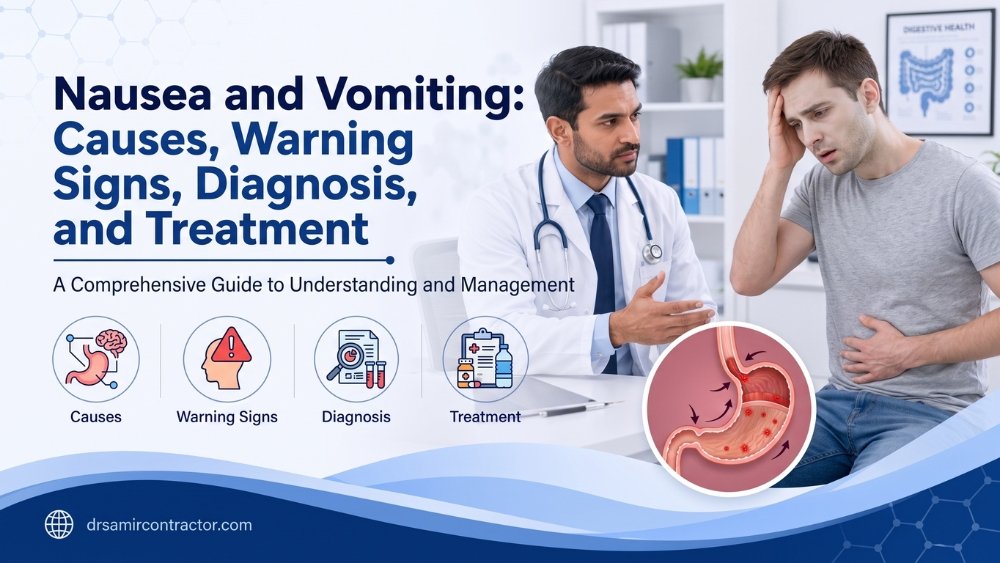
Nausea is the feeling of wanting to vomit. Vomiting is the forceful expulsion of stomach contents. Both are symptoms - not diseases - and can arise from many different causes ranging from a simple stomach bug to a serious GI condition. Most episodes resolve on their own. Persistent, severe, or blood-containing vomiting always needs prompt medical attention.
✦ Quick Answers
Nausea and vomiting are among the most common symptoms that bring patients to a GI clinic. They are not diseases themselves - they are the body's response to an underlying problem. That problem can be as simple as a heavy meal or food poisoning, or as serious as a bleeding ulcer or bowel obstruction.
The key to managing nausea and vomiting well is reading the pattern correctly. How long has it been happening? What comes up? Is there blood? Is there pain? These questions help distinguish a self-limiting episode from something that needs urgent investigation. This page will help you understand where your symptoms fit - and when to act.
What Are Nausea and Vomiting?
Nausea is the unpleasant, queasy sensation that precedes vomiting - a feeling that you are about to be sick. It can exist without vomiting and can be just as disabling.
Vomiting is the forceful expulsion of stomach contents upward through the mouth. It is an active reflex coordinated by the brain, involving strong contractions of the stomach and abdominal muscles.
Both are protective reflexes - the body's attempt to eliminate something harmful. But when they become frequent, severe, or associated with other warning features, they indicate a problem that needs evaluation.
Two patterns that guide diagnosis
Acute (Sudden Onset)
- Begins abruptly, often within hours
- Commonly: food poisoning, gastroenteritis, medication reaction
- May also signal: appendicitis, gallstones, bowel obstruction
- Usually self-limiting if GI infection is the cause
- Needs urgent evaluation if severe pain or blood is present
Chronic (Persistent or Recurring)
- Lasts weeks or occurs repeatedly
- Causes: GERD, peptic ulcer, gastroparesis, gastric outlet obstruction
- May also occur: post-bariatric surgery, in pregnancy
- Weight loss with chronic vomiting is a red flag
- Always needs evaluation - endoscopy often required
Symptoms That Accompany Nausea and Vomiting
Nausea and vomiting rarely occur in isolation. The symptoms that appear alongside them give the most important diagnostic clues.
Common associated symptoms
- Upper abdominal pain or cramping - before, during, or after vomiting
- Heartburn or acid taste in the mouth
- Bloating and distension
- Loss of appetite
- Diarrhoea - when gastroenteritis or food poisoning is the cause
- Fever - suggests infection, appendicitis, cholecystitis, or other inflammatory cause
- Dizziness or light-headedness - often from dehydration
What the vomit looks like - and what it means
- Undigested food shortly after eating - suggests gastroparesis, pyloric obstruction, or severe GERD
- Partially digested food hours after eating - suggests gastric outlet obstruction or gastroparesis
- Bright red blood - upper GI bleeding; requires emergency evaluation
- Coffee-ground appearance - digested blood from upper GI bleed; requires urgent evaluation
- Yellow-green bile - may indicate the stomach is empty or bowel obstruction is present
- Faeculent (foul-smelling) - suggests low bowel obstruction; surgical emergency
What Causes Nausea and Vomiting?
The causes are broad. For the purposes of this page - focused on GI causes - the most relevant are listed below. Non-GI causes (inner ear problems, migraines, medications, pregnancy, neurological) should also be considered and are often identified from the history.
Common GI Causes (Usually Manageable)
- Gastroenteritis - viral or bacterial stomach infection
- Food poisoning - contaminated food, very common in India during summer
- Acid reflux or GERD - nausea especially after lying down or large meals
- Gastritis - stomach lining inflammation; H. pylori, NSAIDs, alcohol
- Peptic ulcer - especially duodenal ulcer which causes nausea with or after meals
- Overeating or very heavy, oily meal
- Medications - antibiotics, iron tablets, metformin, NSAIDs
- Functional nausea - linked to stress, anxiety, gut hypersensitivity
- Pregnancy - first trimester morning sickness; also hyperemesis
Causes That Require Prompt Evaluation
- Appendicitis - nausea and vomiting with right lower abdominal pain and fever
- Acute cholecystitis - gallstone complication causing right upper pain, nausea, fever
- Gallstone pancreatitis - severe upper abdominal pain with vomiting
- Gastric outlet obstruction - vomiting of old food; from severe ulcer scarring or cancer
- Bowel obstruction - nausea, vomiting, inability to pass stool or gas
- Upper GI bleeding - blood or coffee-ground vomit
- Gastric or esophageal cancer - persistent vomiting, weight loss, difficulty swallowing
- Post-bariatric surgery complications - vomiting after sleeve or bypass surgery needs urgent review
When Should You Worry? Red Flags
Vomiting from a stomach bug typically settles within 24-48 hours. The following features mean the cause may be more serious and needs prompt evaluation.
Seek urgent medical care if vomiting is associated with:
- Blood in the vomit - bright red or coffee-ground appearance
- Severe abdominal pain, particularly with fever or rigidity of the abdomen
- Inability to keep any fluid down for more than 6-8 hours
- Signs of dehydration - very dry mouth, no urine for 8+ hours, sunken eyes, extreme weakness
- Vomiting of old, undigested food - hours after the last meal
- Vomiting that begins after abdominal surgery
- Persistent vomiting associated with weight loss over weeks
- Vomiting in an elderly person or young child that does not settle quickly
- Vomiting after a head injury - may indicate raised intracranial pressure
- Faeculent (foul, dark brown) vomit - suggests bowel obstruction
Go to an emergency room immediately if:
- There is blood in the vomit
- Severe abdominal pain accompanies the vomiting and is not settling
- The patient is unable to stand or is severely weak from fluid loss
- Vomiting follows a recent head injury or fall
Who Is at Higher Risk?
- People with known GERD, peptic ulcer, or gastritis - nausea is a frequent accompaniment of these conditions, particularly during flares
- Those with gallstones - acute cholecystitis and biliary colic commonly present with nausea and vomiting alongside right-sided pain
- Pregnant women - nausea and vomiting affect 70-80% of pregnancies in the first trimester; severe cases (hyperemesis gravidarum) require hospital management
- Post-bariatric surgery patients - vomiting after sleeve gastrectomy or bypass can indicate a surgical complication and always warrants review
- People on NSAIDs, antibiotics, or iron supplements - all commonly cause nausea and GI irritation
- People with diabetes - diabetic gastroparesis causes chronic nausea and vomiting from delayed stomach emptying
- Those who eat from outside regularly in summer - food poisoning from contaminated street food or water is extremely common in Gujarat during April-June
- Children and elderly - both groups dehydrate faster and require earlier medical review
How Doctors Evaluate Nausea and Vomiting
The history is the most valuable diagnostic tool. Your doctor will ask:
- How long has the nausea or vomiting been present?
- Is it related to eating - before, during, or after meals?
- What does the vomit look like - food, bile, blood?
- Is there associated abdominal pain - where exactly, and how severe?
- Is there fever, diarrhoea, or change in bowel habits?
- Has there been any weight loss?
- Are there any recent medication changes?
- Is there any history of abdominal surgery, particularly bariatric surgery?
- Is there any possibility of pregnancy?
Physical examination will assess the abdomen for tenderness, distension, bowel sounds, and signs of dehydration. Vital signs (pulse, blood pressure, temperature) guide urgency. This examination, combined with history, usually points toward the likely cause and the appropriate investigation.
Tests That May Be Needed
Blood tests
Full blood count (infection, anaemia), kidney and liver function (dehydration, hepatitis), amylase or lipase (pancreatitis), blood glucose (diabetic causes), pregnancy test in women of reproductive age. These are usually the first investigations ordered.
Ultrasound abdomen
Identifies gallstones, cholecystitis, liver, pancreatic, or kidney causes. Fast, safe, and widely available. Often the first imaging investigation for nausea and vomiting with abdominal pain.
Upper GI Endoscopy
Indicated when vomiting is persistent, blood-containing, associated with difficulty swallowing, or accompanied by weight loss. Examines the esophagus, stomach, and duodenum directly - identifies ulcers, gastric outlet obstruction, gastritis, and malignancy.
CT scan of abdomen
Ordered when appendicitis, bowel obstruction, or another acute abdominal emergency is suspected and the diagnosis is not clear from examination and ultrasound alone.
Gastric emptying study
For chronic nausea and vomiting where gastroparesis is suspected - particularly in diabetic patients or those with persistent symptoms despite a normal endoscopy.
Treatment Options
Treatment is directed at the underlying cause. Anti-emetic medication helps control the symptom while the cause is being treated. Dehydration prevention is always the immediate priority.
First Priority: Prevent Dehydration
- Sip small amounts of clear fluids every 10-15 minutes - do not gulp large quantities
- Best options: ORS (oral rehydration solution), coconut water, diluted nimbu pani with a pinch of salt and sugar, plain water
- Avoid dairy, solid food, and fatty food until vomiting has settled for at least 4-6 hours
- If ORS is not available, homemade: 1 litre boiled cooled water + 6 teaspoons sugar + ½ teaspoon salt
- If fluids cannot be kept down for 6-8 hours - seek medical care for IV fluids
Treatment Decision Pathway
- 1️⃣ Gastroenteritis / Food Poisoning: Oral rehydration, rest, bland diet. Anti-emetics (ondansetron, domperidone) for symptom control. Antibiotics only when bacterial cause is confirmed or suspected. Most cases resolve in 24-72 hours.
- 2️⃣ GERD or Peptic Ulcer Related Nausea: PPI therapy reduces acid, heals ulcers, and typically resolves associated nausea within 1-2 weeks. H. pylori eradication if positive. Dietary modification throughout.
- 3️⃣ Gallstone-Related (Cholecystitis / Biliary Colic): Acute management includes IV fluids, pain control, and antibiotics when cholecystitis is present. Definitive treatment is laparoscopic cholecystectomy (gallbladder removal) once the acute episode settles - this prevents recurrence.
- 4️⃣ Bowel Obstruction or Appendicitis: Surgical emergency. IV fluids, nil by mouth, and urgent surgical evaluation. Laparoscopic appendectomy for appendicitis. Surgical management of obstruction based on cause.
- 5️⃣ Post-Bariatric Vomiting: Requires specific evaluation - vomiting after sleeve or bypass surgery can indicate anastomotic stricture, port slippage, or a leak. This must be evaluated promptly. Do not manage at home without a surgical review.
Eating After Vomiting - Indian Guidance
- Start with: Plain water, ORS, coconut water, or diluted jeera (cumin) water - 15-20 minutes between small sips
- First food: Once vomiting has stopped for 4+ hours - plain khichdi with minimal salt and ghee, soft boiled rice, plain white bread (pav without butter)
- Progress to: Soft moong dal khichdi, plain curd rice, banana, boiled potato - after 24 hours of no vomiting
- Avoid for 48-72 hours: Oily or spicy food, dairy milk, raw vegetables, full meals, tea and coffee
- Jeera water: A glass of lukewarm water with ½ teaspoon roasted cumin is a traditional and genuinely useful remedy for mild nausea and gastric discomfort
When Is Surgery Needed?
Nausea and vomiting themselves do not require surgery. Surgery is needed when the underlying cause is a surgical condition.
Surgical causes of vomiting that need operative management:
- Appendicitis - laparoscopic appendectomy is the definitive treatment
- Acute cholecystitis from gallstones - laparoscopic cholecystectomy after the acute episode is managed
- Bowel obstruction - from adhesions, hernia, or tumour; requires surgical relief of the obstruction
- Gastric outlet obstruction from peptic ulcer scarring or cancer - endoscopic or surgical correction depending on cause
- Perforated peptic ulcer - surgical emergency requiring laparoscopic or open repair
- Post-bariatric complications - strictures, internal hernia, or anastomotic problems requiring surgical or endoscopic correction
What Happens If Nausea and Vomiting Are Left Without Care?
For mild, self-limiting episodes - such as a stomach bug - most cases resolve without intervention. Leaving serious causes untreated, however, carries real risk:
- Dehydration - particularly dangerous in children, the elderly, and anyone with persistent vomiting. Can lead to kidney injury and severe electrolyte imbalance
- Untreated appendicitis - perforation, peritonitis, and life-threatening infection within 24-72 hours of symptom onset if not operated
- Untreated bowel obstruction - bowel strangulation and necrosis within hours; a true surgical emergency
- Delayed diagnosis of gastric cancer - persistent vomiting with weight loss that is dismissed leads to advanced-stage diagnosis with poorer outcomes
- Malnutrition from chronic vomiting - particularly in gastroparesis and gastric outlet obstruction; leads to weight loss, vitamin deficiencies, and weakness
- Aspiration pneumonia - vomit entering the lungs, particularly in patients who are very ill or unconscious
Recovery and What Patients Can Expect
hrs
wk
Op
Op
Frequently Asked Questions
Nausea and Vomiting in India - What Is Relevant for You
India-specific patterns and considerations
- Food poisoning from contaminated street food, water, or improperly stored food is extremely common across India - particularly during the summer months of April to June when heat accelerates bacterial growth
- H. pylori infection, which causes gastritis and peptic ulcers - both common causes of nausea - is found in 40-60% of the Indian population
- Gallstones are very common in Indian women - biliary colic with nausea after fatty food is a frequent presentation in Gujarati patients and is often mismanaged as simple acidity for months
- Nausea and vomiting from NSAID overuse is widespread - ibuprofen and diclofenac are purchased without prescription and taken without food regularly
- Dehydration from vomiting is particularly dangerous in the Indian summer - ensure fluid replacement is started early, especially in children and elderly patients
- Post-bariatric vomiting is an increasingly common presentation in Vadodara given the growing bariatric surgical volume across Gujarat
When and Where to Seek Care in Vadodara
For vomiting with abdominal pain, blood in vomit, or vomiting that is not settling within 24-48 hours, seek evaluation at Sterling Hospital, Vadodara. Dr Samir Contractor and his team provide emergency GI evaluation, endoscopy, and surgical management for all causes of acute and chronic vomiting.
Post-bariatric patients with vomiting should contact the surgical team directly - do not wait for a routine appointment if vomiting is persistent or associated with pain.
Desi Patient Questions (Gujarati / Hinglish)
Ha - bilkul abhi. Blood in vomit - bright red ya coffee jaevo dark - upper GI bleeding no sign chhe. Aa emergency chhe. Ghar pe rehva nathi - hospital javo immediately.
ORS ya coconut water thoda thoda peeyo - darabaar 10-15 minute. Khaadhu temporarily band karo. Jeera pani ya saunf pani helpful thay. 24-48 klaak ma nahi sudhre, ya dard ane bukhaar hoy, to doctor pase javo - dehydration dangerous thai shake chhe.
Morning sickness pregnancy ma common chhe. Ginger tea, dry toast, ya thoda cracker subeh uthine khava helpful hoy chhe. Jyaré ulti khub vadhare hoy, fluid nahi rakhay, ya weight ghatto thay to doctor ne jaroor malvo - safe pregnancy-specific treatment available chhe.
Post-bariatric vomiting - especially if persistent, painful, ya 1 week baad hoy - surgical team ne immediately contact karo. Ghar pe manage nahi karvanu. Stricture ya anya complications be quickly diagnosed ane treated thaay chhe - delay kharabo.
Bachha dehydrate quickly kare chhe - adults karta vadhare. Jyaré bachha nu moe dry hoy, ankh andari hoy, 6+ kaak peshab na kare, ya bahot thakelo hoy - hospital lejo. 12-24 kaak thi vadhare chalaato ulti means IV fluids jaruri che most likely.