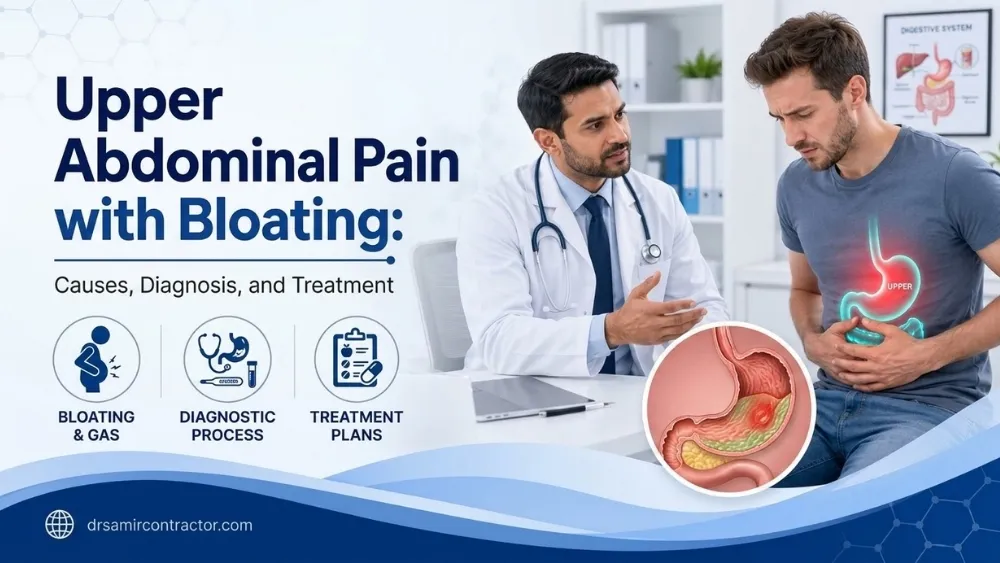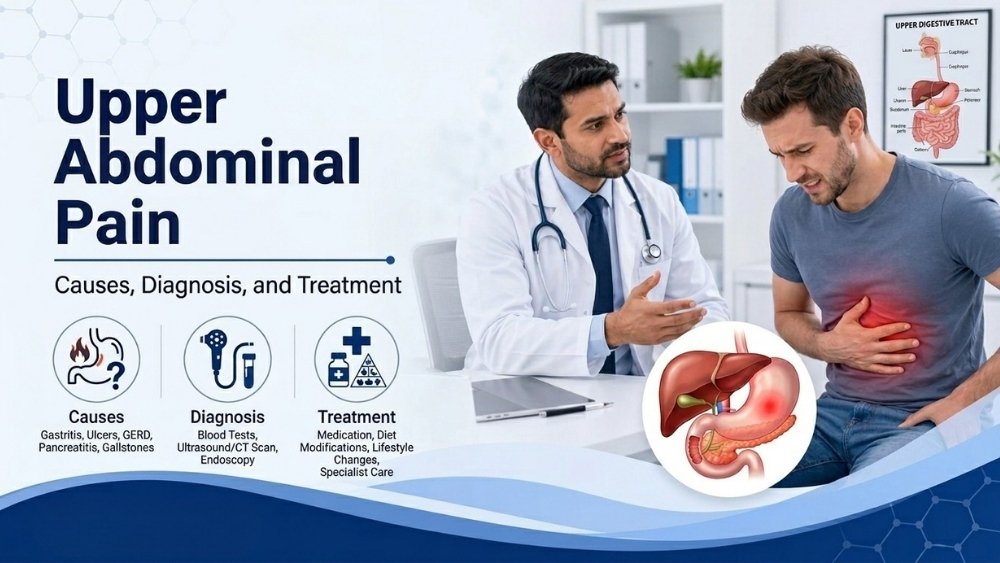
Upper abdominal pain - felt above the navel - is one of the most common GI complaints. It can arise from the stomach, gallbladder, liver, pancreas, or food pipe. The location, character, and timing of the pain give the most important clues to its cause. Most causes are manageable, but some require urgent evaluation.
Quick Answers
Upper abdominal pain is one of the most frequent reasons patients visit a GI surgeon or gastroenterologist. The upper abdomen houses some of the most important digestive organs - the stomach, liver, gallbladder, bile ducts, pancreas, and the upper part of the small intestine. Pain in this region can come from any of these, or even be referred from the chest in cardiac and lung conditions.
The location of pain within the upper abdomen is the single most useful initial guide. Right upper quadrant pain points toward the gallbladder and liver. Central upper (epigastric) pain points toward the stomach, pancreas, or food pipe. This guide will help you understand what your upper abdominal pain is likely to mean - and when it needs urgent attention.
Understanding Upper Abdominal Pain - The Location Map
The abdomen is divided into nine regions. Upper abdominal pain affects the top three zones - right upper quadrant, epigastrium (centre), and left upper quadrant. The table below shows what structures live in each region and what conditions commonly cause pain there.
Right Upper
- Gallbladder
- Right lobe of liver
- Right kidney (upper)
- Part of colon
Epigastrium (Centre)
- Stomach
- Pancreas (head)
- Lower esophagus
- Duodenum
Left Upper
- Stomach (fundus)
- Spleen
- Left kidney (upper)
- Pancreas (tail)
How Upper Abdominal Pain Presents
The character of pain gives as much information as the location. When describing your pain to a doctor, these details matter:
Characteristics that help identify the cause
- Burning or gnawing central pain - worse on empty stomach, improves briefly with food: suggests peptic ulcer (duodenal)
- Burning central or chest pain after meals or at night - suggests GERD or gastric ulcer
- Severe right upper pain 30-60 mins after fatty meal - cramping and waves: suggests gallstone biliary colic
- Right upper pain with fever, nausea, and tenderness - suggests acute cholecystitis
- Severe central pain radiating through to the back - boring, constant, relieved by leaning forward: suggests pancreatitis
- Right upper pain with yellow eyes or skin (jaundice) - suggests common bile duct obstruction from stones or other cause
- Dull right upper ache with fatigue and dark urine - suggests hepatitis or liver pathology
- Diffuse upper pain with bloating and belching - suggests functional dyspepsia or gastritis
Upper abdominal pain that radiates to the left arm, jaw, or chest - particularly with sweating and breathlessness - may be cardiac (heart attack) rather than GI. This must always be ruled out first in any patient with central upper pain, especially above 45 years of age.
Common Causes of Upper Abdominal Pain
Common and Correctable Causes
- GERD - burning epigastric and chest pain linked to eating and lying down
- Gastritis - inflamed stomach lining; from H. pylori, NSAIDs, alcohol, or stress
- Peptic ulcer disease - gastric or duodenal ulcer causing gnawing or burning pain
- Functional dyspepsia - upper discomfort without structural cause
- Gallstones - right upper pain after fatty meals; biliary colic pattern
- Irritable bowel syndrome (upper variant) - diffuse discomfort, bloating
- Costochondritis - rib cartilage inflammation mimicking upper abdominal pain
- Dietary excess - heavy, oily meal causing temporary discomfort
- Constipation - can refer discomfort to upper abdomen in some patients
Causes Requiring Prompt Evaluation
- Acute cholecystitis - infected gallbladder; right upper pain, fever, nausea
- Acute pancreatitis - severe central pain radiating to back, often from gallstones or alcohol
- Perforated peptic ulcer - sudden severe pain, rigid abdomen; surgical emergency
- Upper GI bleeding - epigastric pain with vomiting blood or black stool
- Common bile duct stones with jaundice - obstruction of bile drainage
- Liver abscess or severe hepatitis
- Gastric or pancreatic cancer - persistent pain with weight loss
- Mesenteric ischaemia - severe pain out of proportion to examination findings (rare)
- Myocardial infarction (heart attack) - can present as upper abdominal pain, especially in diabetics and women
When Should You Worry? Red Flags
Most upper abdominal pain is caused by manageable conditions. The following features, however, indicate something more serious that must not be ignored.
Seek urgent medical evaluation immediately if upper abdominal pain is:
- Sudden and severe - especially if the abdomen becomes rigid or board-like (possible perforation)
- Associated with fever and jaundice (yellow eyes or skin) - suggests bile duct obstruction or cholangitis
- Associated with vomiting blood or black tarry stool - upper GI bleeding
- Radiating to the chest, jaw, or left arm with sweating or breathlessness - rule out heart attack first
- Accompanied by persistent vomiting that prevents any oral intake
- Associated with unintended weight loss over weeks
- New-onset severe pain in a person above 50 with no prior history
- Pain that is constant, worsening, and not responding to any treatment over 24-48 hours
- Associated with a palpable lump or hardness in the upper abdomen
Any pain that you feel is "different" from your usual pattern - more severe, different location, or not responding to usual remedies - deserves evaluation rather than self-medication.
Who Is at Higher Risk?
- People with H. pylori infection - causes gastritis and peptic ulcers, both common upper GI pain sources; high prevalence in India
- Regular NSAID or aspirin users - for chronic pain or cardiac conditions; directly damage stomach lining causing gastritis and ulcers
- Women between 30-50 years of age - gallstones are significantly more common in women; the classic "5 Fs" profile (fat, female, forty, fertile, fair) identifies high-risk individuals
- Heavy alcohol users - risk of gastritis, peptic ulcer, alcoholic hepatitis, and acute pancreatitis
- People with diabetes - gastroparesis, pancreatitis, and atypical presentations of cardiac events causing upper abdominal pain
- Those above 50 with new upper abdominal pain - pancreatic and gastric cancer become more relevant; these should not be assumed to be benign without evaluation
- People with known gallstones - risk of cholecystitis, biliary colic, and bile duct stones
- Post-bariatric surgery patients - gallstones frequently develop after rapid weight loss
How Doctors Evaluate Upper Abdominal Pain
The clinical history - location, character, timing, triggers, and associated symptoms - guides the entire evaluation. Your doctor will ask:
- Exactly where is the pain - right, centre, or left upper abdomen?
- Does it radiate anywhere - back, shoulder, chest?
- What does it feel like - burning, cramping, stabbing, constant ache?
- Is it related to meals - and if so, does eating improve or worsen it?
- Is there fever, nausea, vomiting, or change in stool colour?
- Are there any red-flag features?
- What medications are you taking?
Physical examination will focus on the upper abdomen - palpating for tenderness, guarding, or a mass. Murphy's sign (tenderness on deep breath with pressure over gallbladder area) is specifically checked when cholecystitis is suspected. Vital signs guide urgency of further management.
Tests That May Be Needed
Not every patient needs every test. Investigations depend on your age, symptom pattern, examination findings, and whether red flags are present.
Blood tests (usually first)
Full blood count (infection, anaemia), liver function tests (hepatitis, biliary obstruction), amylase and lipase (pancreatitis), kidney function, and blood glucose. A cardiac enzyme test may be added to rule out a heart attack in appropriate patients.
Ultrasound abdomen
The most important first-line imaging for upper abdominal pain. Identifies gallstones, gallbladder wall thickening, bile duct dilatation, liver abnormalities, and free fluid (suggesting perforation or bleeding). Fast, safe, and widely available. Should be performed early.
Upper GI Endoscopy
For epigastric (central) pain - identifies gastritis, peptic ulcer, GERD, hiatal hernia, and malignancy. The investigation of choice when a stomach or esophageal cause is suspected. Also performed to treat bleeding ulcers endoscopically.
CT scan of abdomen
When pancreatitis severity needs assessment, when perforation is suspected, when ultrasound is inconclusive, or when malignancy needs staging. Gives a comprehensive view of all upper abdominal organs.
MRCP (MR cholangiopancreatography)
Non-invasive imaging of the bile ducts and pancreatic duct. Used when bile duct stones, bile duct dilatation, or pancreatic duct pathology is suspected on ultrasound or clinically.
H. pylori testing
Breath test, stool antigen test, or endoscopy biopsy. Performed when gastritis or peptic ulcer is suspected. H. pylori eradication often resolves the pain.
Treatment Options
Treatment is entirely determined by the cause. This is why an accurate diagnosis is essential before starting long-term treatment. The common causes and their treatments:
Cause-Based Treatment Pathways
Indian Dietary Guidance for Upper Abdominal Pain
- GERD / gastritis: Light khichdi, plain dal, soft roti, curd, banana. Avoid tea on empty stomach, spicy curries, fried snacks, eating close to bedtime
- Gallstone-related pain: Low-fat diet - avoid pure ghee, fried food, heavy curries. Steamed vegetables, dal, thin roti, fruit, curd. Even small fatty meals can trigger biliary colic in susceptible patients
- Pancreatitis recovery: Very low-fat, small frequent meals. Begin with clear fluids, then soft khichdi, then gradually progress. No alcohol under any circumstance
- Peptic ulcer: Regular small meals to buffer acid. Avoid skipping meals and eating spicy, acidic, or very hot food. H. pylori treatment typically resolves the pain
When Is Surgery Needed?
Upper abdominal pain often resolves without surgery. Surgery is needed in specific, well-defined situations:
- Symptomatic gallstones - laparoscopic cholecystectomy is the gold standard and prevents future attacks
- Acute cholecystitis - laparoscopic cholecystectomy, preferably within 72 hours
- Gallstone pancreatitis - cholecystectomy after the acute episode resolves, to prevent recurrence
- Common bile duct stones - ERCP (endoscopic removal) followed by cholecystectomy
- Perforated peptic ulcer - emergency laparoscopic or open repair
- Gastric outlet obstruction from chronic ulcer - surgical correction
- Gastric or pancreatic cancer on investigation - surgical resection as part of oncological management
- GERD with hiatal hernia - laparoscopic fundoplication when medical therapy has failed
What Happens If Upper Abdominal Pain Is Ignored?
- Untreated gallstones - progress to cholecystitis, bile duct obstruction, gallstone pancreatitis, and rarely gallbladder cancer over time
- Peptic ulcer ignored - perforation (sudden surgical emergency), bleeding (potentially life-threatening), and stricture at the stomach outlet
- H. pylori untreated - progressive gastric atrophy, increased cancer risk over decades
- Pancreatitis without follow-up - gallstone-related pancreatitis has a 30-50% recurrence rate without cholecystectomy
- Missed cardiac cause - upper abdominal pain as a presentation of heart attack that is dismissed as acidity has serious mortality implications
- Cancer diagnosed late - gastric and pancreatic cancer caught at an early stage are potentially curable; the same cancers caught late have very poor outcomes
Recovery and What Patients Can Expect
wk
wk
Op
days
Frequently Asked Questions
Upper Abdominal Pain in India - What Is Relevant for You
Why upper abdominal pain is so prevalent - and often mismanaged - in India
- H. pylori prevalence of 40-60% makes gastritis and peptic ulcer disease extremely common causes of epigastric pain across India - yet many patients are never tested and remain on antacids for years
- Gallstones are among the most common surgical conditions in Indian women - right upper abdominal pain after fatty food is a classic presentation that is frequently attributed to "acidity" for months before the correct diagnosis is made
- NSAID overuse - ibuprofen and diclofenac taken without food or doctor guidance - is a major contributor to gastric ulcers and upper GI bleeding in India
- Pancreatitis from gallstones is increasing in India with rising rates of gallstone disease, particularly in the 30-50 age group
- Upper abdominal pain as a presentation of inferior-wall heart attacks is missed more often in India due to diagnostic constraints and delayed presentation - patients sometimes self-treat with antacids for hours before seeking cardiac evaluation
- Dietary habits - ghee, fried snacks, spicy preparations, irregular meals - contribute significantly to upper GI complaints across Gujarat and urban India
When and Where to Seek Care in Vadodara
If upper abdominal pain is recurring, not responding to antacids, associated with fatty food, or accompanied by any red-flag feature, consult Dr Samir Contractor at Sterling Hospital, Vadodara. Ultrasound, blood tests, and upper GI endoscopy are available to identify the precise cause and guide targeted treatment.
"It is probably acidity" is not a diagnosis. A correct evaluation saves months of unnecessary treatment and identifies conditions - like gallstones or peptic ulcer - that need specific management to prevent serious complications.
Desi Patient Questions (Gujarati / Hinglish)
Jyaré fried ya fatty food pachhi right side upar dard thay, 30-60 min delay sathe - e gallbladder nu classic sign chhe. Ultrasound karo - gallstones confirm kari shake chhe. Repeat attacks prevent karva mate surgery suggestion thay chhe.
Ha - turant javo. Jaundice sathe upar dard bile duct obstruction ya cholangitis no sign hoi shake chhe. Aa serious condition chhe - hospital ma evaluation, blood tests ane ultrasound/MRCP jaruri chhe. Delay kharabo thay shake chhe.
Antacid sirf acid related causes ne help kare chhe. Gallstones, peptic ulcer, ya H. pylori na pain ne antacid thi farak nathi padto. Proper evaluation zaruri chhe - doctor ne malso, ultrasound ane endoscopy decisions karashe based on history.
Ha - upper abdominal pain jo pith (back) taraf radiate kare, especially severe hoy, to pancreatitis ya gallstone-related problem no sign hoi shake chhe. Hospital evaluation required. Ghar pe manage nathi karvu - IV fluids ane proper testing jaruri chhe.
Ha, bilkul zaruri chhe. Heart attack sometimes upper abdominal pain ane ulti sathe present thay chhe - especially diabetics ane women ma. ECG quick ane painless test chhe. Doctor suggest kare tyaré avoid nahi karvanu - better safe than sorry.
Upper Abdominal Pain Not Improving? Find the Real Cause in Vadodara
Upper abdominal pain has many causes - and treating the wrong one wastes time. Dr Samir Contractor provides complete GI evaluation including blood tests, ultrasound, endoscopy, and surgical management at Sterling Hospital, Vadodara.