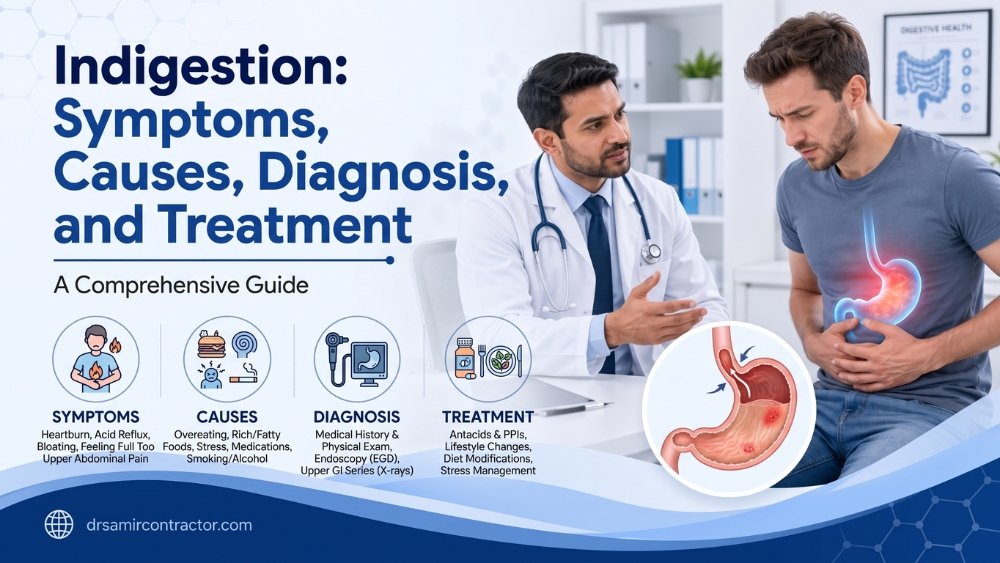
Indigestion - also called dyspepsia - is discomfort, pain, or a feeling of fullness in the upper abdomen, often after eating. It is one of the most common GI complaints in India. Most cases are caused by dietary habits and respond well to simple changes, but persistent or severe indigestion always needs proper evaluation to identify the underlying cause.
✦ Quick Answers
In India, indigestion is one of the most frequently self-medicated conditions. Most households keep antacids as a staple. "Pet kharab chhe" - the stomach is off - is one of the most common complaints patients bring to a doctor. Yet the word "indigestion" covers a wide range of symptoms and a wide range of causes.
Understanding indigestion matters because the same symptom - upper abdominal discomfort after eating - can come from simple dietary excess, H. pylori infection, a peptic ulcer, GERD, or, occasionally, early stomach cancer. Treating the symptom without identifying the cause leads to years of inadequate management. The right approach depends on the right diagnosis.
What Is Indigestion?
Indigestion, or dyspepsia, is an umbrella term for a group of upper GI symptoms - discomfort, pain, fullness, bloating, or nausea - that occur in the upper abdomen, usually in relation to eating. It is not a single disease but a symptom pattern that can arise from multiple different causes.
Doctors classify indigestion into two main types based on whether a structural cause is found:
Functional Dyspepsia
- No structural cause found
- Endoscopy is normal
- Most common type
- Linked to gut sensitivity, stress, motility
- Can persist for months or years
- Managed with diet, lifestyle, low-dose medication
Organic Dyspepsia
- A structural cause is found
- Examples: peptic ulcer, gastritis, GERD
- H. pylori infection often responsible
- Endoscopy shows an abnormality
- Responds well to targeted treatment
- Eradicating H. pylori often resolves it
Alarm Features Present
- Weight loss or anorexia
- Difficulty swallowing
- Black or bloody stool
- New onset above age 45
- Vomiting blood
- Needs urgent endoscopy - do not delay
Symptoms of Indigestion
Indigestion symptoms vary between patients. Some feel pain; others feel only fullness or bloating. Most describe a general sense that their stomach is "not working right" after eating.
Common symptoms
- Discomfort or mild pain in the upper abdomen - often described as a heaviness, pressure, or ache
- Feeling uncomfortably full during or shortly after a meal, even when you have not eaten much
- Bloating - a sense of tightness or swelling in the upper abdomen
- Excessive belching or burping
- Nausea - especially after meals
- A burning sensation in the upper abdomen (this may overlap with heartburn)
- Early satiety - feeling full very quickly, well before a normal meal is finished
Symptoms that frequently accompany indigestion
- Heartburn or acid reflux - burning in the chest or throat
- Regurgitation of food or liquid
- Loose stool or constipation in some patients
- Loss of appetite - particularly when indigestion is severe or persistent
- Fatigue - from poor absorption or chronic discomfort affecting eating patterns
What Causes Indigestion?
Indigestion is caused by a wide range of factors. Often more than one is contributing. Identifying the main driver is the key to effective treatment.
Common and Correctable Causes
- Overeating or eating too quickly
- Very oily, spicy, or heavy food
- Eating irregularly - skipping meals, then overeating
- Excess tea or coffee, especially on an empty stomach
- Alcohol
- Stress and anxiety - directly affects gut motility and sensitivity
- NSAIDs and aspirin - common cause of gastric irritation
- Antibiotics or iron supplements - can disturb gut lining
- Swallowing excess air (aerophagia)
- Sedentary lifestyle and poor sleep
Medical Causes That Need Evaluation
- Helicobacter pylori (H. pylori) infection - extremely common in India; causes gastritis and ulcers
- Peptic ulcer disease - gastric or duodenal ulcer
- Gastroesophageal reflux disease (GERD)
- Chronic gastritis - ongoing inflammation of the stomach lining
- Delayed gastric emptying (gastroparesis)
- Hiatal hernia
- Gallstones - can cause upper abdominal discomfort similar to indigestion
- Pancreatic conditions (less common)
- Stomach cancer - rare but must be considered in new-onset dyspepsia above age 45
When Should You Worry? Red Flags
Most indigestion is not dangerous. But the following features require prompt medical evaluation - do not manage these with antacids and wait.
Seek medical evaluation without delay if indigestion is associated with:
- Unintended weight loss - even if gradual
- Difficulty swallowing or a sense of food getting stuck
- Vomiting blood, or vomit that looks like coffee grounds
- Black, tarry, or bloody stool
- Persistent vomiting preventing normal eating
- New-onset indigestion in a person above 45 with no prior history
- Symptoms that have progressively worsened over weeks despite treatment
- Anaemia (low blood count) without a clear cause
- Loss of appetite lasting more than 2 weeks
These features do not automatically mean cancer - but they do mean that endoscopy is needed promptly to rule it out. Early detection of gastric cancer dramatically improves outcomes.
Who Is at Higher Risk of Indigestion?
- People with H. pylori infection - prevalence in India is 40-60%, making this the single most common identifiable medical cause of indigestion in the country
- Regular NSAID or aspirin users - for chronic pain, arthritis, or cardiac conditions; these drugs damage the stomach lining directly
- Those under chronic stress - stress alters gut motility, increases acid secretion, and lowers the threshold for experiencing discomfort
- People with irregular eating habits - skipping breakfast, eating large meals late at night, or going long hours without food
- Smokers and alcohol users - both damage the stomach lining and impair healing
- Overweight individuals - central obesity increases GERD and indigestion risk
- Those above 45 with new symptoms - organic causes including ulcers and malignancy become more relevant with age
- People with a family history of gastric cancer or peptic ulcer - both conditions have familial patterns
- Those on long-term medications including steroids, bisphosphonates, or SSRIs
How Doctors Evaluate Indigestion
A thorough history is the starting point. Your doctor will want to know:
- Exactly where the discomfort is - above or below the navel, central or to one side
- Relationship to meals - does it start during eating, right after, or hours later?
- What makes it better - eating, antacids, lying down, or nothing?
- What makes it worse - specific foods, stress, medications?
- How long the symptoms have been present and whether they are worsening
- Any red-flag features (weight loss, difficulty swallowing, blood in stool)
- Current medications, particularly NSAIDs and aspirin
- Alcohol, tobacco, and dietary habits
Physical examination will follow, focusing on the upper abdomen - looking for tenderness, a mass, or signs of anaemia. In straightforward cases without red flags and in patients under 45, a test-and-treat strategy for H. pylori before endoscopy is a reasonable and evidence-based approach.
Tests That May Be Needed
H. pylori testing (often the first step)
Three reliable methods are available: the urea breath test (non-invasive and accurate), stool antigen test, and rapid urease test at endoscopy. H. pylori is identified in a significant proportion of Indian dyspepsia patients, and its eradication often resolves symptoms without the need for long-term medication.
Upper GI Endoscopy
Direct camera examination of the food pipe, stomach, and upper small intestine. The most important test when red-flag features are present, when symptoms are persistent, or when the patient is above 45 with new-onset indigestion. Can diagnose gastritis, peptic ulcer, GERD, Barrett's esophagus, and gastric cancer.
Blood tests
Full blood count (to check for anaemia), liver and kidney function, and blood glucose. Anaemia with indigestion is a red-flag combination that warrants urgent evaluation.
Ultrasound abdomen
Useful when gallstones, liver disease, or pancreatic causes are suspected. Cannot directly diagnose stomach conditions but is part of a standard workup when symptoms overlap with biliary or right-side abdominal causes.
Gastric emptying study
In patients where gastroparesis (delayed stomach emptying) is suspected - typically those with prominent early satiety, bloating, and vomiting - a radionuclide gastric emptying test may be ordered.
Treatment Options for Indigestion
Treatment depends entirely on the cause. Treating functional dyspepsia with antibiotics is unnecessary. Treating H. pylori-related dyspepsia with antacids alone is inadequate. Accurate diagnosis drives appropriate treatment.
Treatment Decision Pathway
- 1️⃣ Lifestyle and Dietary Changes (Always First): Eat smaller, more frequent meals. Avoid triggers: oily food, spicy preparations, excess tea or coffee. Stop NSAIDs if possible. Reduce stress, improve meal regularity and sleep. Effective for mild, dietary-related indigestion.
- 2️⃣ H. pylori Testing and Eradication (if positive): If H. pylori is detected, a 14-day eradication course (combination of two antibiotics plus a PPI) is prescribed. This resolves indigestion in many patients with H. pylori-related gastritis or ulcers and is one of the most effective treatments available for this group.
- 3️⃣ Acid Suppression (PPIs or H2 Blockers): For GERD-related or ulcer-related indigestion - PPIs reduce acid secretion and allow healing. Prescribed for 4-8 weeks initially. Not appropriate as the sole long-term treatment for functional dyspepsia.
- 4️⃣ Prokinetics (Motility Agents): For patients with prominent early satiety, bloating, and slow stomach emptying - motility agents help the stomach move food along faster. Used in functional dyspepsia where delayed gastric emptying is contributing.
- 5️⃣ Endoscopy and Cause-Specific Treatment: If peptic ulcer is confirmed - H. pylori eradication plus acid suppression. If GERD-related - standard GERD management. If structural cause identified - appropriate intervention. Endoscopy also provides reassurance when no serious cause is found.
Indian Diet Guidance for Indigestion
- Best choices: Plain khichdi, soft moong dal, curd rice, banana, soft plain roti, steamed vegetables (dudhi, tinda, turai), chaas (buttermilk), coconut water
- Reduce significantly: Rajma, chole, whole urad dal (gas-forming), very heavy curry with excess oil, deep-fried snacks, very spicy pickles, raw onion and garlic in large amounts
- Avoid: NSAIDs (ibuprofen, diclofenac) without food or doctor guidance, excess alcohol, early morning tea on an empty stomach
- Eating pattern: 4-5 small meals rather than 2-3 large ones makes a real difference. Avoid eating past 8 PM whenever possible.
- Stress: If stress is a major trigger - and it commonly is - managing it through regular exercise, adequate sleep, and consistent meal times helps as much as any medication for functional dyspepsia.
When Is Surgery Needed?
Indigestion itself does not require surgery. Surgery may become relevant when a specific structural condition causing the indigestion leads to a complication.
Situations where surgery may be needed:
- Perforated peptic ulcer - a medical emergency where the ulcer has created a hole in the stomach wall; requires urgent surgical repair
- Gastric outlet obstruction from chronic ulcer - scarring from a long-standing ulcer at the stomach outlet causes persistent vomiting and requires surgical correction
- Significant hiatal hernia - causing persistent GERD and indigestion unresponsive to medical treatment; laparoscopic repair may be recommended
- Gastric cancer confirmed on endoscopy - requires oncological surgical management
The vast majority of patients with indigestion are managed entirely without surgery. When surgery is needed, the indication is always a specific, confirmed structural diagnosis - never the symptom of indigestion alone.
What Happens If Indigestion Is Left Untreated?
The consequences depend heavily on the underlying cause:
- H. pylori left untreated - persistent gastritis, progression to peptic ulcer, and a small but real increased risk of gastric cancer over many years
- Peptic ulcer left untreated - risk of bleeding (black stool, vomiting blood), perforation (acute surgical emergency), and obstruction from chronic scarring
- GERD-related indigestion ignored - esophagitis, stricture, Barrett's esophagus, and impaired quality of life
- Gastric cancer missed due to delayed evaluation - early-stage gastric cancer is treatable; advanced-stage has a poor prognosis. New-onset indigestion above 45 should always prompt endoscopy
- Functional dyspepsia - not dangerous, but significantly impairs quality of life, eating habits, and nutritional status if not managed appropriately
Self-medicating with antacids for months without a proper evaluation is the most common pattern seen in Indian patients presenting late with complicated disease.
Recovery and What Patients Can Expect
wk
wk
wk
term
Frequently Asked Questions
Indigestion in India - What Makes It So Prevalent
India-specific factors that make indigestion extremely common
- H. pylori infection affects 40-60% of the Indian population - far higher than in Western countries - and is the most common identifiable cause of organic dyspepsia and peptic ulcer disease in India
- Dietary habits - large meals with high spice content, oily preparations, irregular meal timings, and early morning tea on empty stomach - are culturally embedded triggers
- High stress burden from work, family, and financial pressures directly contributes to functional dyspepsia, which is increasingly recognised across Indian cities
- NSAID overuse - ibuprofen and diclofenac are widely available over the counter in India and widely used for pain, often without food, causing significant gastric irritation
- Delayed medical evaluation is common - the perception that indigestion is a minor problem leads many patients to self-medicate for months before seeking a proper diagnosis
- Antacid use is among the highest per capita in the world in Indian urban populations - a sign of symptom masking rather than disease management
When and Where to Seek Care in Vadodara
If your indigestion is recurring, not improving with dietary changes, or you have not had a proper evaluation including H. pylori testing, see Dr Samir Contractor at Sterling Hospital, Vadodara. Upper GI endoscopy and H. pylori testing are available to identify your specific cause and guide targeted treatment.
Years of antacid use without a diagnosis is not management - it is delay. One good evaluation saves significant time, money, and health in the long run.
Desi Patient Questions (Gujarati / Hinglish)
Aa functional dyspepsia ya H. pylori na common signs chhe. Serious nathi pan check karvanu warrants. Ek vaar H. pylori test karavo - jyaré positive hoy to 14-day treatment thi bahu patients completely thik thay jaay chhe.
Ha, indigestion ane gas extremely common chhe - India ma millions of people have chhe. Aa GI doctor for common condition che, bilkul sharam rakhvo nahi. Proper evaluation thi actual cause khabar pade chhe ane treatment kaam kare chhe.
Puretu band karvanu zaruri nathi. Rajma-chole saari reet rinse karo ane cook karo. Nana portions lo. Sensitive stomach vala lokone vadhare problem thay chhe - doctor sathe discuss karo ke kon si dal best chhe tumara mate.
NSAIDs (ibuprofen, diclofenac) khali pet leva thi stomach damage thay chhe. Jyaré levo tyare food sathe lo. Jyaré doctor na advice vagar long-term lo cho - stop karo ane doctor sathe discuss karo. Alternative pain management options hooi shake chhe.
Endoscopy ek very safe procedure chhe - serious complications extremely rare chhe. Light sedation sathe karvaay chhe, usually 10-15 minute. Doctor ne red flags hoy to recommend kare chhe ane tya karvanu important chhe - delay karvathi kaam nathi chaltu when investigation is indicated.