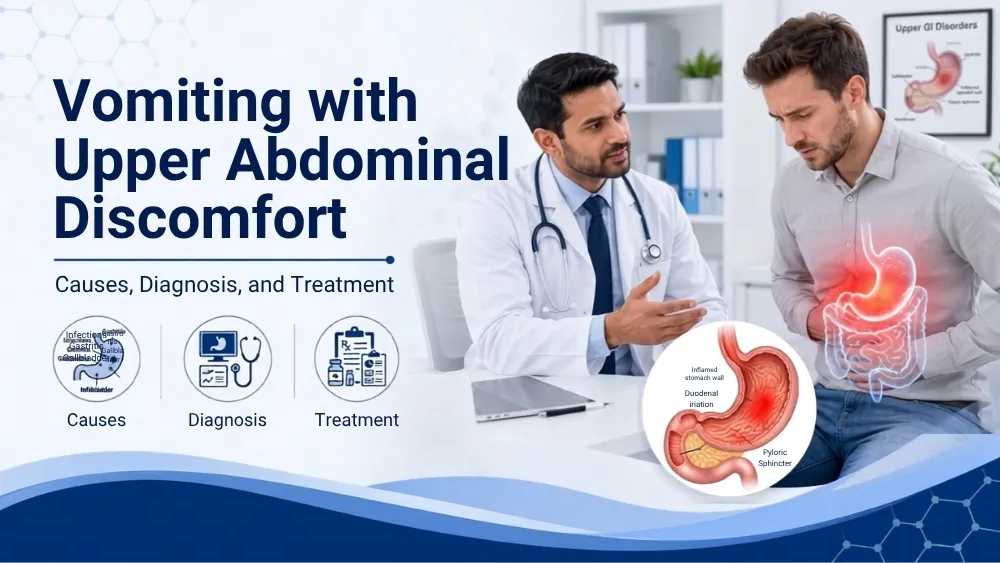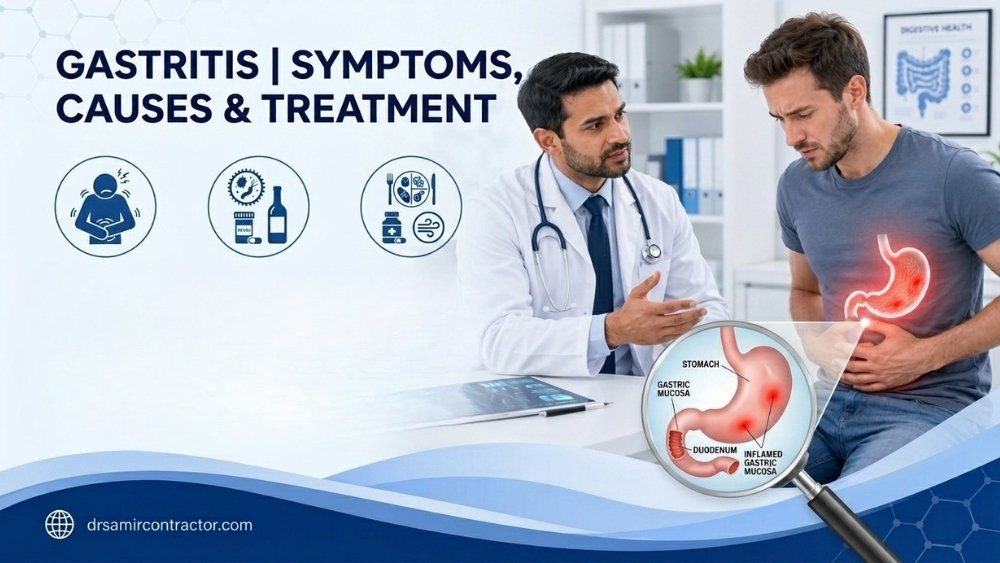
Gastritis is inflammation of the stomach lining. It is one of the most common GI conditions in India, where H. pylori infection and NSAID overuse are the dominant causes. Most cases are very treatable - H. pylori eradication resolves gastritis permanently in positive patients. Chronic, untreated gastritis can progress to peptic ulcer and, over decades, carries a cancer risk.
✦ Quick Answers
Gastritis means the stomach lining is inflamed. This inflammation impairs the stomach's normal function - producing acid and digestive enzymes, protecting itself from that acid, and moving food along. The resulting symptoms - upper abdominal pain, nausea, bloating, and post-meal discomfort - are among the most common GI complaints in India.
The most important distinction in gastritis is whether H. pylori is the cause. If it is, eradication permanently resolves the condition in most patients. If it is not, other causes need to be identified and addressed.
Types of Gastritis
Acute gastritis
Sudden inflammation, usually from a specific trigger - alcohol binge, a single course of NSAIDs, a viral infection, or severe physiological stress. Resolves when the trigger is removed. Typically causes sudden onset upper abdominal pain, nausea, and vomiting that improves within days.
Chronic gastritis
Long-standing inflammation developing over months to years. Often caused by H. pylori infection or autoimmune processes. May be asymptomatic or cause persistent dyspepsia. If untreated, can progress to gastric atrophy, intestinal metaplasia, and increased cancer risk over decades.
Erosive gastritis
Multiple erosions (superficial breaks) in the stomach lining - most commonly from NSAIDs, alcohol, or critical illness. Can cause acute upper GI bleeding - black stool or vomiting blood.
Autoimmune gastritis
The immune system attacks the stomach's acid-producing cells. Causes reduced acid production and vitamin B12 malabsorption (leading to pernicious anaemia). Less common but important to identify - associated with increased gastric cancer risk and requires surveillance.
Symptoms of Gastritis
- Upper abdominal pain or discomfort - gnawing, burning, or aching quality, typically central
- Nausea - particularly after meals
- Bloating and belching
- Post-meal heaviness and fullness
- Loss of appetite
- Vomiting in acute or severe cases
- Black or tarry stool - when erosive gastritis is causing bleeding
Causes of Gastritis
Common and Treatable Causes
- H. pylori infection - by far the most common cause of chronic gastritis in India; 40-60% prevalence; eradication is curative
- NSAIDs (ibuprofen, diclofenac, naproxen, aspirin) - inhibit prostaglandin synthesis, removing the protective mucus layer; extremely common cause in India given widespread OTC use
- Alcohol - directly damages the stomach lining; acute gastritis from binge drinking; chronic gastritis from regular excess
- Bile reflux - alkaline bile from the small intestine damaging the stomach lining; does not respond to acid medicine
- Stress gastritis - in critically ill patients in ICU; managed with PPI prophylaxis
Less Common but Important
- Autoimmune gastritis - antibodies against parietal cells and intrinsic factor; causes achlorhydria (no acid), vitamin B12 deficiency, and pernicious anaemia
- CMV gastritis - in immunocompromised patients
- Crohn's disease involving the stomach - upper GI Crohn's
- Radiation gastritis - after radiotherapy near the stomach
- Ischemic gastritis - inadequate blood supply in severe illness
Red Flags
Seek urgent evaluation if gastritis symptoms include:
- Black, tarry stool (melaena) - erosive gastritis with bleeding
- Vomiting blood or coffee-ground material - significant upper GI bleeding
- Unintended weight loss - chronic atrophic gastritis or possible malignancy
- Persistent symptoms despite 4-8 weeks of treatment
- New onset above age 45 - gastric cancer must be excluded
- Family history of gastric cancer
Diagnosis
H. pylori testing - always first in India
Urea breath test (most accurate non-invasive), stool antigen test, or endoscopic biopsy with rapid urease test. Given 40-60% prevalence, this is the highest-yield initial investigation for any patient with chronic upper GI symptoms.
Upper GI Endoscopy
Direct visualisation of the stomach lining. Identifies the pattern of gastritis (antral predominant = H. pylori; diffuse = autoimmune; erosive = NSAIDs/alcohol). Biopsies taken for histology and H. pylori testing. In patients above 45 with new symptoms - endoscopy is essential to exclude malignancy.
Blood tests
Full blood count (anaemia from erosive gastritis or pernicious anaemia), B12 and folate (autoimmune gastritis), anti-parietal cell antibodies (autoimmune gastritis workup), ferritin.
Treatment of Gastritis
H. pylori eradication (most important treatment in India)
14-day eradication course - two antibiotics + one PPI. Standard regimen includes clarithromycin + amoxicillin + PPI (triple therapy) or bismuth-based quadruple therapy. Confirm eradication by urea breath test 4-6 weeks after completing the course. Eradication permanently resolves H. pylori gastritis in most patients and significantly reduces ulcer and cancer risk.
NSAID-related gastritis
- Stop NSAIDs where clinically possible
- Switch to paracetamol for pain control when appropriate
- If NSAIDs must be continued - always take with food and a PPI to protect the stomach lining
- PPI co-prescription is mandatory for high-risk patients on NSAIDs (age >65, prior ulcer, high dose)
PPI therapy
For acid-related gastritis - reduces acid and allows the stomach lining to heal. 4-8 weeks standard course. Taken correctly (30-60 minutes before breakfast).
Autoimmune gastritis
No treatment for the autoimmune process itself. B12 injections for pernicious anaemia. Regular endoscopic surveillance given increased cancer risk (every 3 years typically).
Indian Dietary Guidance for Gastritis
- Best choices: Plain khichdi, soft dal, curd rice, boiled batata, banana, coconut water, chaas - all low in acidity and easy on an inflamed stomach lining
- Avoid during active gastritis: NSAIDs on empty stomach, alcohol, very spicy food, deep-fried snacks, chai on empty stomach (stimulates acid directly)
- Meal pattern: Regular small meals - do not skip meals. An empty stomach allows acid to irritate the inflamed lining directly. Small meals buffer acid without overwhelming the stomach
- After recovery: Gradual return to normal Indian diet. Maintain moderate ghee and oil. Avoid NSAIDs without food even after recovery.
What Happens If Gastritis Is Left Untreated?
- H. pylori gastritis progresses to peptic ulcer disease in 15-20% of infected individuals - with attendant risks of bleeding, perforation, and obstruction
- Chronic H. pylori gastritis causes gastric atrophy, intestinal metaplasia, and dysplasia over decades - part of the Correa cascade leading to gastric cancer risk
- Autoimmune gastritis causes progressive pernicious anaemia (B12 deficiency), neurological complications, and increased gastric cancer risk
- Erosive gastritis from NSAIDs can cause acute significant upper GI bleeding requiring hospitalisation and endoscopic management
Frequently Asked Questions
Gastritis in India
India-specific context - why gastritis is so prevalent and undertreated
- H. pylori prevalence in India (40-60%) is among the highest in the world - making H. pylori gastritis the single most common identifiable cause of upper GI symptoms in the country, yet most patients have never been tested
- NSAIDs (ibuprofen, diclofenac) are among the most widely purchased medications in India without prescription - used regularly for headache, back pain, arthritis, and dental pain - without food, without PPI co-therapy, causing widespread erosive gastritis
- Alcohol-related gastritis is an important and under-acknowledged cause in Indian patients who underreport their alcohol intake to doctors
- Autoimmune gastritis with pernicious anaemia is under-recognised in India - many patients with unexplained B12 deficiency and neurological symptoms have never had their stomach evaluated
Seek Care in Vadodara
Persistent upper GI symptoms - H. pylori testing + endoscopy at Sterling Hospital, Vadodara. Dr Samir Contractor provides complete evaluation and targeted treatment.
Desi Patient Questions
Alag chhe. Acidity symptom chhe (burning feel). Gastritis diagnosis chhe (stomach lining inflamed). Both sathe hoi shake. Gastritis H. pylori ya NSAIDs thi thay chhe - simple acidity medicine thi fully nathi jaatu. H. pylori test karo - jyaré positive hoy to eradication thi permanently better thay chhe most cases ma.
NSAIDs khali petey leva na joiye - stomach lining damage thay chhe. Band karo ya food sathe lo. Doctor sathe discuss karo alternative pain management. PPI (omeprazole) simultaneously lo jyaré NSAIDs zaruri hoy. Symptoms persist kare to endoscopy karo - erosive gastritis ni severity check karva.