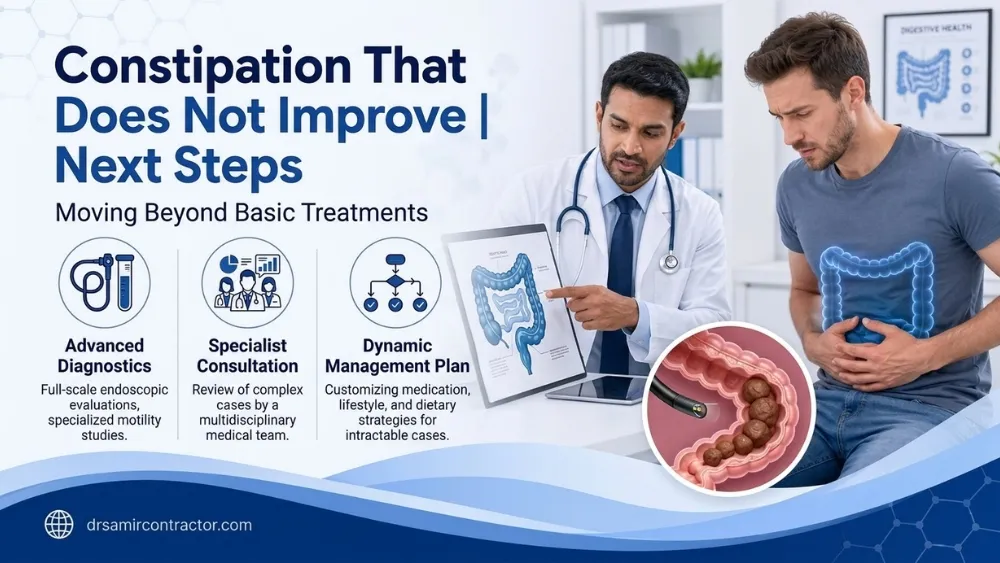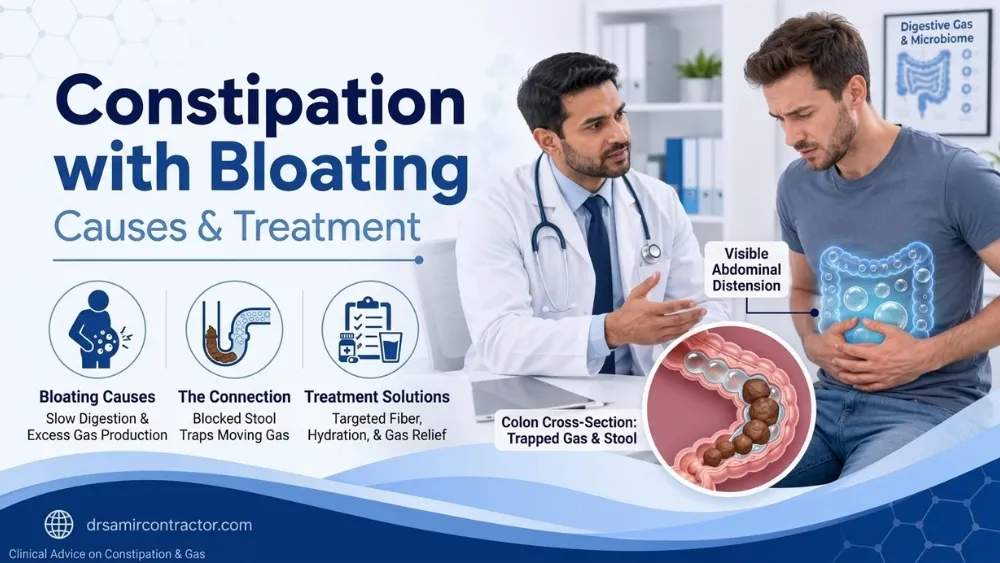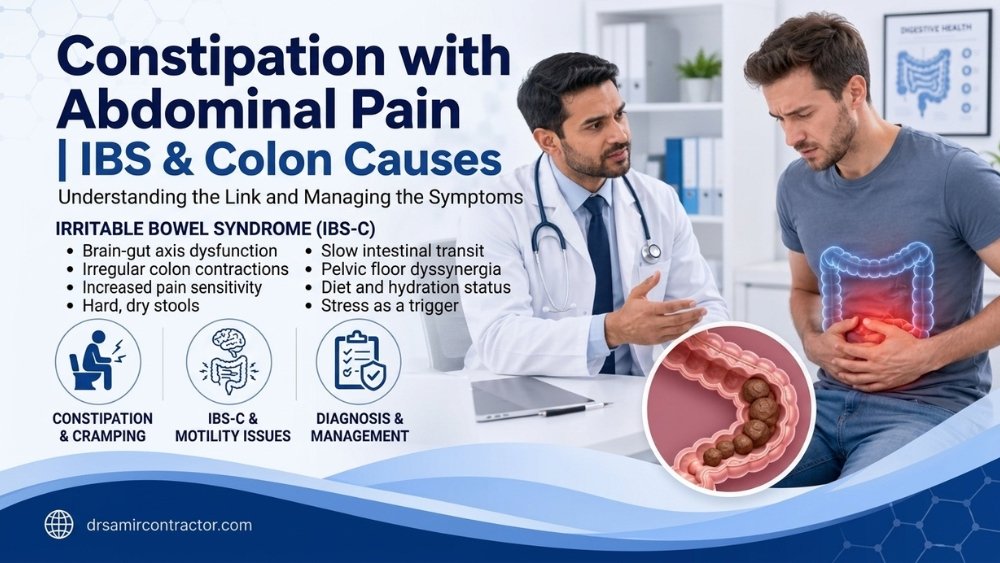
Constipation combined with abdominal cramping or pain is one of the most characteristic symptom clusters of irritable bowel syndrome (IBS-C). When pain is relieved by defecation, the diagnosis of IBS-C is particularly likely. However, constipation with persistent severe abdominal pain, weight loss, or change in bowel habit above age 45 requires colonoscopy to exclude colorectal pathology.
✦ Quick Answers
Rome IV Criteria for IBS-C (Constipation-Predominant)
- Recurrent abdominal pain at least 1 day/week for the last 3 months
- Pain associated with 2+ of: related to defecation (better or worse after), change in stool frequency, change in stool appearance
- In IBS-C: majority of bowel movements are hard/lumpy stools (BSC type 1-2) with <25% loose stools
- Structural pathology excluded (normal colonoscopy, no alarm features)
Common Causes of Constipation with Abdominal Pain
- IBS-C - most common; crampy lower abdominal pain relieved by defecation; hard stools; bloating; stress as a major trigger
- Functional constipation with colonic distension - accumulated stool and gas cause diffuse cramping; relieved by laxative or successful bowel movement
- Diverticular disease - left lower abdominal cramping with constipation (and sometimes diarrhoea alternating); common above age 45
- Bowel obstruction - constipation + severe abdominal pain + distension + inability to pass gas - emergency
- Colorectal cancer - progressive constipation + cramping + blood + weight loss - needs colonoscopy
- Inflammatory bowel disease - constipation (particularly in proctitis) with cramping and mucus
Red Flags
Colonoscopy needed when constipation + pain includes:
- Age above 45
- Blood in stool
- Weight loss
- Pain that is constant, severe, and not relieved by defecation
- Progressive worsening over weeks
- Inability to pass stool AND gas (bowel obstruction)
- Family history of colorectal cancer
Treatment for IBS-C (Most Common Cause)
- Low-FODMAP diet: Reduce high-fermentation carbohydrates - onion, garlic, wheat in large amounts, apples, pears. Rice and banana are well tolerated. Gujarati diet adaptation: reduce onion-garlic-heavy sabzi during flares.
- Soluble fibre (isabgol): Reduces both constipation and IBS cramping - works better than insoluble fibre for IBS
- Peppermint oil capsules: Antispasmodic - specifically helps IBS abdominal cramping and bloating
- Antispasmodics (mebeverine, dicyclomine): For acute cramping episodes
- Prokinetics (domperidone, itopride): For slow transit component
- Stress management: IBS-C is strongly stress-linked; regular meals, exercise, and sleep improve symptoms measurably
- Low-dose tricyclic antidepressants: For visceral hypersensitivity in refractory IBS-C
Desi Patient Questions
Ha - pain relieved by defecation = IBS-C hallmark feature. Low-FODMAP diet try karo (onion-garlic-wheat reduce karo), isabgol add karo, peppermint oil capsules for cramps. Stress manage karo - direct impact chhe IBS par. Jyaré age 45+ hoy ya blood hoy - colonoscopy zaruri chhe structural causes exclude karva.
Frequently Asked Questions
Related Pages
Constipation + Abdominal Pain? Get Properly Evaluated in Vadodara
Dr Samir Contractor at Sterling Hospital, Vadodara provides colonoscopy and specialist management for IBS-C and other causes of this cluster.
Medical Disclaimer: For patient education only. Not a replacement for medical consultation.