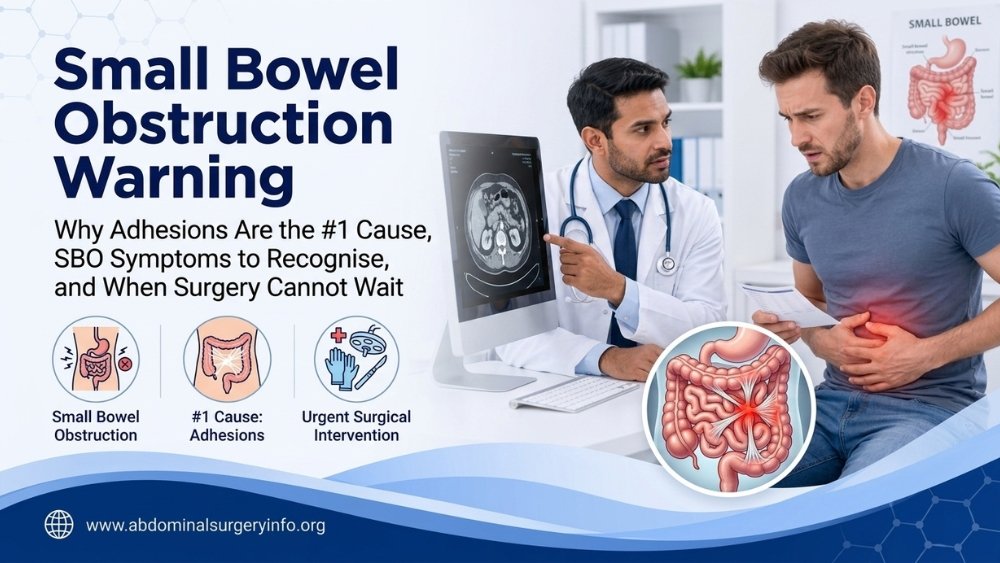
In simple terms: Small bowel obstruction (SBO) happens when something physically blocks your small intestine, preventing food and fluid from passing through. The single most common cause is adhesions - bands of internal scar tissue that form after abdominal surgery. If you have ever had an operation on your abdomen and you suddenly develop severe cramping pain with vomiting, this could be an SBO and you need hospital evaluation the same day. Many cases settle with a nasogastric tube and IV fluids, but some require surgery - and delays can turn a manageable problem into a life-threatening emergency.
✦ Quick Answers
Understanding Small Bowel Obstruction - What Happens Inside
The small intestine is a tube roughly 5-7 metres long that connects the stomach to the large intestine (colon). Its job is to digest food and absorb nutrients. When this tube becomes blocked at any point, everything upstream of the blockage - partially digested food, digestive juices, bile, and gas - begins to accumulate. The bowel above the blockage distends, pressure builds, and the body responds with cramping pain and reflexive vomiting as it tries to push contents past the obstruction.
If the blockage is not relieved, the distended bowel wall becomes swollen and inflamed. Fluid shifts from the bloodstream into the bowel wall and lumen, leading to dehydration and electrolyte imbalance. In the most dangerous scenario - strangulation - the blood supply to the trapped segment is compromised. Without blood flow, the bowel tissue dies (necrosis), perforates, and spills intestinal contents into the abdominal cavity, causing peritonitis and potentially fatal sepsis.
This sequence - from blockage to distension to potential strangulation - explains why SBO is considered a surgical emergency even when the initial treatment is conservative. The clock is always running, and careful monitoring is essential to detect the transition from simple obstruction to strangulation before it is too late.
Unlike a general overview of bowel obstruction (which covers both large and small bowel - see our bowel obstruction warning signs page), this page focuses specifically on small bowel obstruction because it has distinct causes, a different clinical presentation, and its own management pathway centred around adhesions and the decision between conservative care and surgery.
Why Adhesions Are the #1 Cause of Small Bowel Obstruction
Adhesions are fibrous bands of scar tissue that form between abdominal organs and the peritoneal lining after surgery, infection, or inflammation. They are the body's natural healing response to tissue injury - but they can become problematic when they kink, compress, or twist loops of mobile small bowel.
The statistics are striking. Studies consistently show that 60-75% of all SBO admissions are caused by adhesions. In patients who have undergone previous abdominal surgery, adhesions form in approximately 90-95% of cases - though only a fraction of these will ever cause symptoms. The risk is cumulative: each additional abdominal operation increases both the density of adhesions and the likelihood of obstruction.
Which Surgeries Carry the Highest Adhesion Risk?
| Surgery Type | Adhesion-Related SBO Risk | Why Risk Is Higher |
|---|---|---|
| Appendicectomy (open) | Moderate - up to 5% lifetime risk | Lower abdominal dissection; peritonitis if appendix perforated |
| Colorectal surgery (open) | High - up to 10-15% | Extensive peritoneal handling; multiple bowel loops exposed |
| Gynaecological surgery (open) | Moderate to high - 5-12% | Pelvic adhesions; endometriosis surgery compounds the risk |
| Surgery for peritonitis | Very high - 15-20% | Widespread inflammation triggers dense adhesion formation |
| Laparoscopic procedures | Lower - 1-3% | Smaller incisions, less peritoneal trauma, reduced tissue drying |
| Upper GI surgery (open) | Low to moderate - 3-5% | Less small bowel handling unless extensive dissection needed |
Beyond adhesions, the other causes of SBO include:
- Hernias (10-15% of SBO): Inguinal, femoral, umbilical, or incisional hernias can trap (incarcerate) loops of small bowel. A hernia that was once reducible but suddenly becomes hard, tender, and irreducible is a warning sign of impending strangulation.
- Tumours (5-10%): Primary small bowel tumours (carcinoid, lymphoma, adenocarcinoma) or external compression from metastatic deposits can obstruct the lumen.
- Crohn's disease: Chronic inflammation leads to stricture formation in the terminal ileum, a common site for Crohn's-related obstruction.
- Gallstone ileus: A large gallstone erodes through the gallbladder into the duodenum and impacts distally, usually at the ileocaecal valve. This is rare but classically presents in elderly women.
- Intussusception: One segment of bowel telescopes into the adjacent segment. More common in children but can occur in adults, often with a pathological lead point such as a polyp or tumour.
Clinical Features - How to Recognise SBO Early
The classic presentation of small bowel obstruction follows a recognisable pattern, though the exact symptoms depend on whether the obstruction is high (proximal) or low (distal) in the small bowel:
- Central colicky abdominal pain: The pain comes in waves, corresponding to peristaltic contractions trying to force contents past the blockage. Patients often describe it as "cramping" or "gripping" pain centred around the navel.
- Vomiting - early and profuse: This is a hallmark feature that distinguishes SBO from large bowel obstruction. In proximal SBO, vomiting occurs within hours of onset and is bilious (greenish-yellow). In distal SBO, vomiting develops later and may become feculent (dark, foul-smelling) as stagnant intestinal contents back up.
- Minimal initial distension: Unlike large bowel obstruction, abdominal distension in early SBO may be modest or even absent - particularly in high obstruction where vomiting decompresses the proximal bowel. Significant distension develops as the obstruction persists.
- Absolute constipation: Complete inability to pass gas or stool. Early in the course, the bowel below the obstruction may continue to empty, so some patients pass gas or stool initially - but this stops as the obstruction becomes established.
- Audible bowel sounds: High-pitched, tinkling bowel sounds are characteristic of mechanical obstruction. The bowel is working harder to overcome the blockage, producing exaggerated sounds that a stethoscope easily detects.
Small Bowel Obstruction vs Large Bowel Obstruction - Key Differences
| Feature | Small Bowel Obstruction (SBO) | Large Bowel Obstruction (LBO) |
|---|---|---|
| Most common cause | Adhesions (60-75%) | Colorectal cancer (60%+) |
| Vomiting | Early, profuse, bilious/feculent | Late or absent |
| Distension | Minimal initially; central | Marked; peripheral (flanks) |
| Pain character | Central, colicky, periumbilical | Lower abdominal, cramping |
| Constipation | Late feature (bowel below may still empty initially) | Often the earliest symptom |
| X-ray appearance | Central dilated loops; valvulae conniventes visible | Peripheral dilated loops; haustra visible |
| Conservative resolution rate | 65-80% (adhesive SBO) | Lower; most require intervention |
| Dehydration | Rapid and severe (profuse vomiting) | Slower onset |
This table highlights why SBO and LBO are managed as distinct clinical entities. For a comprehensive overview covering both types, see our bowel obstruction warning signs page.
Red Flags - Signs That SBO May Be Strangulating
- Pain becomes constant - colicky pain that shifts to continuous, unrelenting pain suggests bowel wall ischaemia
- Fever (temperature above 38°C / 100.4°F) - indicates bowel compromise or developing peritonitis
- Tachycardia (heart rate above 100/min) with low blood pressure - sign of sepsis or severe dehydration
- Rigid, board-like abdomen - peritoneal irritation from bowel necrosis or perforation
- Rebound tenderness - pain that worsens when you release pressure, indicating peritonitis
- Bloody nasogastric aspirate - suggests mucosal necrosis in the obstructed segment
- Metabolic acidosis on blood gas analysis - marker of tissue ischaemia
- Raised white blood cell count and lactate - laboratory indicators of strangulation
- Failure to improve after 48-72 hours of conservative management
- CT findings: mesenteric haziness, thickened bowel wall, pneumatosis (air in bowel wall), or portal venous gas
Any of these signs mandate urgent surgical consultation. Strangulated SBO carries a mortality rate of 10-25% vs less than 5% for simple SBO - the difference is early recognition.
Encouraging Signs - When Conservative Management Is Likely to Succeed
- Pain remains colicky (comes and goes) rather than constant
- No fever, and heart rate and blood pressure are stable
- Abdomen is distended but soft - no rigidity or rebound tenderness
- Nasogastric tube output is decreasing over 24-48 hours
- Patient begins passing flatus (gas) - a strong sign the obstruction is resolving
- Gastrografin contrast reaches the colon on follow-up X-ray within 24 hours
- Blood tests remain normal (white cell count, lactate, electrolytes)
- History of previous adhesive SBO episodes that resolved without surgery
Even when signs are reassuring, patients must remain in hospital under close observation until the obstruction has fully resolved and oral diet is tolerated.
Diagnosis of Small Bowel Obstruction
Accurate diagnosis requires a combination of clinical assessment, imaging, and laboratory tests:
- History: Previous abdominal surgery (the single most important question), onset and nature of pain, timing of last flatus/stool, character of vomiting, presence of hernias.
- Physical examination: Inspection for surgical scars and hernias, abdominal distension, visible peristalsis, tenderness, peritoneal signs. All hernia orifices (inguinal, femoral, umbilical, incisional) must be examined.
- Plain abdominal X-ray: Shows dilated small bowel loops (greater than 3 cm diameter), air-fluid levels on erect film, and a paucity of gas in the colon. Multiple air-fluid levels at different heights are characteristic of mechanical SBO.
- CT scan with contrast (gold standard): Identifies the exact site of obstruction (transition point), the cause (adhesive band, hernia, tumour), and critically - signs of strangulation (mesenteric oedema, bowel wall thickening, reduced enhancement, pneumatosis). CT has sensitivity above 90% for SBO and is now considered the investigation of choice.
- Blood investigations: Complete blood count (raised WBC suggests strangulation), serum electrolytes (vomiting causes hypokalaemia and metabolic alkalosis), renal function (dehydration), serum lactate (raised in ischaemia), and arterial blood gas.
- Gastrografin follow-through: Administered via NGT at 24-48 hours. Serves a dual purpose - diagnostic (predicts need for surgery) and mildly therapeutic (the hyperosmolar contrast draws fluid into the lumen, which may help resolve partial obstruction).
Treatment of Small Bowel Obstruction - Conservative vs Surgical
Initial Conservative Management (the "Drip and Suck" Protocol)
The majority of adhesive SBO cases are initially managed conservatively:
- Nil by mouth (NBM): Complete bowel rest to reduce the burden on the obstructed segment.
- Nasogastric tube (NGT) decompression: A tube passed through the nose into the stomach to drain accumulated fluid and gas, reducing vomiting and abdominal distension. NGT output is monitored closely - decreasing volumes indicate improvement.
- Intravenous fluids: Aggressive fluid resuscitation to correct dehydration caused by vomiting, third-space fluid losses, and reduced oral intake. Electrolytes (especially potassium and sodium) are corrected simultaneously.
- Regular monitoring: Vital signs (pulse, blood pressure, temperature), abdominal examination every 6-8 hours, NGT output measurement, urine output via catheter, and serial blood tests to detect early signs of strangulation.
- Urinary catheter: To accurately measure urine output as a marker of hydration status and renal perfusion.
Conservative management is typically given a trial of 48-72 hours. During this period, the Gastrografin challenge at the 24-48-hour mark provides an objective measure of whether the obstruction is resolving.
When Surgery Becomes Necessary
Surgery is indicated in the following situations:
- Clinical or radiological signs of strangulation at any point during the admission
- Complete SBO that fails to resolve after 48-72 hours of conservative management
- Gastrografin contrast fails to reach the colon on follow-up imaging
- SBO caused by an incarcerated hernia (surgery should not be delayed)
- Suspected closed-loop obstruction on CT scan
- Recurrent episodes of adhesive SBO causing repeated hospitalisations
Laparoscopic Adhesiolysis - The Modern Approach
When surgery is needed for adhesive SBO, laparoscopic (keyhole) adhesiolysis has become the preferred approach in suitable patients. The procedure involves dividing the adhesive bands responsible for the obstruction through small incisions using a camera and specialised instruments.
Advantages of laparoscopic adhesiolysis over open surgery include:
- Smaller incisions - typically three 5-10 mm ports compared to a full laparotomy wound
- Less post-operative pain and reduced need for opioid painkillers
- Faster return of bowel function (passing gas within 24-48 hours)
- Shorter hospital stay (3-5 days vs 7-14 days for open surgery)
- Lower rate of new adhesion formation - which is particularly important given that adhesions caused the problem in the first place
- Reduced risk of wound infection and incisional hernia
Laparoscopic adhesiolysis is not suitable in all cases - patients with very dense adhesions, multiple previous operations, signs of bowel necrosis, or severe distension may require open surgery (laparotomy). The decision is made by the operating surgeon based on clinical findings and intra-operative assessment. In my practice at Sterling Hospital, I attempt laparoscopic management first whenever feasible, converting to open surgery only when the laparoscopic approach reaches its limits. For more about minimally invasive techniques, visit our laparoscopic surgery page.
Bowel Resection - When Bowel Cannot Be Saved
If the obstructed bowel segment has become non-viable (necrotic) due to strangulation, it must be surgically removed (resected). The healthy ends are then joined back together (anastomosis). In rare situations where the bowel is too inflamed or the patient too unwell for a primary anastomosis, a temporary stoma (opening onto the abdominal wall) may be created. This is reversed in a second operation once the patient has recovered. Bowel resection adds to the complexity and recovery time of SBO surgery, which is why early recognition and timely intervention are so important - the goal is to operate before the bowel dies.
Preventing Recurrent Small Bowel Obstruction
Because adhesion formation is the fundamental problem, prevention strategies focus on reducing new adhesion development:
- Laparoscopic surgery when possible: Minimally invasive approaches cause less peritoneal trauma and produce fewer adhesions than open surgery.
- Anti-adhesion barriers: Specialised materials (such as hyaluronate-carboxymethylcellulose membranes) can be placed during surgery to physically separate healing surfaces. Evidence shows they reduce adhesion formation, though their ability to prevent SBO recurrence specifically remains under study.
- Careful surgical technique: Gentle tissue handling, meticulous haemostasis (stopping all bleeding), avoiding foreign material in the abdomen, and keeping tissues moist during surgery all reduce adhesion formation.
- Early mobilisation after surgery: Getting out of bed and walking within hours of surgery helps restore gut motility and may reduce adhesion density.
- Dietary awareness: Patients with a history of adhesive SBO should eat smaller, well-chewed meals and avoid very high-fibre foods in large quantities that might form a bolus in a narrowed segment.
Had abdominal surgery and experiencing pain with vomiting? Do not wait at home. Dr Samir Contractor provides urgent evaluation for suspected bowel obstruction at Sterling Hospital, Vadodara.
Long-Term Outlook for Patients with Adhesive SBO
The prognosis for adhesive SBO depends on the severity and timing of treatment:
- Simple adhesive SBO treated promptly: Mortality below 5%. Most patients recover fully and resume normal activities within 2-4 weeks.
- Strangulated SBO requiring bowel resection: Mortality rises to 10-25%, depending on the extent of necrosis and patient fitness. Recovery is longer (4-8 weeks) and nutritional support may be needed.
- Recurrence: After a first episode of adhesive SBO, the risk of a future episode is approximately 15-30% over the following years. Patients who have had multiple episodes face higher recurrence rates.
Patients with a history of SBO should be educated about the warning signs so they seek help immediately if symptoms recur. Carrying a medical summary card or wearing a medical alert that mentions previous SBO and abdominal surgery can speed up emergency management.
SBO in Special Clinical Situations
Post-Bariatric Surgery Patients
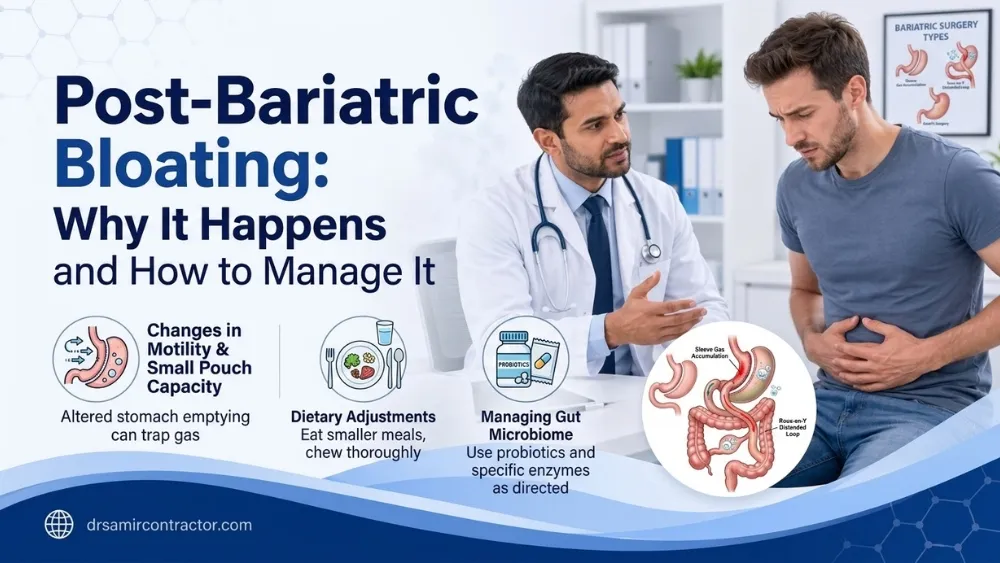
Patients who have undergone bariatric (weight-loss) surgery - particularly Roux-en-Y gastric bypass - face a specific risk of internal hernia-related SBO. The altered anatomy creates potential spaces (Petersen's space, mesocolic defect) through which small bowel can herniate internally. The presentation may be atypical and CT findings subtle. Any post-bariatric patient with acute abdominal pain should be evaluated with a high index of suspicion for SBO. See also: post-bariatric bloating.
Elderly Patients
Elderly patients with SBO face higher mortality because of comorbidities, delayed presentation, and reduced physiological reserve. Strangulation may present with fewer classical signs in the elderly - the absence of fever or tachycardia does not exclude ischaemia. A low threshold for CT imaging and surgical consultation is essential in this population.
SBO with No Surgical History
When SBO occurs in a patient with no previous operations, adhesions are unlikely to be the cause. The surgeon must actively look for hernias (including internal and femoral hernias, which are easily missed), small bowel tumours, Crohn's disease, and gallstone ileus. These patients are more likely to require surgery, and the underlying cause often needs definitive treatment beyond simple adhesiolysis.
Small Bowel Obstruction in the Indian Context
Several factors make SBO management in India distinct from Western practice:
- High open surgery rate historically: Until recently, the majority of abdominal surgeries in India were performed through open incisions. This means a large population of patients carries significant abdominal adhesions, making adhesive SBO one of the most frequent surgical emergencies across Indian hospitals.
- Obstructed hernias remain common: Unlike in Western countries where elective hernia repair is routine, many patients in India present late with long-standing hernias that eventually incarcerate and obstruct. Inguinal and femoral hernias remain a significant cause of SBO, particularly in rural populations.
- Tuberculosis-related strictures: Intestinal tuberculosis can cause stricture formation in the ileum, leading to recurrent episodes of subacute or acute SBO. This is a cause rarely seen in Western practice but important in the Indian context, particularly in patients with a history of pulmonary TB or those from endemic regions.
- Delayed presentation: Many patients in India present to hospital only after trying home remedies, visiting local practitioners, or tolerating symptoms for days. This delay increases the risk of strangulation and the need for emergency surgery with bowel resection.
- Worm-bolus obstruction: In paediatric populations and some rural adult populations, heavy Ascaris (roundworm) infestation can cause a bolus of worms to physically block the small bowel lumen. This is managed initially with nasogastric decompression and anti-helminthic medication, with surgery reserved for non-resolving cases.
- Growing laparoscopic expertise: Indian surgical centres, including Sterling Hospital in Vadodara, are now performing laparoscopic adhesiolysis with outcomes comparable to international standards. The shift toward minimally invasive surgery is helping reduce future adhesion-related SBO in the next generation of operated patients.
Common Questions in Gujarati & Hinglish
After any abdominal surgery, scar tissue (adhesions) forms inside the belly. These adhesion bands can twist or press on the small intestine, blocking it. This can happen weeks, months, or even years after the operation. If you suddenly get severe cramping pain with vomiting, go to the hospital immediately.
When the small intestine is blocked, food and fluid cannot pass through. You get very bad stomach cramps, start vomiting green or brown liquid, and cannot pass gas or stool. If not treated, the trapped part of the intestine can die, which is life-threatening. Hospital treatment with a tube through the nose and drip is needed urgently.
If you have severe cramping belly pain that comes in waves along with repeated vomiting - especially if you have had any abdominal surgery before - this could be small bowel obstruction. Do not take any laxatives or try home remedies. Go to the emergency department so doctors can do an X-ray and start treatment immediately.
Yes, in many cases laparoscopic (keyhole) surgery can be used to cut the adhesion band causing the blockage. This means smaller cuts, less pain after surgery, faster recovery, and most importantly - fewer new adhesions forming. Dr Samir Contractor performs this procedure at Sterling Hospital when the patient's condition allows it.
After one episode of adhesion-related blockage, there is about a 15-30% chance of it happening again in the future. To reduce this risk, eat smaller meals, chew food well, avoid very heavy high-fibre foods in one sitting, and if you ever need surgery again, ask your surgeon about laparoscopic techniques and anti-adhesion barriers.
If the blocked part of the intestine loses its blood supply (strangulation), the bowel tissue can die. This is a very serious, life-threatening situation. If treated early - before strangulation - the risk is low. But if there is delay, mortality can be 10-25%. This is why you must never ignore severe abdominal pain with vomiting, especially after previous surgery.
Frequently Asked Questions
Small bowel obstruction (SBO) is a blockage of the small intestine, most commonly caused by adhesions from previous surgery. It presents with early profuse vomiting, central colicky pain, and minimal initial distension. Large bowel obstruction (LBO) affects the colon, is most often caused by colorectal cancer, and presents with marked distension, constipation as the earliest symptom, and late or absent vomiting. The management pathways differ significantly. For a detailed overview of both, see our bowel obstruction warning signs page.
SBO typically develops over hours. Pain and vomiting can begin suddenly, especially in complete adhesive obstruction. In partial or subacute obstruction, symptoms may fluctuate over days. The key feature is progression - worsening pain, increasing vomiting, and inability to pass gas signal that the obstruction is not resolving on its own.
Yes. In partial (incomplete) SBO, some gas and even liquid stool may still pass through the narrowed segment. However, if symptoms are progressing - increasing pain, worsening vomiting, reduced oral intake - the obstruction may be worsening toward complete blockage. Do not wait until all gas stops; seek evaluation based on symptom progression.
A nasogastric tube (NGT) is a thin, flexible tube passed through the nose, down the oesophagus, and into the stomach. It drains accumulated fluid and gas, providing significant relief from nausea, vomiting, and distension. Insertion can cause brief discomfort and gagging, but once in place, most patients tolerate it well and experience immediate improvement in symptoms.
For SBO that resolves with conservative management (NGT, IV fluids), hospital stay is typically 3-5 days. Laparoscopic adhesiolysis requires 3-5 days. Open surgery with or without bowel resection may require 7-14 days or longer if complications arise. The key discharge criteria are return of bowel function, tolerance of oral diet, and manageable pain.
The small intestine processes approximately 6-8 litres of digestive secretions daily (saliva, gastric juice, bile, pancreatic juice, intestinal secretions). When the bowel is blocked, these fluids have nowhere to go and accumulate above the obstruction. The body reflexively expels them through vomiting. This is also why dehydration occurs so rapidly in SBO.
Gastrografin is a water-soluble contrast agent given through the NGT. If it reaches the large bowel on X-ray within 24 hours, the obstruction is likely partial and will resolve without surgery (positive predictive value above 95%). If it fails to reach the colon, surgery is recommended. Gastrografin also has a mild therapeutic effect - its hyperosmolar nature draws fluid into the bowel, which can help resolve partial obstruction.
Adhesions themselves are usually not directly visible on CT or ultrasound because they are thin, soft-tissue bands. However, CT can identify a "transition point" where dilated bowel abruptly transitions to collapsed bowel - this is the site of obstruction. When no obvious cause (hernia, mass) is seen at the transition point in a patient with previous surgery, adhesive SBO is the presumed diagnosis.
After a first episode of adhesive SBO, the risk of recurrence is approximately 15-30%. Patients who undergo surgery for SBO may develop new adhesions that cause future episodes. This is one reason why conservative management is preferred when safe - avoiding surgery means avoiding new adhesion formation. Laparoscopic surgery, when required, produces fewer new adhesions than open surgery.
Yes. In children, the causes differ somewhat from adults. Common paediatric causes include intussusception (the most common cause of SBO in children under 3), incarcerated hernias, Meckel's diverticulum, and post-operative adhesions. In India, Ascaris worm-bolus obstruction is also seen in children from areas where worm infestation is prevalent.
Feculent vomiting refers to vomit that has a dark brown colour and faecal odour. It occurs in late or distal SBO when intestinal contents have been stagnant for a prolonged period and bacterial overgrowth produces faecal-smelling gas and fluid. Feculent vomiting is a serious sign indicating significant and prolonged obstruction - it warrants urgent surgical assessment.
Absolutely not. Laxatives should never be taken when mechanical bowel obstruction is suspected. Stimulant laxatives increase peristaltic activity against a fixed blockage, which can worsen pain, cause bowel perforation, and precipitate strangulation. If you suspect SBO, stop eating and drinking and go to the hospital immediately.
Simple (non-strangulated) SBO treated promptly has a mortality rate below 5%. Strangulated SBO with bowel necrosis carries a mortality rate of 10-25%, which rises further if diagnosis is delayed, if the patient is elderly, or if significant bowel resection is needed. Early recognition and timely intervention are the most important factors in reducing mortality.
Simple SBO that resolves - either conservatively or with timely surgery - generally does not cause permanent bowel damage. However, strangulated SBO requiring bowel resection means permanent loss of that segment of small bowel. If a large segment is removed (over 100-150 cm), it may lead to short bowel syndrome, which impairs nutrient absorption and may require long-term nutritional support.
A hernia that was previously soft and reducible (you could push it back in) but suddenly becomes hard, tender, irreducible, and is accompanied by colicky abdominal pain, vomiting, and inability to pass gas is likely incarcerated and may be causing SBO. This is a surgical emergency - present to the emergency department immediately.
In patients with existing adhesions, eating very large meals, inadequately chewed food, or large quantities of high-fibre foods (such as uncooked vegetables, fruit skins, and seeds) can form a food bolus that gets stuck at a narrowed point. Eating smaller, more frequent, well-chewed meals with adequate fluids may reduce the risk of triggering an episode.
Laparoscopic surgery reduces adhesion formation compared to open surgery because of smaller incisions, less peritoneal handling, and reduced tissue drying. Patients who have laparoscopic adhesiolysis form fewer new adhesions than those who undergo open laparotomy, which may reduce - though not eliminate - the risk of future SBO episodes. Read more: Laparoscopic Surgery.
Patients with a history of adhesive SBO should carry a medical summary card or wear a medical alert bracelet/tag that states: previous SBO, type and date of previous surgeries, and current medications. This information allows emergency teams to diagnose and treat a recurrent episode faster, especially if the patient is too unwell to communicate.
Related Pages
Do not ignore severe abdominal pain after previous surgery. Schedule an urgent evaluation with Dr Samir Contractor today.
Medical Disclaimer: The information on this page is provided for educational and informational purposes only. It is not a substitute for professional medical advice, diagnosis, or treatment. Always seek the advice of a qualified healthcare provider with any questions you may have regarding a medical condition. Never disregard professional medical advice or delay seeking it because of something you have read on this website. If you think you may have a medical emergency, call your doctor or local emergency services immediately.
© 2026 Dr Samir Contractor. All rights reserved.