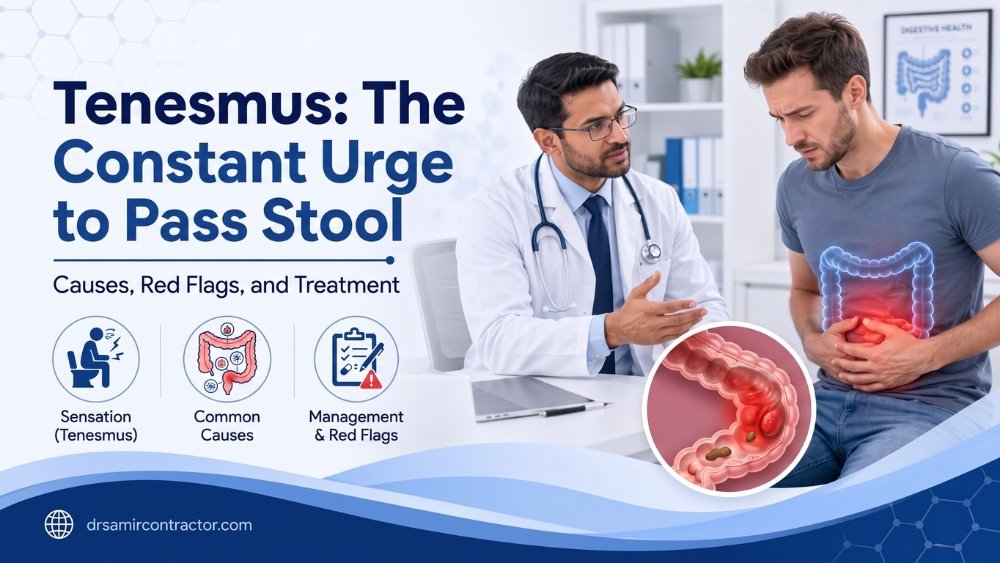
Tenesmus is the persistent, distressing sensation of needing to pass stool even when the rectum is empty. You strain, you sit on the toilet, but nothing comes out - or only a small amount of mucus or blood passes. It is a symptom that should never be ignored, because it can signal rectal inflammation, a rectal mass, or colorectal cancer.
Reviewed by Dr. Samir Contractor, MS, FMAS, FIAGES · Senior Consultant - Sterling Hospital, Vadodara · 25+ years, 8,000+ surgeries · Published April 2026
✦ Quick Answer
What Is Tenesmus?
Tenesmus is one of those symptoms that patients struggle to describe - and often feel embarrassed about. In my outpatient clinic at Sterling Hospital, Vadodara, patients frequently say things like, "I keep feeling like I need to go to the toilet, but when I sit there, nothing happens," or "I strain and strain, but only a little mucus comes out." Some describe it as a cramping pressure deep inside the rectum that never quite goes away.
The medical term for this sensation is tenesmus - derived from the Greek word teinesmos, meaning a straining effort. In clinical practice, tenesmus specifically refers to a persistent or recurrent feeling that defecation is needed, accompanied by straining, even though the rectum contains little or no stool. The rectum is essentially empty, but the brain receives a signal that something is there.
This matters for two reasons. First, tenesmus is genuinely distressing - patients lose sleep, feel anxious about leaving the house, and spend extended periods in the bathroom. Second, tenesmus is a red-flag symptom. When it is persistent and new, it must be investigated to rule out rectal cancer, proctitis, and other serious conditions.
Tenesmus vs. Incomplete Evacuation vs. Urgency: Understanding the Differences
Patients and even some healthcare providers sometimes confuse tenesmus with two related but distinct symptoms - incomplete evacuation and urgency to pass stool. Getting the distinction right is important because the causes and the clinical approach differ.
| Feature | Tenesmus | Incomplete Evacuation | Urgency |
|---|---|---|---|
| Core sensation | Constant urge to defecate even when the rectum is empty | Feeling that stool remains after you have finished | Sudden, intense need to rush to the toilet |
| After passing stool | Urge persists - no relief | Some relief, but a residual sense of fullness | Usually resolves once bowel is emptied |
| Stool output | Little or nothing; sometimes mucus or blood only | Stool passes, but you feel more is left behind | Normal volume passed if you reach the toilet in time |
| Key causes | Proctitis, rectal mass, radiation, post-dysenteric | Hemorrhoids, ODS, rectocele, IBS | IBS-diarrhoea, colitis, rectal hypersensitivity |
| Red-flag level | High - always investigate | Moderate - investigate if persistent | Moderate - investigate if new or worsening |
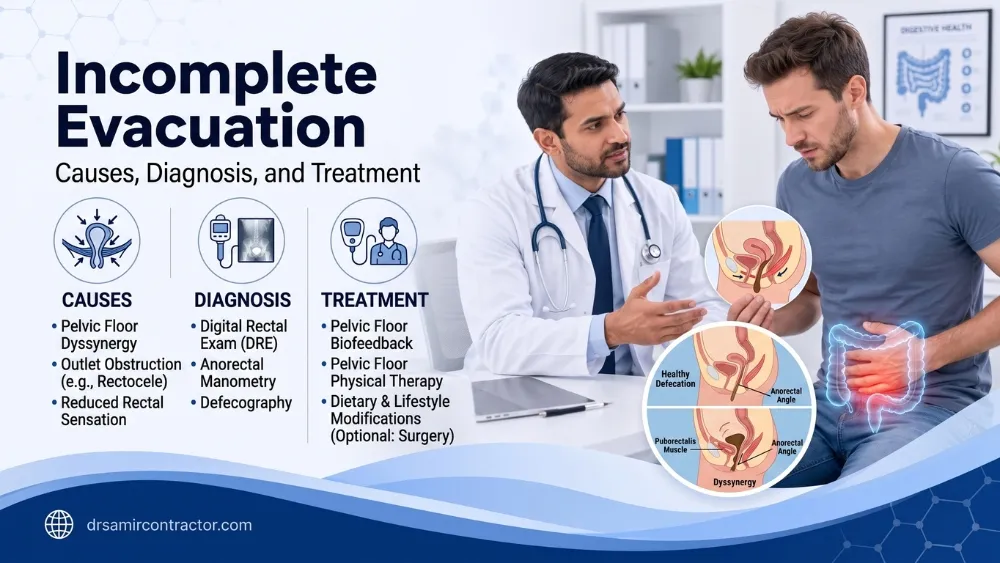
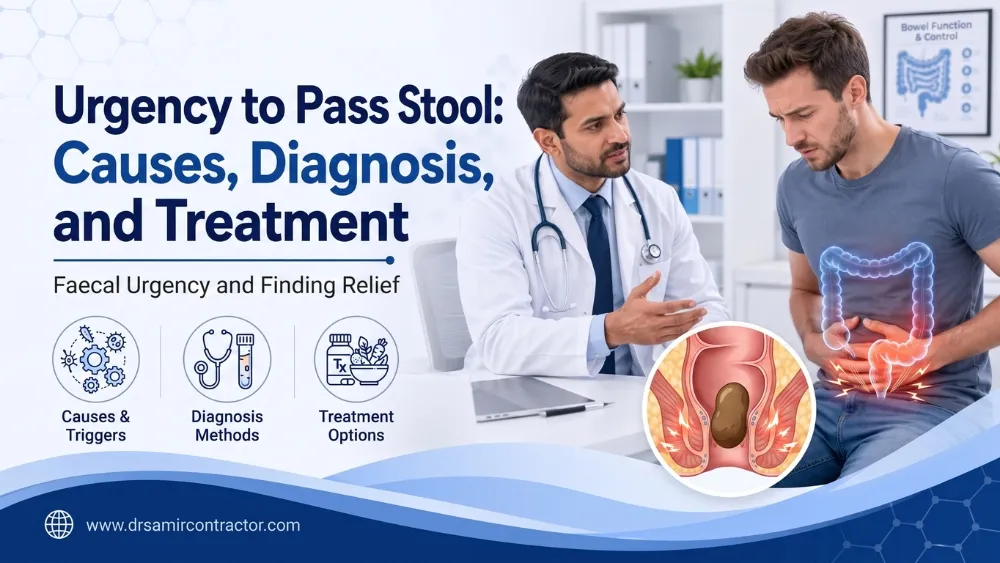
If your primary experience is feeling that your bowels never fully empty after a normal motion, our page on incomplete evacuation covers that in detail. If your main problem is needing to rush to the toilet urgently, the urgency to pass stool page addresses that presentation. This page focuses specifically on tenesmus - the persistent urge when nothing is there.
What Causes Tenesmus?
Tenesmus arises when the sensory nerve endings in the rectal wall are stimulated even though the rectum contains no stool. This stimulation can come from inflammation, a mass occupying the rectum, radiation damage, or a persistent irritation left behind after an infection. Here are the main causes I encounter in clinical practice.
1. Proctitis (Rectal Inflammation)
Proctitis is the single most common cause of tenesmus. When the rectal mucosa is inflamed, the sensory receptors in the rectal wall become hypersensitive. Even a small amount of mucus or blood collecting in the inflamed rectum triggers a signal to the brain that feels identical to the urge to pass stool. Causes of proctitis include:
- Ulcerative colitis: Inflammation typically starts in the rectum (ulcerative proctitis) and can extend upwards. Tenesmus with bloody mucus is one of the earliest symptoms of ulcerative colitis flares.
- Infectious proctitis: Bacterial infections (Shigella, Salmonella, Campylobacter), amoebic dysentery, sexually transmitted infections (gonorrhoea, chlamydia, HSV), and tuberculosis of the rectum can all cause intense proctitis and tenesmus.
- Radiation proctitis: Patients who have received pelvic radiotherapy for cervical, prostate, bladder, or rectal cancers can develop radiation-induced inflammation of the rectal mucosa. This can occur during treatment or months to years later (late radiation proctitis). Tenesmus is a hallmark symptom.
- Crohn's disease: While Crohn's more commonly affects the ileum, rectal involvement does occur and produces tenesmus, perianal disease, and fistula formation.
2. Rectal Mass or Polyp
A tumour or large polyp sitting in the rectum physically occupies space and triggers the stretch receptors in the rectal wall - producing a constant sensation that something needs to be expelled. This is one of the most important causes to rule out.
- Rectal cancer: Persistent tenesmus - especially when combined with blood in stool, mucus discharge, or change in bowel habits - is one of the classical presenting symptoms of rectal cancer. The tumour acts as a space-occupying lesion that the body interprets as retained stool.
- Large rectal polyp: A villous adenoma or other large polyp in the lower rectum can produce the same mechanical sensation. Large rectal polyps also carry a risk of malignant transformation and should be removed.
3. Post-Dysenteric (Post-Infectious) Tenesmus
After a bout of amoebic or bacillary dysentery - which is common in India - the rectal mucosa remains irritated for days to weeks after the infection has been treated. During this recovery period, patients experience tenesmus even though stool cultures may be negative. This typically resolves with time, but if it persists beyond 4 to 6 weeks, further investigation is warranted.
4. Functional (Non-Organic) Tenesmus
In some patients, no structural or inflammatory cause is found despite thorough investigation. These patients have a functional anorectal disorder - the rectal nerves are hypersensitive and generate a false signal of rectal fullness. Contributing factors include:
- Pelvic floor dyssynergia: Uncoordinated pelvic floor muscle contraction during defecation can produce a sensation of incomplete emptying that mimics tenesmus.
- Visceral hypersensitivity: Similar to the mechanism in IBS, the rectum may be abnormally sensitive to normal physiological stimuli.
- Psychological factors: Anxiety and hypervigilance about bowel function can amplify the sensation. This is not "imaginary" - the gut-brain connection is real and measurable.
5. Other Causes
- Rectal foreign body: Occasionally, retained faecal matter, a foreign body, or impacted stool in the rectum produces tenesmus.
- Perianal abscess or fistula: Inflammation adjacent to the rectum can irritate rectal nerve endings.
- Endometriosis of the rectum: In women, endometrial tissue on the rectal wall can cause cyclical tenesmus that worsens around menstruation.
- Solitary rectal ulcer syndrome: A benign but distressing condition where chronic straining produces an ulcer on the anterior rectal wall, creating a cycle of tenesmus and further straining.
Causes of Tenesmus: Summary Table
| Category | Specific Cause | Key Features |
|---|---|---|
| Inflammatory | Ulcerative proctitis / colitis | Bloody mucus, cramping, diarrhoea; responds to 5-ASA therapy |
| Infectious proctitis (amoebic, bacterial, STI) | Acute onset after dysentery or exposure; stool culture/PCR diagnostic | |
| Radiation proctitis | History of pelvic radiotherapy; bleeding and tenesmus months to years later | |
| Crohn's disease (rectal) | Perianal disease, fistulae, skip lesions on colonoscopy | |
| Neoplastic | Rectal cancer | Blood in stool, weight loss, change in bowel habit; biopsy on colonoscopy |
| Large rectal polyp | Mucus discharge, intermittent bleeding; removed at colonoscopy | |
| Post-infectious | Post-dysenteric irritation | Recent dysentery episode; stool tests now negative; resolves over weeks |
| Functional | Pelvic floor dyssynergia | Diagnosed by anorectal manometry and defecography |
| Visceral hypersensitivity | Normal investigations; rectal balloon distension test abnormal | |
| Other | Solitary rectal ulcer syndrome | Anterior rectal ulcer on proctoscopy; history of chronic straining |
| Rectal endometriosis | Cyclical symptoms around menstruation; MRI pelvis diagnostic |
Why Tenesmus Is a Red-Flag Symptom
I emphasize this to every patient I see with tenesmus: persistent tenesmus is not a symptom to wait out. The reason is straightforward - rectal cancer is among its causes, and rectal cancer detected early has excellent cure rates. Detected late, the prognosis is very different. The window between early and late is exactly the time that patients spend hoping the symptom will go away on its own.
In India, there is a widespread tendency to attribute any rectal symptom to hemorrhoids ("piles"). Many patients - and unfortunately some physicians - assume that tenesmus is simply a feature of piles and prescribe creams or sitz baths. While hemorrhoids can cause a sensation of fullness, true persistent tenesmus with straining and no productive stool output is not a typical hemorrhoid symptom. It demands direct visualization of the rectum.
Red Flags: When Tenesmus Needs Urgent Investigation
If you have tenesmus along with any of the following, seek medical evaluation without delay:
- Blood in stool or on wiping - whether bright red or dark
- Mucus discharge from the rectum
- Unintentional weight loss
- Change in bowel habits lasting more than 3 weeks (new constipation, diarrhoea, or alternating)
- Tenesmus that is new, persistent, and not resolving after 2 to 3 weeks
- Progressive worsening of the urge over days or weeks
- Age above 45 with new-onset tenesmus
- Family history of colorectal cancer or inflammatory bowel disease
- Fever with rectal symptoms
- Iron-deficiency anaemia of unknown cause
- Narrow or pencil-thin stools alongside tenesmus
- Tenesmus developing after pelvic radiotherapy (even months later)
Reassurance: When Tenesmus Is Likely Temporary
Not all tenesmus indicates cancer or serious disease. If you have recently recovered from a bout of food poisoning or dysentery and the tenesmus started during that illness and is gradually improving - this is most likely post-infectious irritation that will settle within a few weeks. Similarly, if tenesmus is mild, intermittent, clearly linked to straining or constipation, and you have no blood, mucus, weight loss, or change in bowel habits - the likelihood of a serious underlying condition is low. However, even in these cases, a clinical examination is advisable if symptoms persist beyond 3 to 4 weeks.
How Tenesmus Is Diagnosed
When a patient presents with tenesmus at my clinic, the evaluation follows a systematic pathway. The goal is to identify the cause - or rule out the serious causes - as efficiently as possible.
Step 1: Detailed History
I ask about the onset and duration (sudden or gradual, days or months), associated symptoms (blood, mucus, pain, weight loss, fever), any recent dysentery episode, history of inflammatory bowel disease, pelvic radiotherapy, medications, and family history of colorectal cancer. The pattern of symptoms often points toward the most likely cause even before examination.
Step 2: Digital Rectal Examination (DRE)
This is the single most important first step. A careful digital examination of the rectum can detect a low rectal mass, tenderness suggesting proctitis, stricture, or the presence of blood or mucus on the examining finger. A rectal mass palpable on DRE is an immediate indication for urgent colonoscopy and biopsy. I cannot overstate how many rectal cancers are diagnosed simply by performing this examination - an examination that takes less than 30 seconds.
Step 3: Proctoscopy
A proctoscope is a short, rigid instrument that allows direct visualization of the rectal mucosa. It is performed in the outpatient clinic without sedation and takes two to three minutes. Proctoscopy can reveal:
- Rectal mucosal inflammation (proctitis) - redness, friability, ulceration
- A rectal polyp or mass
- Solitary rectal ulcer
- Radiation changes (telangiectasia, pallor, friability)
- Internal hemorrhoids (which may coexist but are rarely the sole cause of true tenesmus)
Step 4: Colonoscopy
Colonoscopy is essential when red flags are present or when proctoscopy does not provide a definitive answer. It examines the entire colon and rectum, allows tissue biopsy, and can remove polyps in the same sitting. In the context of tenesmus, colonoscopy is needed to:
- Rule out rectal cancer or proximal colon cancer
- Assess the extent of inflammatory bowel disease
- Remove large polyps that may be causing the sensation
- Biopsy suspicious areas
Colonoscopy is performed under sedation as a day-care procedure at Sterling Hospital. It is painless and typically takes 20 to 30 minutes.
Step 5: Additional Investigations (When Needed)
- Blood tests: Complete blood count (to check for anaemia), ESR, CRP (inflammatory markers), liver function, and CEA (tumour marker in suspected malignancy)
- Stool tests: Microscopy for amoeba and parasites, stool culture, calprotectin (a marker of intestinal inflammation that helps distinguish inflammatory from functional causes)
- MRI pelvis: For staging of rectal cancer, assessment of fistulae, or suspected endometriosis
- Anorectal manometry: When functional tenesmus is suspected - measures rectal sensation thresholds and pelvic floor muscle coordination
Persistent tenesmus? Do not wait - a focused consultation with proctoscopy can identify the cause and guide the right treatment.
Book a Consultation WhatsApp Dr. SamirTreatment of Tenesmus
The treatment of tenesmus is entirely directed at the underlying cause. Tenesmus itself is a symptom - not a disease. Treating the cause resolves the symptom.
Proctitis (Inflammatory)
- Ulcerative proctitis: Mesalamine (5-ASA) suppositories or enemas are the first-line treatment. They deliver anti-inflammatory medication directly to the inflamed rectal mucosa. Response is usually seen within 2 to 4 weeks. For more extensive colitis, oral mesalamine, steroids, or biologic therapy may be needed under gastroenterology guidance.
- Infectious proctitis: Treated with targeted antibiotics or antiparasitic agents based on stool culture or PCR results. Amoebic proctitis responds to metronidazole followed by a luminal agent.
- Radiation proctitis: Management ranges from topical sucralfate enemas and short-chain fatty acid enemas to argon plasma coagulation (APC) for bleeding telangiectasia. Hyperbaric oxygen therapy is used in refractory cases at specialised centres.
Rectal Cancer or Polyp
- Rectal polyp: Removed endoscopically during colonoscopy. If the polyp is too large for endoscopic removal, transanal minimally invasive surgery (TAMIS) or formal colorectal surgery may be required.
- Rectal cancer: Treatment involves a multidisciplinary approach - surgery (low anterior resection or abdominoperineal resection depending on tumour location), often preceded by neoadjuvant chemoradiotherapy for locally advanced disease. Early-stage rectal cancer confined to the rectal wall has excellent survival rates with surgery alone. The earlier the diagnosis, the better the outcome. This is precisely why persistent tenesmus must not be ignored. For more details, see our page on colorectal cancer warning signs.
Post-Dysenteric Tenesmus
When tenesmus follows a documented episode of dysentery and investigations confirm no ongoing infection or inflammation, management is supportive:
- Reassurance that the mucosa is healing and the symptom will resolve
- Warm sitz baths for rectal discomfort
- Bulking agents (isabgol/psyllium) to regulate stool consistency
- Antispasmodics if cramping is prominent
- Review in 4 weeks - if tenesmus persists, re-investigation is warranted
Functional Tenesmus
When no structural or inflammatory cause is found, management involves:
- Biofeedback physiotherapy: Particularly effective for pelvic floor dyssynergia. The patient learns to coordinate pelvic floor muscles during defecation using real-time feedback.
- Dietary management: Adequate fibre and hydration to ensure normal stool consistency. Avoiding straining, which worsens the cycle.
- Gut-directed hypnotherapy or CBT: For patients in whom anxiety and hypervigilance amplify the sensation.
- Low-dose tricyclic antidepressants: Amitriptyline at low doses (10 to 25 mg at night) can reduce visceral hypersensitivity and improve rectal sensation thresholds. This is used as a neuromodulator, not as an antidepressant.
What Happens If Tenesmus Is Ignored?
The consequences of ignoring persistent tenesmus depend on the underlying cause, but they can be significant.
- Missed rectal cancer: A patient who attributes persistent tenesmus to "gas" or "piles" and delays investigation may present months later with advanced rectal cancer that could have been caught at an early, curable stage.
- Untreated IBD: Ulcerative proctitis that is not treated can progress to more extensive colitis, increasing the risk of complications and the difficulty of management.
- Chronic straining: Persistent straining in response to tenesmus can itself cause complications - hemorrhoids, rectal prolapse, and solitary rectal ulcer syndrome - creating a vicious cycle.
- Quality of life: Tenesmus is genuinely debilitating. Patients describe spending hours in the bathroom, avoiding social events, losing sleep, and experiencing significant anxiety. Early diagnosis and treatment can restore quality of life that patients thought was permanently lost.
Tenesmus and the Importance of Not Assuming "Piles"
This point deserves its own section because it is the single most common clinical error I encounter. In India - and in Vadodara specifically - the default assumption for any rectal symptom is hemorrhoids. Patients tell me, "My doctor said it is piles." Family members say, "Everyone has piles, it is nothing to worry about."
Hemorrhoids (piles) are common. But hemorrhoids cause bleeding, prolapse, and sometimes a sense of fullness. They do not typically cause the persistent, unrelenting urge to strain with no productive output that defines tenesmus. When a patient has true tenesmus, especially with blood or mucus, and the diagnosis of "piles" was made without a proctoscopy or colonoscopy - the diagnosis may be incomplete or wrong.
I have seen patients referred to me with "bleeding piles" who turned out to have rectal cancer. I have seen patients treated for constipation for months who actually had ulcerative proctitis causing tenesmus. The lesson is simple: any persistent rectal symptom deserves at least a proctoscopy. It takes minutes, is done in the clinic, and can save lives.
Tenesmus in the Indian Context
Several factors make tenesmus a particularly important symptom to recognize in Indian patients.
- High burden of infectious dysentery: Amoebic and bacillary dysentery remain common across India, especially during monsoon months and in areas with inconsistent water quality. Post-dysenteric tenesmus is a frequent presentation in my Vadodara clinic. While most cases resolve, persistent tenesmus after dysentery always needs investigation to rule out incomplete treatment, mucosal damage, or a co-existing pathology unmasked by the infection.
- Rising colorectal cancer incidence: Colorectal cancer incidence in urban India has increased steadily over the past two decades. Younger patients (below 50) are increasingly being diagnosed. The traditional assumption that colorectal cancer is rare in Indians is outdated. Tenesmus as a presenting symptom of rectal cancer is well documented in Indian surgical literature.
- Delayed presentation: Cultural reluctance to discuss rectal symptoms, the tendency to self-treat with home remedies or over-the-counter "piles" medications, and limited access to proctoscopy in primary care all contribute to delayed diagnosis. Many patients I see have had tenesmus for months before seeking specialist evaluation.
- Tuberculosis of the rectum: While uncommon, intestinal and rectal tuberculosis is part of the differential diagnosis in India. It can mimic Crohn's disease and rectal cancer, and histological examination of biopsy samples is essential for differentiation.
- IBD awareness gap: Inflammatory bowel disease - particularly ulcerative colitis - is increasing in India but remains under-diagnosed. Many patients with ulcerative proctitis are treated empirically for "infection" or "IBS" without ever undergoing colonoscopy and biopsy for definitive diagnosis.
Frequently Asked Questions About Tenesmus
તમારી ભાષામાં સવાલો · Questions in Gujarati / Hinglish
Aa symptom ne medical bhasha ma "tenesmus" kahe chhe. Matlab ke rectum (chhealla bhag ni aatnardi) ma kaayin nathi, pan brain ne signal aave chhe ke kaayin chhe. Aa proctitis (rectal inflammation), rectal polyp, cancer, ke infection pachhini irritation na lidhe thai shake chhe. Aa symptom ignore na karo - proctoscopy karavo zaruri chhe.
Piles (hemorrhoids) ma bleeding, swelling, ke prolapse hoy chhe - pan besi ne strain karo ane kaayin na aave, aa piles nu typical symptom nathi. Jyare tame strain karo ane bass mucus ke thodu blood j aave, varamvar toilet javanu man thay - aa tenesmus chhe. Piles chhe ke nahi aa proctoscopy thi j khabar pade, pan tenesmus nu cause ene upar hoy shake chhe - jeva ke rectal cancer. Check karavvu zaruri chhe.
Dysentery pachhi rectal lining irritated rehti hoy chhe. Normally 2 thi 4 ahavadiya ma sudhre chhe. Pan jyo 4-6 ahavadiya pachhithi pan tenesmus rahe, ke blood-mucus aave, to colonoscopy karavvi joiye - infection complete clear thai gayi chhe ke nahi, ke koi bijo problem to nathi.
Badha ne nahi, pan ghanna ne haa. Jyo blood aave, mucus aave, weight ghatyu hoy, 45 varshe thi upar no hoy, ke symptom 3 ahavadiya thi vadhare rahe - to colonoscopy zaruri chhe. Aa painless procedure chhe, sedation ma thay chhe, ane ek j divas ni chhe. Rectal cancer jaldi pakdavvu hoy to colonoscopy sabauthi reliable test chhe.
Treatment cause upar depend kare chhe. Proctitis ma suppositories (mesalamine) kaam kare chhe. Infection ma antibiotics. Polyp hoy to colonoscopy ma j kadhi nakhay. Cancer hoy to surgery - jaldi pakdavo to outcome bahuj saru hoy chhe. Functional tenesmus ma biofeedback ane diet modification thi faydo thay chhe.
Tenesmus cancer nu ek symptom hoi shake chhe, pan mota bhag na cases ma cancer nathi hotu. Proctitis, infection, ane functional causes vadhare common chhe. Pan cancer ne rule out karvu jaruri chhe - khas karine jyare blood hoy, weight ghatyu hoy, ke bowel habit badli gayi hoy. Proctoscopy ane colonoscopy thi answer mali jay chhe.
Related Pages on drsamircontractor.com
Related Symptoms
Disease Pages
Treatment Pages
Book your consultation with Dr. Samir
Contractor
Sterling Hospital, Vadodara