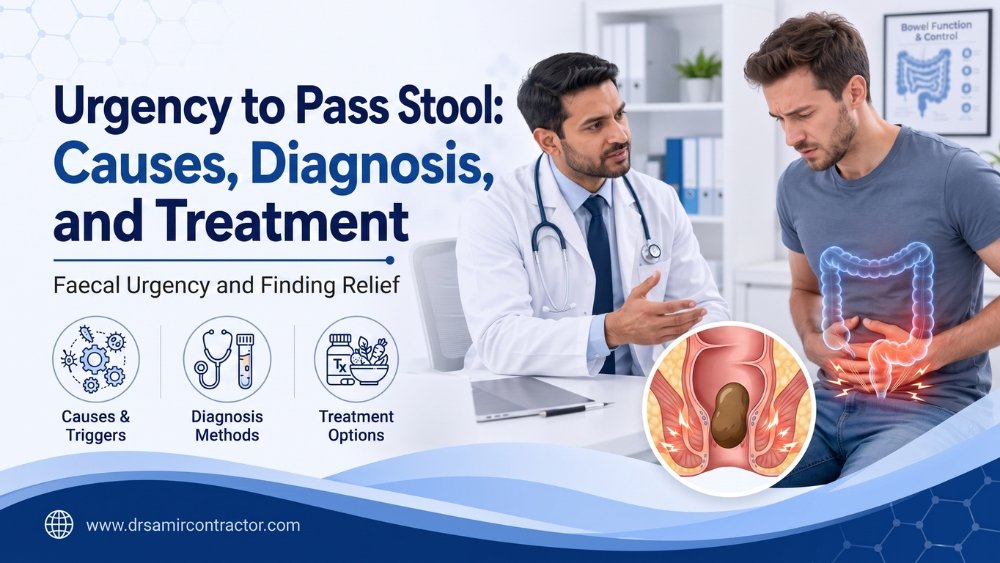
Faecal urgency is the sudden, intense need to rush to the toilet to pass stool - with very little warning time and a real fear of not making it. It is a distressing symptom that limits travel, social outings, and daily confidence. While most causes are treatable, persistent or worsening urgency needs proper evaluation to identify the underlying reason and rule out serious conditions.
Reviewed by Dr. Samir Contractor, MS, FMAS, FIAGES · Senior Consultant - Sterling Hospital, Vadodara · 25+ years, 8,000+ surgeries · Published April 2026
✦ Quick Answer
What Is Faecal Urgency?
Faecal urgency - also called bowel urgency or rectal urgency - is the sudden, overwhelming need to get to a toilet immediately to pass stool. Patients describe it in unmistakable terms: "I have no warning," "I have to drop everything and run," "I cannot wait even five minutes." Unlike the normal physiological urge to defecate, which allows you to comfortably defer a bowel movement for a reasonable time, faecal urgency gives almost no grace period. The consequence is real: if a toilet is not accessible within minutes, involuntary soiling can occur.
This is not a rare complaint. In my outpatient clinic at Sterling Hospital, Vadodara, I see patients with faecal urgency almost every week. What strikes me most is how profoundly this symptom affects daily life - far more than many conditions that are objectively more dangerous. Patients with chronic urgency plan their entire day around toilet access. They avoid long commutes. They skip social events. They decline travel. Some carry a change of clothes at all times. The social and psychological burden is enormous, yet many patients suffer in silence for years before seeking help because they feel embarrassed to discuss it.
Understanding what causes faecal urgency, distinguishing it from a related but different symptom called tenesmus, and knowing that effective treatments exist are the key messages of this page.
Urgency vs. Tenesmus: A Critical Distinction
Urgency and tenesmus are frequently confused - by patients and sometimes by doctors - but they are clinically different symptoms with different implications. Getting this distinction right is essential for correct diagnosis.
| Feature | Faecal Urgency | Tenesmus |
|---|---|---|
| Core sensation | "I need to go NOW and cannot wait" | "I feel like I need to go but nothing comes out" |
| Is stool present? | Yes - there is actual stool to pass | Often no - rectum may be empty |
| Timing | Acute, comes in waves, often after meals | Persistent, nagging, may last hours |
| Main problem | Lack of warning time, risk of incontinence | Incomplete emptying, straining, passing small amounts of mucus |
| Common causes | IBS-D, food intolerance, bile acid diarrhoea, rectal inflammation | Rectal mass, proctitis, rectal prolapse, obstructed defecation |
| Key investigation | Colonoscopy when red flags present; stool tests; dietary review | Colonoscopy and rectal examination (always - to exclude rectal mass) |
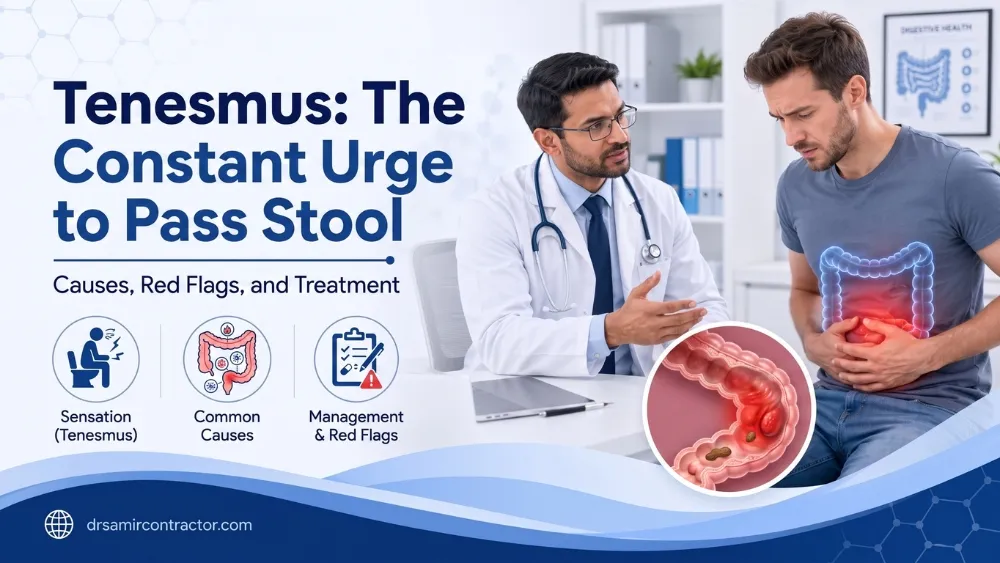
If your primary complaint is a persistent feeling of needing to pass stool even when the rectum is empty, our dedicated page on tenesmus covers that symptom in detail. This page focuses specifically on the "I need to go NOW" symptom - faecal urgency.
Common Causes of Faecal Urgency
Faecal urgency has a wide range of causes. In clinical practice, I categorize them by mechanism - because understanding the mechanism guides treatment directly.
1. Irritable Bowel Syndrome with Diarrhoea (IBS-D)
IBS-D is the single most common cause of chronic faecal urgency in otherwise healthy adults. The hallmark of IBS-D is recurrent abdominal cramping or discomfort followed by an urgent, loose bowel movement - often first thing in the morning or immediately after meals. The gut in IBS-D is hypersensitive: it overreacts to normal stimuli such as food entering the stomach (the gastrocolic reflex), producing rapid colonic contractions that propel stool toward the rectum faster than normal. Patients describe a pattern of waking with urgency, having two to four loose stools in the morning, and then being relatively settled for the rest of the day. Stress and anxiety amplify the symptoms significantly.
2. Rectal Inflammation (Proctitis and Inflammatory Bowel Disease)
When the rectum is inflamed - from ulcerative colitis, Crohn's disease affecting the rectum, radiation proctitis, or infectious proctitis - its capacity and compliance are reduced. An inflamed rectum cannot stretch to accommodate stool normally. Even small amounts of liquid stool reaching the inflamed rectum trigger an intense, immediate urge to defecate. Patients with active proctitis commonly report urgency with small-volume stools, often mixed with mucus or blood. This is one of the most important causes to identify because targeted treatment of the inflammation can dramatically reduce urgency.
3. Post-Cholecystectomy Diarrhoea
After gallbladder removal (cholecystectomy), a significant minority of patients - estimates range from 10 to 20 percent - develop persistent loose stools and urgency. The mechanism is bile acid malabsorption: without the gallbladder to store and regulate bile release, bile acids are continuously secreted into the small intestine. Excess bile acids reaching the colon stimulate water secretion and rapid colonic contractions, producing watery, urgent stools - often within 30 minutes of eating, particularly after fatty meals. This is commonly called bile acid diarrhoea and is one of the most underdiagnosed causes of faecal urgency in India, where cholecystectomy for gallstones is extremely common.
4. Food Intolerances
Lactose intolerance - present in an estimated 60 to 70 percent of Indian adults - is a major contributor. Undigested lactose reaching the colon is fermented by bacteria, producing gas, bloating, cramps, and urgent loose stools. Patients who consume milk, paneer, ice cream, or sweets regularly may experience daily urgency without realizing the dietary connection. Fructose malabsorption and sensitivity to certain FODMAPs (fermentable carbohydrates in foods like wheat, onion, garlic, and certain fruits) can produce similar urgency in sensitive individuals.
5. Low Rectal Compliance
The rectum normally acts as a reservoir, stretching to accommodate stool until a socially convenient time for defecation. Conditions that reduce this storage capacity - called low rectal compliance - produce urgency because even small volumes of stool trigger the defecation reflex. Causes include previous pelvic radiation (for cervical, prostate, or rectal cancer), previous rectal surgery, chronic inflammation, and rectal fibrosis. The key feature is that the urgency occurs with normal or even small stool volumes, and the patient cannot defer defecation.
6. Rectal or Sigmoid Mass
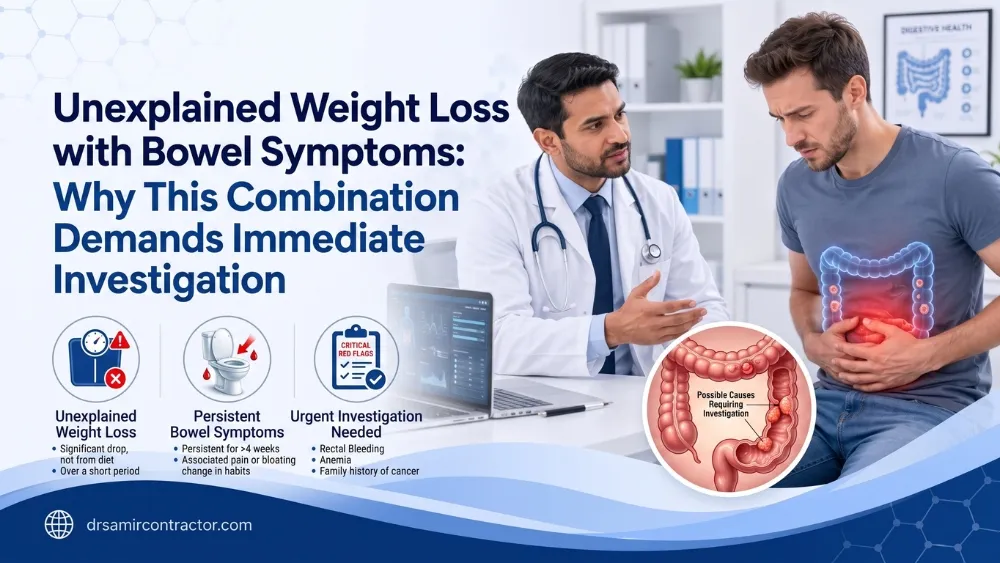
A tumour in the rectum or lower sigmoid colon can physically reduce rectal capacity, acting as a space-occupying lesion that leaves less room for stool. As the mass grows, urgency becomes progressive. This is an important cause to exclude - particularly in patients over 45 with new-onset urgency - because rectal cancer diagnosed early has excellent outcomes with appropriate surgical treatment. Associated features include blood in stool, mucus discharge, change in stool calibre (thinner stools), and unintended weight loss.
7. Infections and Acute Causes
Acute gastroenteritis - from bacterial, viral, or parasitic infection - produces urgency alongside diarrhoea, cramping, and sometimes fever. In India, food-borne infections are common and usually self-limiting within a few days. Persistent urgency beyond two weeks after an acute infection should raise suspicion for post-infectious IBS, a well-recognized condition in which the gut remains hypersensitive after the infection has cleared.
8. Medications
Several commonly prescribed medications can cause or worsen faecal urgency:
- Metformin - used for diabetes; causes diarrhoea and urgency in up to 20 percent of users, particularly at higher doses
- Proton pump inhibitors (PPIs) - long-term use can alter gut bacteria and increase diarrhoea
- Antibiotics - disrupt gut flora, causing antibiotic-associated diarrhoea
- NSAIDs - can cause colitis and diarrhoea with chronic use
- Magnesium-containing antacids - osmotic effect produces loose stools
- Orlistat - used for weight loss; causes oily, urgent stools due to fat malabsorption
The Social Impact: Why Faecal Urgency Matters Beyond Medicine
The clinical impact of faecal urgency is well understood, but what often goes unrecognized - even by healthcare providers - is the profound social and psychological toll. In my experience, patients with chronic faecal urgency experience a form of disability that is difficult to quantify on standard medical assessments.
- Fear of accidents: The constant anxiety of not reaching a toilet in time dominates daily thinking. Patients describe living in a state of perpetual vigilance, always scanning for the nearest restroom.
- Travel avoidance: Long bus rides, train journeys, flights, and even short car trips become sources of dread. Many patients in Vadodara tell me they have stopped visiting family in other cities entirely because of this symptom.
- Social withdrawal: Dinner invitations, religious gatherings, wedding functions, and outings with friends are declined because the patient cannot guarantee access to a clean, private toilet. Over months, this leads to increasing isolation.
- Work limitations: Jobs that require travel, site visits, or even long meetings become difficult. Some patients have changed careers because of this symptom.
- Emotional burden: Shame, embarrassment, frustration, and depression are common companions of chronic urgency. Many patients suffer silently for years because they consider the symptom too embarrassing to discuss with a doctor.
Acknowledging this social dimension is important because it reinforces that faecal urgency is not a minor inconvenience - it is a clinically significant symptom that deserves proper evaluation and treatment.
Red Flags: When Faecal Urgency Needs Urgent Evaluation
- Blood in stool - fresh blood or dark maroon mixed with stool alongside urgency
- Mucus discharge - mucus mixed with stool or passed separately with urgency
- Unintended weight loss - losing weight without trying, alongside worsening urgency
- Progressive worsening - urgency that started mild and is getting steadily worse over weeks
- New onset above age 45 - any new bowel symptom in this age group needs colonoscopy
- Nocturnal urgency - being woken from sleep by urgency (suggests organic rather than functional cause)
- Faecal incontinence - involuntary loss of stool despite trying to reach the toilet
- Fever with urgency - suggests infection or active inflammatory bowel disease
- Family history of colorectal cancer or IBD - lowers the threshold for investigation
When Urgency Is Likely Not Dangerous
- Morning urgency with loose stools that settles by midday - typical of IBS-D
- Urgency clearly linked to specific foods (dairy, spicy food, caffeine) that resolves when the trigger is avoided
- Urgency that started after gallbladder removal and follows fatty meals
- Short-lived urgency during a bout of gastroenteritis that resolves within a week
- Urgency associated with anxiety or stress that improves when stress is managed
- No blood, no mucus, no weight loss, no nocturnal symptoms
Even in these reassuring scenarios, if urgency persists beyond 3 to 4 weeks or significantly limits your daily activities, evaluation is worthwhile - because effective treatments are available.
Diagnosis: How Faecal Urgency Is Investigated
The investigation pathway for faecal urgency depends on the clinical picture - specifically the duration, associated symptoms, and the presence or absence of red flags.
Step 1: Detailed History
The most important diagnostic tool for faecal urgency is a thorough clinical history. Key questions include: When did urgency start? Is it getting worse? How many times do you pass stool per day? What is the stool consistency (using the Bristol Stool Scale)? Is there blood, mucus, or pain? Does urgency occur at night? What medications are you taking? Have you had any surgery (particularly cholecystectomy or pelvic surgery)? Is there a dietary trigger? What is the impact on your daily life?
Step 2: Clinical Examination
A digital rectal examination is essential. It assesses sphincter tone, identifies any rectal mass, checks for rectal inflammation, and evaluates pelvic floor function. In my practice, I find that this simple examination - which takes less than a minute - provides more diagnostic information for urgency than many expensive tests.
Step 3: Basic Investigations
- Blood tests: Full blood count, CRP, ESR, thyroid function, coeliac screen (anti-tTG antibodies)
- Stool tests: Faecal calprotectin (distinguishes inflammatory from functional causes), stool culture, ova and parasites
- Breath tests: Lactose breath test (if lactose intolerance suspected), glucose breath test (for SIBO)
Step 4: Colonoscopy
Colonoscopy is indicated when red flags are present, when urgency is persistent and unexplained, in all patients over 45 with new-onset urgency, and when faecal calprotectin is elevated. The procedure examines the entire colon and rectum, identifies or excludes inflammation, polyps, tumours, and diverticular disease. It is performed as a day-care procedure under sedation and is well tolerated.
Step 5: Specialist Investigations (When Indicated)
- Anorectal manometry: Measures rectal compliance and sphincter pressures - useful when low rectal compliance or sphincter weakness is suspected
- SeHCAT scan or C4 blood test: Confirms bile acid malabsorption in post-cholecystectomy patients (availability may vary in India)
- MRI pelvis: When structural rectal or pelvic floor pathology is suspected
Treatment of Faecal Urgency
The treatment of faecal urgency is cause-specific. There is no single tablet for urgency - the right treatment depends on identifying and addressing the underlying mechanism.
Dietary and Lifestyle Management
For many patients - particularly those with IBS-D, food intolerances, or mild bile acid diarrhoea - dietary modification is the first and most important step.
- Soluble fibre supplementation: Psyllium husk (isabgol) taken with water adds bulk to loose stools, improves stool consistency, and reduces urgency. Unlike insoluble fibre (bran), soluble fibre does not worsen diarrhoea. Start with one teaspoon in a glass of water at night and increase gradually.
- Identify and eliminate triggers: Common culprits include dairy (if lactose intolerant), excess caffeine, spicy food, alcohol, and high-FODMAP foods. A food and symptom diary kept for two weeks is remarkably effective in identifying patterns.
- Small, regular meals: Large meals stimulate a stronger gastrocolic reflex. Smaller, more frequent meals reduce the volume hitting the colon at once and reduce post-meal urgency.
- Limit caffeine: Tea and coffee stimulate colonic motility. Reducing intake to one to two cups per day - and avoiding caffeine on an empty stomach - can reduce morning urgency significantly.
- Reduce fat intake: Particularly important for post-cholecystectomy patients. Fat is the strongest stimulus for bile acid release, and reducing dietary fat reduces bile acid-driven urgency.
- Stay hydrated but time it well: Adequate hydration is important, but drinking large volumes of water immediately before or during meals can worsen urgency. Sip water throughout the day instead.
Medical Treatment
- Loperamide (Imodium): The most effective and widely used medication for urgency. Loperamide slows colonic transit, increases water absorption, and improves sphincter tone - directly addressing all three components of urgency. It can be taken as a regular low dose (2 mg once or twice daily) or as a pre-emptive dose before meals, travel, or social events. It is safe for long-term use at recommended doses.
- Bile acid sequestrants (cholestyramine, colesevelam): First-line treatment for post-cholecystectomy diarrhoea and bile acid malabsorption. They bind excess bile acids in the intestine, preventing them from stimulating the colon. Response is often dramatic - patients who have suffered for months or years after gallbladder removal frequently report significant improvement within days.
- Antispasmodics: Mebeverine, dicyclomine, or hyoscine reduce colonic spasm and cramping associated with urgency in IBS-D. Most useful when urgency is accompanied by cramping pain.
- 5-ASA preparations (mesalamine): Topical or oral mesalamine is the primary treatment for mild to moderate ulcerative proctitis - reducing rectal inflammation and thereby reducing urgency.
- Probiotics: Specific strains (Saccharomyces boulardii, certain Lactobacillus and Bifidobacterium species) can improve stool consistency and reduce urgency in IBS-D. Not all probiotics are equivalent - strain selection matters.
- Eluxadoline: A newer medication approved for IBS-D that acts on opioid receptors in the gut, reducing motility and urgency. Available in India and useful for patients who do not respond to loperamide.
Biofeedback and Pelvic Floor Rehabilitation
Biofeedback therapy is an underutilized but highly effective treatment for patients whose urgency relates to poor rectal sensation or pelvic floor dysfunction. Using sensors placed in the rectum, patients learn to recognize rectal distension at lower volumes and train their external sphincter to contract more effectively when urgency strikes. Studies consistently show 60 to 70 percent improvement rates in urgency and incontinence with structured biofeedback programs. It is non-invasive, has no side effects, and the benefits are durable. I recommend it particularly for patients with post-surgical or post-radiation urgency.
Surgical Treatment
Surgery is reserved for specific structural causes:
- Rectal or sigmoid tumours: Surgical resection - often possible laparoscopically - removes the mass that is reducing rectal capacity. Early-stage rectal cancer treated surgically has excellent long-term outcomes.
- Severe inflammatory bowel disease: When medical therapy fails to control proctitis or colitis causing intractable urgency, surgical options including colectomy may be considered.
- Sacral nerve stimulation: For refractory urgency with incontinence, sacral nerve stimulation (neuromodulation) can improve rectal sensation and sphincter function.
Living with faecal urgency? A focused consultation can identify the cause and start you on targeted treatment.
Book a Consultation WhatsApp Dr. SamirWhy Faecal Urgency Is Common in India
Several factors specific to Indian populations make faecal urgency a particularly common complaint in gastroenterology and surgical clinics across the country.
- High prevalence of lactose intolerance: With 60 to 70 percent of Indian adults having some degree of lactose malabsorption, daily consumption of milk, paneer, and sweets causes chronic low-grade diarrhoea and urgency in millions of people who do not realize the dietary connection.
- Post-cholecystectomy population: Gallstone disease is extremely common in India, and laparoscopic cholecystectomy is one of the most frequently performed surgeries. A significant proportion of these patients develop bile acid diarrhoea afterwards, but the diagnosis is often missed because awareness of this condition remains low.
- Spice-heavy diet: Chilli, pepper, and other spices can stimulate colonic motility and worsen urgency in sensitive individuals. This does not mean Indian food causes urgency - but patients with an underlying predisposition may find that reducing spice levels helps.
- Infectious diarrhoea burden: Food-borne and water-borne infections remain common in India. Post-infectious IBS - where gut hypersensitivity persists months after the acute infection has cleared - is a well-recognized cause of chronic urgency.
- Cultural barrier to discussing bowel symptoms: Many Indian patients - particularly women - feel deeply embarrassed discussing urgency and incontinence with a doctor. This leads to years of silent suffering and delayed diagnosis. Early consultation can make a significant difference.
- Self-medication: Many patients take antidiarrhoeals, digestive enzymes, or ayurvedic preparations without understanding the underlying cause. While these may provide temporary relief, they delay proper evaluation and cause-specific treatment.
Frequently Asked Questions About Faecal Urgency
તમારી ભાષામાં સવાલો · Questions in Gujarati / Hinglish
Aa faecal urgency kahevay chhe. Sabauthi common cause IBS-D chhe - jema jaman pachhithi ke savare uthta j urgency aave. Bija causes ma lactose intolerance, gallbladder kadhavya pachhinu bile acid diarrhoea, ane rectal inflammation chhe. Doctor pase jao - cause identify thaay to sachi treatment male chhe.
Bahuj possible chhe. India ma 60-70% adults ma lactose puri rite digest nathi thatu. Dudh, paneer, ice cream, mithai pachhithi bloating, gas, cramps, ane urgency aave to lactose intolerance nu strong indication chhe. Dahi ke chaas try karo - jema lactose ochhu hoy chhe. Breath test thi confirm thai shake chhe.
Haa, 10-20% patients ma cholecystectomy pachhithi bile acid diarrhoea thaay chhe. Gallbladder vagar bile continuously release thaay, je colon ma irritation kare ane urgency ane loose motions aave. Bile acid sequestrant dava (cholestyramine) thi ghani patients ne dramatic relief male chhe. Doctor ne janaavo - aa treatable condition chhe.
Jaruri nathi ke cancer j hoy. Blood nu sabauthi common cause hemorrhoids ke rectal inflammation chhe. Pan urgency sathe blood, weight loss, ke mucus aave to colonoscopy karavi joiye - rectal cancer exclude karva. Jaldi diagnosis ma outcome bahuj saru hoy chhe. Darvanu nahi - check karavvanu.
Urgency ma tamne toilet sudhi jaldi javanu hoy chhe ane stool ACTUALLY pass thaay chhe - problem ae chhe ke warning time nathi. Tenesmus ma lagya kare chhe ke motion javanu chhe pan rectum khali hoy chhe - kahi bhar nathi avtu. Banne alag symptoms chhe ane causes pan alag chhe.
Pahela doctor pase jao - cause identify karvanu important chhe. Eni sathe practical steps lo: bahar javanu hoy tyare pahela loperamide tablet lo, halku jaman karo, caffeine ane dairy avoid karo, ane toilet locations pahelethi jaani rakho. Treatment sathe ane aa practical tips sathe ghana patients ni life significantly improve thaay chhe.
Related Pages
Related Symptoms
Disease Pages
Treatment Pages
Struggling with faecal urgency? Book your consultation
with Dr. Samir Contractor
Sterling Hospital, Vadodara