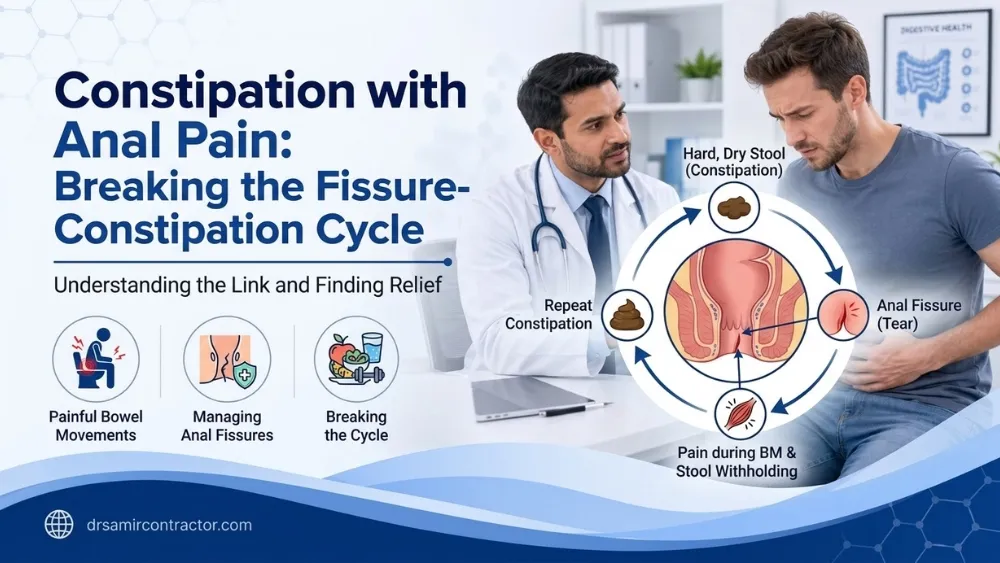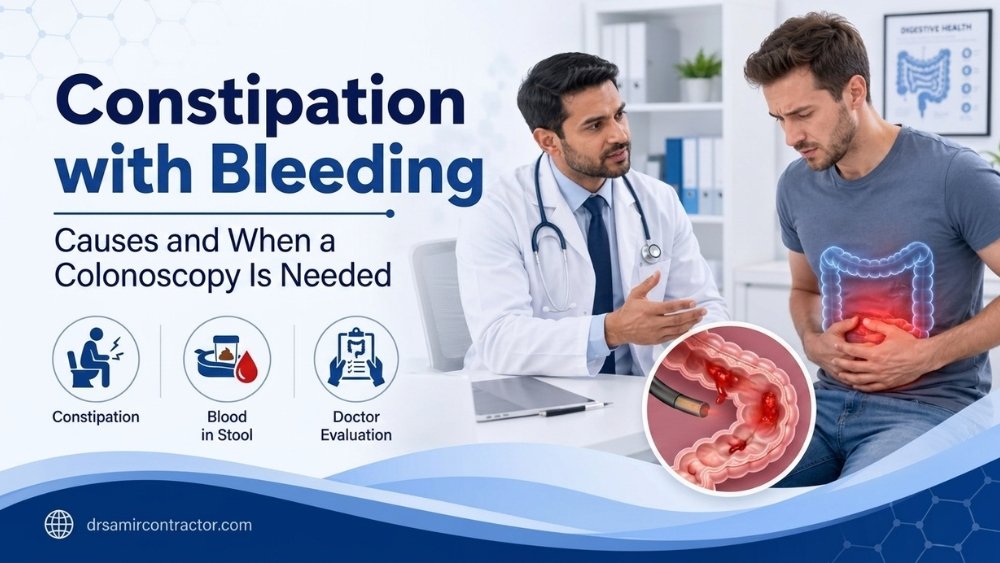
Constipation combined with rectal bleeding always requires evaluation. While the most common causes - anal fissure and hemorrhoids - are benign and very treatable, colorectal polyps and cancer also present with this exact symptom combination. Never assume that constipation-related bleeding is "just piles" without proper examination, particularly in patients above 45 or with additional red-flag features.
✦ Quick Answers
Blood in stool alongside constipation is one of the most important symptom combinations in colorectal medicine. The bleeding is almost always from a benign cause - but the consequences of missing a colorectal cancer are too serious to allow routine assumption. The correct approach is a focused clinical examination and, when indicated, colonoscopy.
Causes of Constipation with Bleeding
Common Benign Causes
- Anal fissure - hard stool tears the anal lining; sharp pain + bright red blood on paper after defecation
- Hemorrhoids - straining causes hemorrhoidal bleeding; bright red blood on stool surface, toilet paper, or in toilet bowl
- Anal skin tags - may bleed slightly from trauma
Serious Causes to Exclude
- Colorectal polyps - bleeding with constipation; colonoscopy identifies and removes them
- Colorectal cancer - blood mixed into stool, change in bowel habit, weight loss
- Inflammatory bowel disease - mucus + blood + cramping
How to Distinguish the Bleeding Pattern
- Bright red blood on toilet paper only, after hard stool + anal pain: Strongly suggests anal fissure
- Bright red blood coating stool surface or dripping into bowl, no pain: Hemorrhoids
- Blood mixed into the stool (not on surface): Higher origin - needs colonoscopy to exclude colorectal pathology
- Dark red or maroon blood mixed with stool: Higher in the colon - colonoscopy needed
- Black, tarry stool (melaena): Upper GI bleeding - needs endoscopy urgently
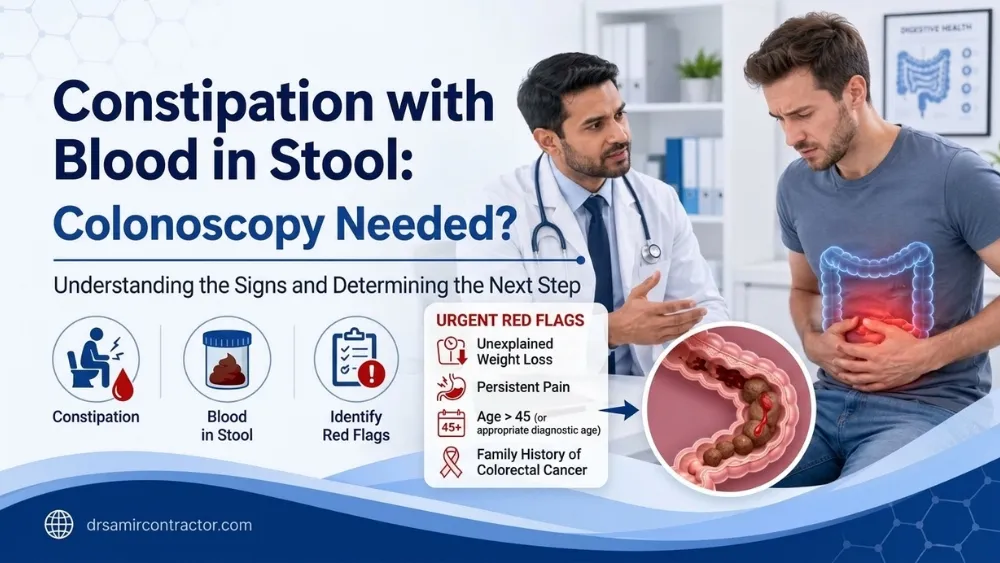
Red Flags - Colonoscopy Needed
Colonoscopy is indicated when constipation + bleeding is associated with:
- Age above 45 - colorectal cancer screening threshold; any rectal bleeding above this age needs colonoscopy
- Unintended weight loss
- Change in bowel habit - new constipation, alternating with diarrhoea, or pencil-thin stools
- Blood mixed into (not just on surface of) the stool
- Family history of colorectal cancer or polyps
- Symptoms not improving after 4-6 weeks of appropriate treatment
- Anaemia (low blood count) without clear explanation
Treatment
Treat the constipation - always first
Regardless of the bleeding cause, softening the stool is the foundation of treatment. Hard stool perpetuates fissures, worsens hemorrhoids, and increases bleeding. Fibre (25-35g/day), water (2-3L/day), and regular activity.
Anal fissure bleeding
Topical GTN or diltiazem ointment. Botulinum toxin injection for chronic fissure. Lateral internal sphincterotomy (surgery) for non-healing chronic fissure - quick recovery, excellent results.
Hemorrhoid bleeding
Rubber band ligation for grade 2-3 hemorrhoids - outpatient procedure, very effective. Sclerotherapy. Hemorrhoidectomy for large, symptomatic grade 3-4 hemorrhoids.
Colonoscopy
For patients meeting any of the red-flag criteria above - identifies and removes polyps, confirms or excludes cancer, guides further management.
Desi Patient Questions
Doctor pase javo. Examination confirm karshe - fissure ya hemorrhoids most likely chhe young patients ma. But age 45+ ya weight loss ya stool ma blood mixed hoy to colonoscopy zaruri chhe - colorectal cancer exclude karva. "Just piles" assume karvu without evaluation = risky.
Frequently Asked Questions
Related Pages
Constipation with Bleeding? Get Evaluated - Don't Assume It's Just Piles
Dr Samir Contractor at Sterling Hospital, Vadodara provides anorectal examination and colonoscopy to identify the cause correctly.
Medical Disclaimer: For patient education only. Constipation with bleeding always needs evaluation.