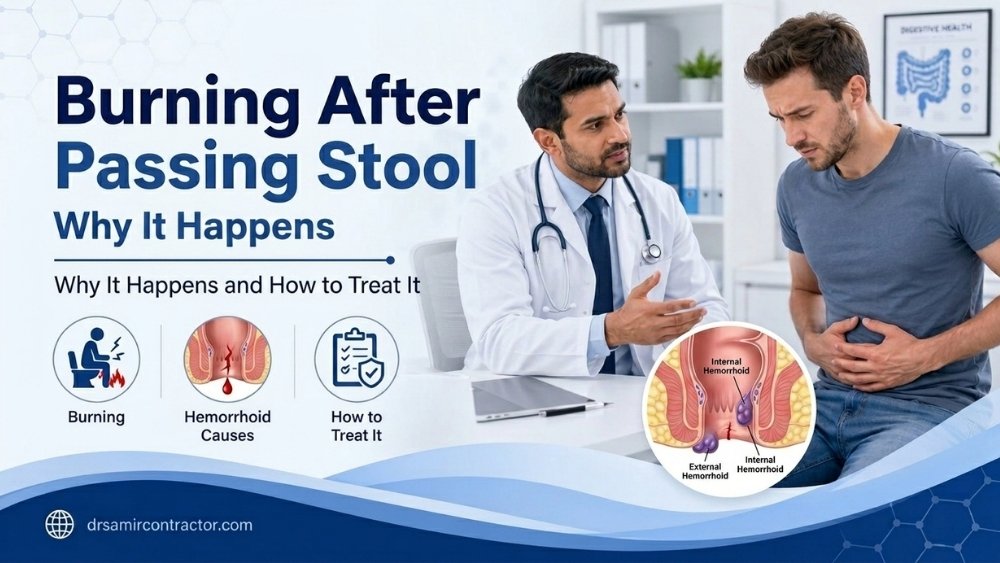
A stinging, scalding burn around the anus that starts during or right after a bowel movement - and lingers for minutes to hours afterward - is one of the most common anorectal complaints. The cause is usually an anal fissure, irritated pile, spicy food, or skin breakdown from diarrhoea. This guide explains each cause, shows you when the burning needs medical attention, and walks through practical treatments that bring relief.
Quick Answers
If you have landed on this page, chances are the burning is happening after every trip to the bathroom - and it is affecting your daily comfort. You may be dreading bowel movements, delaying them, or wondering whether something serious is going on. This is one of the most frequent concerns patients bring to an anorectal clinic, and the good news is that the cause is almost always identifiable and treatable.
This page focuses specifically on the post-defecation burn - the sensation that begins at the moment of stool passage and persists afterward. If your primary concern is sharp, knife-like pain during the act itself, our dedicated pain during bowel movements page covers that in detail. If you have a broader, ongoing anal discomfort unrelated to stool, see our anal pain overview.
What Does Burning After Passing Stool Actually Mean?
The perianal area and the lower anal canal are lined with tissue that is densely packed with sensory nerve endings. When this tissue is intact, stool passes without significant discomfort. When the tissue is damaged - by a tear, inflammation, chemical irritant, or prolonged moisture - those nerve endings become exposed or sensitised.
The result is a burning or scalding feeling. It can range from a mild warmth that fades in a few minutes to an intense sting that lasts two to three hours and makes sitting uncomfortable. The duration and intensity give your doctor a useful clue about the underlying cause.
- Short burn (under 10 minutes): Often dietary - capsaicin, acidic stool from diarrhoea, or mild skin irritation from wiping.
- Moderate burn (10 to 30 minutes): Commonly external pile inflammation or contact dermatitis.
- Prolonged burn (30 minutes to several hours): Strongly suggestive of an anal fissure, especially if preceded by a sharp pain during the stool.
Common Causes of Burning After Passing Stool
1. Anal Fissure - The Most Frequent Cause
A fissure is a small, linear tear in the thin lining of the anal canal. Hard stool, straining, or even a single episode of forceful diarrhoea can create one. The hallmark pattern is a sharp, cutting pain during stool passage that transitions into a deep, throbbing burn lasting 30 minutes to 2 hours afterward. The burn occurs because the internal sphincter muscle goes into spasm once the stool passes, reducing blood flow to the tear and prolonging pain. Read more on our anal fissure page.
2. External Pile (Hemorrhoid) Irritation
External hemorrhoids sit just outside the anal opening, covered by sensitive skin. When they become swollen or inflamed - especially after a hard or prolonged bowel movement - the stretched skin burns on contact with stool, mucus, or moisture. The burn is usually milder than a fissure burn and settles within 10 to 20 minutes. Thrombosed external piles (a blood clot inside the pile) produce a more intense, constant pain. Our hemorrhoids page covers this in detail.
3. Pruritus Ani (Perianal Skin Irritation)
When the perianal skin has been chronically irritated - by scratching, moisture, or fungal infection - it becomes thin, raw, and hypersensitive. Stool passing over this damaged skin produces a burn rather than an itch. Patients often describe a shift: what started as itching eventually turned into burning. See our pruritus ani and itching around the anus guides.
4. Diarrhoea-Related Skin Breakdown
Frequent loose stools - from gastroenteritis, irritable bowel syndrome, antibiotic use, or food intolerance - are acidic and contain digestive enzymes. Repeated contact strips the protective layer of perianal skin, leaving it raw and burning. The more frequent the stools, the worse the burn. This is one of the most common causes of acute perianal burning in clinical practice.
5. Spicy Food and Capsaicin
Capsaicin, the compound that makes chillies hot, is remarkably resistant to digestion. It reaches the rectum and anal canal in an active form and binds to TRPV1 receptors - the same receptors it activates on your tongue. The result is a burning sensation during and after the next bowel movement. This is not harmful to the tissue; it is a receptor-mediated pain signal, not actual tissue damage. The burn clears once the capsaicin passes through.
6. Contact Dermatitis - Wipes, Soaps, and Creams
Fragranced wet wipes, antiseptic soaps, alcohol-based sanitisers, and some medicated creams (particularly those containing neomycin or fragrances) can trigger a chemical irritation of the perianal skin. Patients notice that wiping or washing after stool causes a sharp sting that was not there before they started using the product. Switching to plain water and stopping the offending product usually resolves the burn within a few days.
Burning During Stool vs. Burning After Stool - What Is the Difference?
| Feature | Burning During Stool | Burning After Stool |
|---|---|---|
| Timing | While stool is actively passing | Minutes to hours after stool has passed |
| Character | Sharp, cutting, tearing | Scalding, stinging, throbbing |
| Duration | Stops shortly after stool passes | Can persist 30 min to 3 hours |
| Most likely cause | Capsaicin, acidic diarrhoea, hard stool stretching skin | Anal fissure (sphincter spasm), irritated pile, raw skin |
| Key differentiator | Resolves quickly once the stool clears | Persists because of sphincter spasm or ongoing inflammation |
Many patients experience both - a sharp pain during the moment of passage followed by a prolonged burn afterward. This combination is the classic presentation of an anal fissure. If your burning only occurs during the stool and stops immediately after, capsaicin or diarrhoea-related irritation is more likely.
Red Flags - When Burning Needs Urgent Attention
- Heavy rectal bleeding - soaking toilet paper or dripping into the bowl
- Fever with perianal pain - may indicate a perianal abscess forming
- Pus or foul-smelling discharge - suggests an abscess or fistula
- Rapidly worsening pain that prevents sitting or walking
- Burning that persists for more than 3 weeks despite home measures
- Unintended weight loss or change in bowel habit alongside the burning
- A hard, non-healing lump at the anal margin
If any of these apply, do not wait - book a same-day consultation or visit the emergency department.
Reassuring Signs - Likely Safe to Try Home Measures First
- Burning started after a spicy meal and is limited to one or two bowel movements
- Mild burn that settles within 10 minutes and only happens occasionally
- No bleeding, no fever, no lump, no discharge
- Burning appeared after starting a new soap, wipe, or cream (and stops when you discontinue)
- Recent episode of diarrhoea with mild perianal soreness that is already improving
Even in safe scenarios, if the burning recurs for more than two weeks, an examination is a good idea.
How Is the Cause Diagnosed?
Diagnosis is straightforward in most cases. It begins with a focused history - your doctor will ask about the timing, duration, and character of the burn, your stool consistency, recent dietary triggers, and any products you apply to the area.
A gentle external inspection of the perianal skin reveals fissures, external pile swelling, skin changes from dermatitis, or signs of infection. A digital rectal examination assesses sphincter tone (often increased in fissure patients). A proctoscopy - a brief look inside the lower rectum with a small, lubricated instrument - may be done to check for internal piles or an internal fissure that is not visible from outside.
No blood tests or imaging are needed in the majority of cases. Colonoscopy is reserved for patients with red-flag symptoms (bleeding, weight loss, change in bowel habit) or those over 45 with new symptoms.
Treatment: How to Stop the Burning
1. Sitz Bath - First-Line Relief
Sit in a basin or bathtub of plain warm water (not hot) for 8 to 10 minutes immediately after passing stool. The warm water relaxes the internal sphincter, improves blood flow to the area, and washes away irritants without friction. Do this two to three times daily during a flare. No salt, no Dettol, no betadine - just warm water.
2. Barrier Creams
After the sitz bath, pat the area dry with a soft cloth (no rubbing) and apply a thin layer of zinc oxide cream or plain petroleum jelly. These form a physical barrier that protects raw skin from contact with moisture and stool between bowel movements. Reapply after every wash or stool.
3. Dietary Modification
- Increase fibre - isabgol (psyllium husk), vegetables, dal, whole grains. Softer stool means less stretching and less trauma to the anal lining.
- Increase water intake - aim for 2.5 to 3 litres per day, more during the Indian summer.
- Reduce spice temporarily - if capsaicin is a clear trigger, reduce chilli, raw garlic, and hot pepper for two to three weeks while the skin heals.
- Limit coffee and alcohol - both can loosen stools and increase acidity, worsening perianal irritation.
4. Stop the Offending Product
If the burning coincided with a new wet wipe, soap, medicated cream, or laundry detergent, stop using it. Switch to plain water for cleaning and a fragrance-free, mild soap for bathing. The perianal skin should recover within five to seven days.
5. Medical Treatment for Fissure
If an anal fissure is the cause, your doctor may prescribe a topical muscle relaxant (glyceryl trinitrate or diltiazem cream) to reduce sphincter spasm and improve blood flow to the tear. This allows the fissure to heal and stops the post-defecation burn. Most acute fissures heal within 6 to 8 weeks with conservative treatment. Chronic fissures that do not respond may require a minor surgical procedure - lateral internal sphincterotomy - which has a cure rate above 95 percent.
6. Hemorrhoid-Directed Treatment
If an inflamed external pile is responsible, treatment includes sitz baths, topical anti-inflammatory cream, and stool softeners. Recurrent or large piles may require office-based banding or hemorrhoid surgery to prevent repeated episodes.
What Happens If You Ignore Burning After Stool?
- Fissure becomes chronic: An acute fissure that is not treated can develop fibrosis, a sentinel skin tag, and a hypertrophied anal papilla - making it harder to heal without surgery.
- Stool-holding behaviour: Patients begin to delay bowel movements to avoid the burn. This causes harder stools, which worsen the tear on the next attempt - a self-reinforcing cycle.
- Skin breakdown worsens: Repeated chemical and mechanical irritation of perianal skin can progress from mild redness to eczematous change, lichenification (skin thickening), and secondary fungal infection.
- Quality-of-life impact: Chronic post-defecation burning affects concentration, mood, and willingness to eat regular meals. Patients restrict their diet, lose weight, and avoid social activities.
- Missed underlying condition: In rare cases, persistent burning with a visible skin change can indicate a perianal Crohn's lesion or a pre-malignant skin condition that benefits from early diagnosis.
Early evaluation saves time, money, and discomfort. Most causes are treatable within a few weeks when caught early.
Why This Problem Is Especially Common in India
- Spicy cuisine is a daily staple: Indian diets are among the most capsaicin-rich in the world. Many patients experience post-stool burning regularly and assume it is normal, when reducing chilli intake or adding a barrier cream could eliminate it.
- Hot and humid climate: Perianal skin stays moist for longer in Indian summers, especially during outdoor work. This persistent moisture weakens the skin barrier and amplifies the burn from any minor trauma.
- Aggressive cleaning habits: The cultural preference for water-based cleaning is healthy in principle, but many patients supplement it with Dettol, phenyl-based soaps, or rough cloth - stripping oils from perianal skin and causing contact dermatitis.
- Delayed consultation: Embarrassment about anorectal symptoms is widespread. Patients try home remedies, pharmacy creams (often containing potent steroids), and dietary restrictions for months before seeing a specialist - by which time an acute fissure may have become chronic.
- Over-the-counter steroid creams: Combination creams sold without prescription across Indian pharmacies provide rapid relief but thin the perianal skin with prolonged use, leading to rebound burning when stopped.
Burning After Stool Treatment in Vadodara
Dr Samir Contractor sees patients with post-defecation burning at Sterling Hospital, Vadodara. A focused clinical examination - typically completed in a single visit - identifies the cause, and most patients begin treatment the same day. Fissure patients receive a structured conservative protocol; those who need intervention are offered modern, minimally invasive procedures with rapid recovery.
Gujarati / Hinglish FAQs
Motha bhag na cases ma anal fissure - guda marg ma nano chiro - karan hoy chhe. Stool jyaare pase thay tyaare chiro khule chhe, ane pachhi sphincter muscle ma khinchaan thay chhe je burning aape chhe 30 minute thi 2 kalak sudhi.
Capsaicin - marcha nu tikhu tatva - pachhan ma tootti nathi. Te guda marg ma tyaaj pain receptors ne active kare chhe je modhma pan kare chhe. Aa hanikarak nathi, pan tikhu oadhun kari ne ane barrier cream lagadi ne rahat mali shake chhe.
Ek chhichhari tub ma halku garam pani bharo ane 8-10 minute beso. Stool pass karya pachhi tarant karo. Koi sabun ke Dettol nakhvu nahi - sadu pani j. Aa sphincter ne relax kare chhe ane burning oadhi kare chhe.
Jo burning 2 athvadiya thi vadhu chale, lahi nikle, gaantho dekhay, pus aave, ke taav aave - to tarant doctor ni appointment lo. Motha bhag na cases ma ek visit ma karan khabar padi jay chhe.
Ghana cream ma strong steroid, antibiotic ane antifungal hoy chhe. Steroid skin patli kare chhe, ane cream band karo etle rebound burning thay chhe. Doctor ni salah vagar aa cream lambo samay vaparvo nahi.
Nava (acute) fissure motha bhag ma ghar na ilaaj - sitz bath, isabgol, zinc cream - thi 6-8 athvadiya ma maari jay chhe. Surgery tyaare j jaruri chhe jyaare fissure chronic thay ane 8-12 athvadiya na ilaaj pachhi pan na mare.
Burning That Will Not Settle?
A 10-minute clinical examination can identify the exact cause. Most patients leave with a clear treatment plan on the same day.