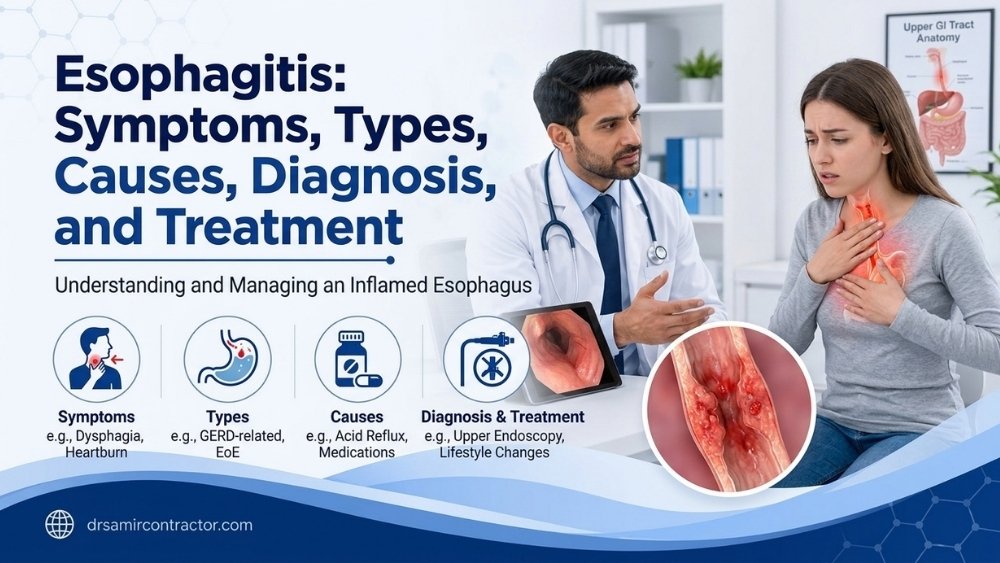
Esophagitis is inflammation of the food pipe (esophagus). The most common cause in India is GERD - repeated acid exposure damages the esophageal lining. Other causes include esophageal infections, pill-induced injury, and allergic (eosinophilic) esophagitis. Treatment depends entirely on the cause - identifying the type is the essential first step.
✦ Quick Answers
Esophagitis is not a single disease - it is the common endpoint of several different damaging processes affecting the food pipe. Recognising which type of esophagitis a patient has is clinically important because the treatment for each is very different. Treating acid reflux esophagitis with antifungal medication, or candida esophagitis with antacids, prolongs the condition and risks complications.
Types of Esophagitis and What Causes Each
| Type | Cause | Who Gets It | Key Feature |
|---|---|---|---|
| Reflux (GERD) Esophagitis | Stomach acid damaging the lower food pipe lining | Most common - anyone with GERD; overweight, late eaters, hiatal hernia | Grades A-D (LA classification); heartburn and regurgitation; responds to PPI |
| Infectious Esophagitis (Candida) | Candida albicans fungal infection | Diabetics, steroid users, antibiotic users, immunocompromised patients | White plaques on food pipe lining; painful swallowing; responds to fluconazole |
| Infectious Esophagitis (Herpes / CMV) | Herpes simplex or CMV viral infection | Immunocompromised patients (HIV, transplant, chemotherapy) | Punched-out ulcers on endoscopy; severe odynophagia; requires antiviral therapy |
| Pill-Induced Esophagitis | Tablets dissolving in contact with esophageal mucosa - chemical burn | Anyone taking NSAIDs, bisphosphonates, tetracycline, doxycycline, iron tablets | Discrete ulcer at contact point; resolves with stopping offending drug + PPI |
| Eosinophilic Esophagitis (EoE) | Allergic immune-mediated eosinophilic inflammation | Younger patients with food allergies, asthma, or eczema | Rings, furrows, and white exudates on endoscopy; food impaction; needs steroids + dietary elimination |
| Radiation Esophagitis | Radiotherapy to chest or neck | Cancer patients receiving chest/neck radiation | Painful swallowing, dysphagia; managed with supportive care and nutritional support |
Common Symptoms of Esophagitis
- Heartburn - burning in the chest or throat (most prominent in reflux esophagitis)
- Painful swallowing (odynophagia) - pain triggered by each swallow (most prominent in infectious and severe reflux esophagitis)
- Difficulty swallowing (dysphagia) - when stricture has developed or EoE is present
- Chest pain - from esophageal spasm or inflammation
- Regurgitation - food or acid returning upward
- Nausea and reduced appetite
- Fever - in infectious esophagitis
- Weight loss - from inability to eat due to pain or stricture
Red Flags
Urgent evaluation if esophagitis-related symptoms include:
- Vomiting blood or material that looks like coffee grounds
- Progressive difficulty swallowing - possible stricture
- Severe pain preventing any oral intake with dehydration
- Fever with painful swallowing in an immunocompromised patient - infection may spread
- Weight loss - adequate food intake compromised by esophageal inflammation
- New symptoms in a person above 45 with no prior GERD history
Diagnosis
Upper GI Endoscopy - definitive and essential
The only investigation that directly visualises the esophageal lining and identifies the type of esophagitis. Biopsies are taken from abnormal areas for histology (eosinophil count for EoE, H. pylori for reflux context, culture for infections). Dilation can be performed at the same sitting if a stricture is present.
Additional tests by type
- Reflux esophagitis: 24-hour pH monitoring if diagnosis is uncertain; manometry before surgery
- Candida esophagitis: Oral swab; blood glucose (diabetes screening)
- EoE: Allergy testing, IgE levels, food elimination challenge
- Pill-induced: History of medications - diagnosis often clinical with endoscopic confirmation
Treatment - Cause-Specific
Reflux (GERD) Esophagitis
- PPI therapy (omeprazole, pantoprazole) - correct timing: 30-60 minutes before breakfast
- Grade A-B: Standard dose for 4-8 weeks
- Grade C-D: Higher dose, twice daily; 8-week course minimum; repeat endoscopy to confirm healing
- Lifestyle changes - meal timing, weight loss, head of bed elevation
- Laparoscopic fundoplication for severe or refractory GERD
Candida Esophagitis
- Oral fluconazole 200 mg loading dose, then 100 mg daily for 14-21 days
- Control predisposing factors - improve blood glucose control in diabetics, review steroid use
- IV antifungals for severe or fluconazole-resistant cases
Eosinophilic Esophagitis
- Dietary elimination of trigger allergens (often dairy, wheat, eggs, nuts, soy, seafood)
- Swallowed topical steroids - budesonide or fluticasone oral suspension
- PPI therapy - some patients with EoE respond to PPIs alone
- Endoscopic dilation if stricture is contributing to food sticking
Pill-Induced Esophagitis
- Stop or substitute the offending medication (with prescribing doctor's guidance)
- PPI therapy for 4 weeks to promote healing
- Prevention - take all tablets upright with a full glass of water; stay upright 30 minutes after
What Happens If Esophagitis Is Left Untreated?
- Reflux esophagitis progresses from grade A to D - increasing pain, risk of bleeding, and stricture formation
- Esophageal stricture - permanent narrowing causing progressive dysphagia, requiring repeated endoscopic dilation
- Barrett's esophagus - precancerous change from grade C-D chronic reflux esophagitis
- Candida esophagitis in immunocompromised patients can disseminate to cause systemic fungal infection
- EoE stricture - worsening food sticking, risk of food bolus impaction
- Nutritional compromise - reduced food intake from persistent pain or obstruction
Frequently Asked Questions
Esophagitis in India
India-specific context
- Reflux esophagitis is the most common type in India - driven by GERD from dietary habits, obesity, and late eating patterns. Grades C and D esophagitis are more common than in Western series, reflecting later presentation
- Candida esophagitis is very common in India's large diabetic population. Many patients with persistent painful swallowing and diabetes have never been tested or treated for this - it is manageable in days with the right treatment
- NSAID overuse (ibuprofen, diclofenac) without proper hydration or technique causes pill-induced esophagitis regularly - completely preventable with the right tablet-taking instruction
- Eosinophilic esophagitis is increasingly recognised in India but remains under-diagnosed - many young patients with recurrent food impaction and no endoscopy have EoE rather than GERD
Seek Care in Vadodara
Persistent heartburn or painful swallowing - especially in diabetics or those on steroids - consult Dr Samir Contractor at Sterling Hospital for endoscopy and cause-specific treatment.
Desi Patient Questions
Grade B = moderate. PPI therapy 4-8 weeks, correct timing sathe (30-60 min before breakfast), lifestyle changes. Repeat endoscopy at 8 weeks to confirm healing. Barrett's surveillance needed jyaré symptoms long-standing hoy. Treatable - but monitor karvo zaruri chhe.
Ha - candida esophagitis most likely. Diabetics ma common chhe. Antifungal (fluconazole) treatment thi 3-5 days ma improvement milshe. Endoscopy confirm karshe. Blood sugar control improve karo - nahi to recurrence thay chhe.