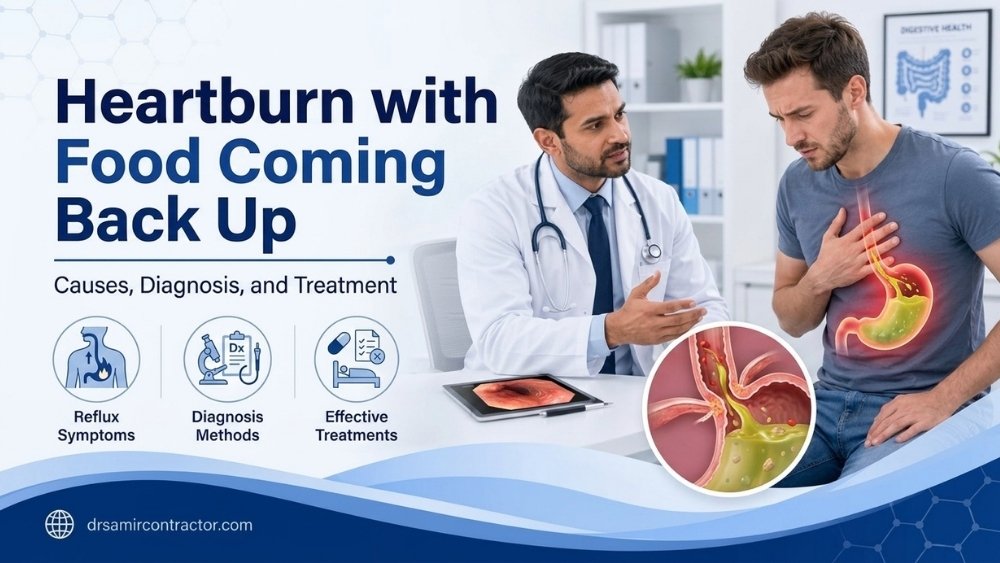
Chest burning (heartburn) combined with food returning to the throat or mouth is the most recognisable symptom cluster of GERD. These two symptoms together arise from the same cause - a weakened or displaced anti-reflux valve. Most patients respond well to treatment, but persistent or progressive symptoms need a proper evaluation including endoscopy.
✦ Quick Answers
Heartburn alone - or food regurgitation alone - each has many causes. When they happen together with most meals, at night, and despite antacids, the combination tells a specific story: the anti-reflux mechanism at the bottom of the food pipe is failing. Acid rises and causes burning. Food follows and comes back up. This is GERD - and when properly evaluated and treated, the vast majority of patients achieve good control.
This page focuses on what this specific combination means, how to distinguish the severity level, what evaluation is appropriate, and how treatment differs based on findings.
What This Symptom Combination Means
Heartburn + Food Coming Back Up = Classic GERD Symptom Cluster
The lower esophageal sphincter (LES) is a one-way valve between the food pipe and stomach. When this valve weakens or is displaced by a hiatal hernia, two consequences happen simultaneously. First - stomach acid rises into the food pipe, irritating its lining and producing burning (heartburn). Second - food or liquid from the stomach rises passively back into the throat or mouth (regurgitation). When both happen together regularly, they are more diagnostic of GERD than either symptom alone, and they indicate that the underlying valve problem needs to be evaluated - not just treated symptomatically.
Three patterns - different clinical significance
- After large meals only, improving quickly: Dietary-triggered transient LES relaxation. Lifestyle changes usually sufficient. Low risk.
- Frequent, at night, partially responding to antacids: Established GERD. Needs PPI therapy, lifestyle change, H. pylori test, and consideration of endoscopy.
- Daily, with aspiration episodes, sleep disruption, or difficulty swallowing: Significant GERD. Needs endoscopy. May have hiatal hernia or esophagitis. Surgical evaluation appropriate.
Typical Presentation of This Cluster
- Burning sensation in the chest rising toward the throat - worse after meals and at night
- Food, liquid, or sour material returning into the mouth or throat without nausea or effort
- Sour or bitter taste on waking in the morning
- Nighttime coughing or waking with liquid in the mouth
- Need to drink water during meals to prevent food from coming back up
- Chronic throat clearing or hoarse voice from acid reaching the larynx
- Worsening when bending forward, exercising, or lying down
What Causes Heartburn with Food Coming Back Up?
Most Common Causes
- GERD - weakened LES allowing acid and food to rise
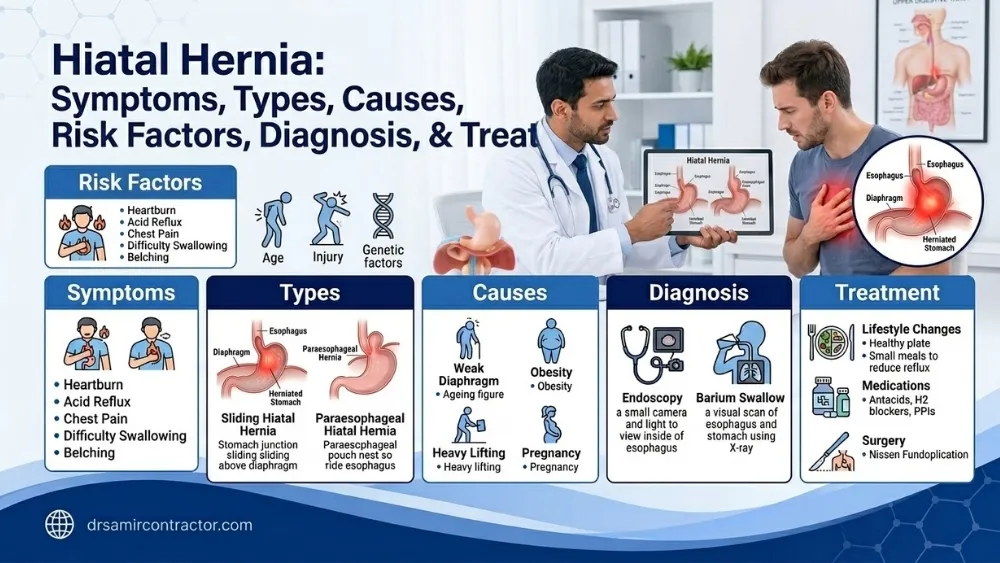
- Hiatal hernia - stomach displaced into chest, making both symptoms easier and more persistent
- Overeating or fatty meals - transiently overwhelms the valve
- Obesity - abdominal pressure chronically overloads the LES
- Pregnancy - hormonal LES relaxation plus uterine pressure
- Post-sleeve gastrectomy - reduced stomach volume increases pressure
Less Common - Must Distinguish
- Achalasia - food returning undigested (no acid taste) with dysphagia; different mechanism entirely
- Esophageal diverticulum - food trapped in a pouch returns hours later
- Severe gastroparesis - delayed emptying with food accumulating
- Pyloric obstruction - chronic vomiting with food returning
Red Flags - Seek Prompt Evaluation
Urgent evaluation needed if this cluster is associated with:
- Difficulty swallowing or food getting stuck
- Unintended weight loss
- Blood in vomit or black stool
- Food returning undigested and without sour taste (achalasia pattern)
- Nocturnal aspiration - waking with choking or chest infection
- New onset above age 45 without prior reflux history
- Symptoms not improving despite 8 weeks of proper PPI therapy
- 5+ years of symptoms without an endoscopy
Tests That May Be Needed
Upper GI Endoscopy
Essential when symptoms persist beyond 8 weeks of treatment, in patients above 45, or with any red-flag feature. Identifies esophagitis grade, hiatal hernia, Barrett's esophagus, and excludes malignancy.
H. pylori testing
Breath test, stool antigen, or endoscopic biopsy. Performed in all patients with persistent upper GI symptoms in India before long-term PPI use.
24-hour pH impedance monitoring
Confirms pathological acid reflux and correlates with symptoms. Essential before surgical planning.
Esophageal manometry
Pre-surgical assessment and to exclude achalasia when food returning undigested is part of the history.
Treatment
Step-by-Step Treatment Pathway
- 1️⃣ Lifestyle First - Non-Negotiable: Dinner 2-3 hours before sleep. Elevate head of bed 15-20 cm. Smaller meals. Weight loss if overweight. Stop smoking. Reduce trigger foods. These changes specifically reduce food regurgitation by reducing the meal volume sitting in the stomach at night.
- 2️⃣ PPI Therapy - Correct Timing: 30-60 minutes before breakfast. Once or twice daily depending on severity. Reduces acid content of what refluxes, making episodes less damaging and less symptomatic. Full 8-week course before reassessment.
- 3️⃣ Alginate Antacid After Meals: Specifically reduces food regurgitation by forming a gel raft over stomach contents. Take immediately after meals and at bedtime. Works through a different mechanism from PPIs - the two complement each other.
- 4️⃣ H. pylori Eradication if Positive: 14-day course. Improves overall upper GI environment and symptom burden.
- 5️⃣ Surgical Evaluation for Hiatal Hernia / Refractory GERD: When endoscopy confirms hiatal hernia and medication is inadequate - laparoscopic fundoplication restores the anti-reflux valve. Both heartburn and food regurgitation typically resolve after successful surgery.
Key Indian Dietary Changes for This Cluster
- Most important: No eating within 2-3 hours of bedtime. Late dinner is the most direct cause of nighttime food regurgitation in Indian patients
- Reduce: Oily curries, large thali meals, ghee-heavy preparations - all delay gastric emptying and increase the pool available to regurgitate
- Choose: Soft khichdi, plain dal, light sabzi, curd rice for dinner - these empty the stomach faster and produce fewer regurgitation episodes
- Alginate tip: Take immediately after dinner and at bedtime for best protection against nighttime food regurgitation
What Happens If Left Untreated?
- Progressive esophagitis from grade A through D - increased pain and bleeding risk
- Esophageal stricture from healed ulceration - progressive difficulty swallowing
- Barrett's esophagus - precancerous change requiring surveillance
- Aspiration pneumonia from nocturnal food regurgitation - recurrent chest infections
- Dental erosion from acid repeatedly reaching the mouth
- Sleep disruption, hoarseness, and chronic cough as long-term quality of life impairment
Frequently Asked Questions
This Cluster in India
Key India-specific factors
- Late-night dinner habits - eating at 9-10 PM followed by sleeping at 11 PM - are the most direct cultural trigger for nighttime food regurgitation with heartburn
- Hiatal hernia is frequently missed in Indian patients who receive only antacid treatment for years without an endoscopy to identify the structural cause
- Post-sleeve gastrectomy heartburn with food regurgitation is an increasingly common presentation at surgical centres in Vadodara and Gujarat
Seek Care in Vadodara
If heartburn and food coming back up are occurring regularly - particularly at night - consult Dr Samir Contractor at Sterling Hospital, Vadodara. Endoscopy, H. pylori testing, and surgical evaluation are available in one appointment.
Desi Patient Questions (Gujarati / Hinglish)
Aa GERD nu classic cluster chhe - same valve thi both thay chhe. Dinner jaldi khaao (7-7:30 PM), alginate antacid levo dinner pachhi, ane pillow uchhu rakho. Doctor pase jao - endoscopy confirm karshe ane proper treatment guide karshe.
Most patients ma medicine + lifestyle thi chalé chhe. Operation consider thay jyaré: endoscopy ma hiatal hernia confirm hoy, ane medicine 8+ weeks proper reet thi lidha pachhi pan symptoms persist kare. Endoscopy first - then decide.
Nahi - jyaré food wapis aave without sour taste, especially hours later - e achalasia ya esophageal problem lagé. GERD ma food sour/acidic taste sathe returns. Different cause - different treatment. Doctor ne exactly describe karo - manometry may be needed.