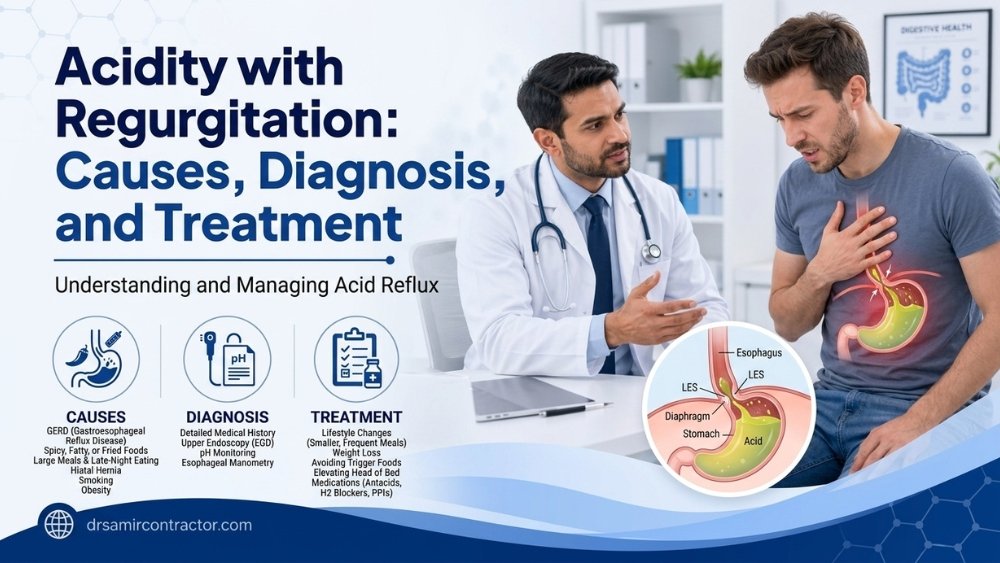
When burning acidity in the chest or throat occurs together with food or acid coming back up into the mouth, this combination is the classic two-symptom picture of GERD - gastroesophageal reflux disease. Together, these two symptoms are more diagnostic and more clinically significant than either one alone. Most cases are very treatable, but persistent or progressive symptoms need proper evaluation.
✦ Quick Answers
Acidity alone - burning in the chest - is extremely common and has many causes. Regurgitation alone - food or acid coming back up - also has many causes. But when both happen together, regularly and in the same patient, the diagnostic probability shifts significantly toward one condition: GERD.
This page focuses on what the combination of these two symptoms means, how to assess severity, what investigation is appropriate, and how to treat the underlying condition effectively - not just manage the symptoms temporarily.
Why These Two Symptoms Occur Together
The lower esophageal sphincter (LES) is the muscular valve at the junction of the food pipe and the stomach. Its job is to let food down and prevent stomach contents from rising back up. When this valve is weak, works inconsistently, or is displaced upward by a hiatal hernia, two things happen simultaneously:
Acidity (Heartburn)
Stomach acid rises into the food pipe, irritating the lining. Felt as burning in the chest or throat. Worsens after meals, when lying down, or bending.
Regurgitation
Food or liquid from the stomach rises passively into the throat or mouth. No nausea or effort. Sour or bitter taste. Often worse at night or when bending forward.
Together → Classic GERD Presentation
Both symptoms arise from the same mechanism - a failed anti-reflux valve. When they occur together regularly, GERD is the most likely diagnosis. The severity determines whether medication alone is sufficient or whether structural evaluation and surgery are needed.
Severity spectrum of this symptom cluster
Understanding where your symptoms sit:
What Patients with This Cluster Experience
- Burning in the chest or throat that coincides with food or liquid coming back up
- Sour or bitter taste in the mouth - especially after meals or in the morning upon waking
- Episodes of regurgitation triggered by bending, lying down, or straining
- Nighttime episodes - waking with sour liquid in the mouth or a burning sensation
- Chronic cough or hoarseness associated with the regurgitation reaching the throat
- A sense that meals "sit" in the food pipe - food not clearing properly
- Bloating and belching following meals
What Causes Acidity with Regurgitation?
Most Common Causes
- GERD (gastroesophageal reflux disease) - the most common cause by a wide margin. Weak lower esophageal sphincter allows both acid and food to rise. Worsened by obesity, late meals, oily food, smoking, stress
- Hiatal hernia - part of the stomach slides into the chest cavity, displacing the valve mechanism and promoting both acid and food regurgitation. Very common underlying structural cause of persistent GERD symptoms
- GERD with large meal or lying flat - even in patients without pathological GERD, large oily meals followed by lying down produce both symptoms simultaneously
- Pregnancy - hormonal changes combined with uterine pressure on the stomach produce both symptoms, particularly in the second and third trimester
Less Common but Important to Distinguish
- Achalasia - regurgitation of undigested food (no acid taste) with dysphagia to both solids and liquids; different mechanism from GERD. Important to distinguish because treatment is entirely different
- Esophageal diverticulum (Zenker's) - a pouch trapping food causes regurgitation of old food, often without acid taste
- Severe gastroparesis - delayed emptying causes food to accumulate and regurgitate, combined with upper GI discomfort
- Post-bariatric reflux - after sleeve gastrectomy in particular, GERD and regurgitation can worsen significantly due to altered stomach anatomy
When Should You Worry? Red Flags
Seek prompt evaluation if acidity with regurgitation is associated with:
- Difficulty swallowing - food getting stuck when swallowing
- Unintended weight loss over weeks
- Blood in vomit or black, tarry stool
- Regurgitation of old, undigested food hours after eating (suggests achalasia, not GERD)
- Nocturnal aspiration - coughing or choking on regurgitated material during sleep
- New onset in a person above 45 who has never had these symptoms before
- Progressive worsening despite adequate PPI therapy and lifestyle changes
- Symptoms present for 5+ years with no endoscopy (Barrett's esophagus risk)
Who Is Most at Risk of This Symptom Cluster?
- Overweight individuals - central abdominal fat increases pressure on the stomach, the most important modifiable risk factor for GERD with regurgitation
- Those who eat late and large - then lie down - a very common pattern in Indian households that perfectly sets up both symptoms
- People with a known hiatal hernia - the structural displacement of the anti-reflux mechanism makes both acid and food regurgitation more frequent and harder to control with medication alone
- Pregnant women - particularly in the second and third trimester
- Post-bariatric surgery patients (sleeve gastrectomy) - sleeve gastrectomy increases intra-gastric pressure and is associated with new or worsening GERD and regurgitation in a significant proportion of patients
- Regular smokers - nicotine directly weakens the lower esophageal sphincter
- People with chronic stress and irregular meals - promotes impaired lower sphincter function and acid hypersecretion
How Doctors Evaluate This Symptom Cluster
The combination of acidity and regurgitation together is clinically highly specific for GERD - more so than either symptom alone. The history will focus on:
- Frequency and timing of both symptoms
- Whether regurgitation is sour/acid (GERD) or bland/undigested (achalasia, diverticulum)
- Relationship to meals, posture, and time of day
- Duration - months or years without treatment means Barrett's esophagus risk
- Response to any previous medication
- Associated symptoms: difficulty swallowing, cough, hoarseness, weight loss
- BMI, lifestyle, medication history, and tobacco/alcohol use
Physical examination assesses BMI, abdominal findings, and any red-flag signs. In straightforward GERD presentation, a trial of PPI therapy is reasonable before endoscopy in younger patients without red flags. Endoscopy is performed when symptoms are persistent, when red flags are present, or when surgery is being considered.
Tests That May Be Needed
Upper GI Endoscopy
The primary investigation when symptoms are persistent, not responding to medication, present for over 5 years, or associated with red-flag features. Identifies the grade of esophagitis, presence of hiatal hernia, Barrett's esophagus, H. pylori, and excludes malignancy. Results directly guide the treatment approach.
H. pylori testing
Performed in all patients with persistent upper GI symptoms in India before long-term PPI use. H. pylori contributes to the upper GI milieu and its eradication often improves symptoms significantly.
24-hour pH impedance monitoring
When endoscopy is normal and symptoms persist on PPI therapy - pH impedance confirms whether acid or non-acid reflux is occurring and correlates with symptoms. Also essential before surgical planning to objectively confirm GERD.
Esophageal manometry
Performed when achalasia needs to be excluded, or as pre-surgical assessment before anti-reflux surgery. Measures esophageal motility and lower sphincter pressure.
Barium swallow
Occasionally used to assess hiatal hernia size and location, esophageal structure, and to help distinguish between GERD and achalasia based on the shape of the lower esophagus.
Treatment for Acidity with Regurgitation
Treatment targets the underlying GERD and its severity. Regurgitation specifically benefits from positional and dietary measures alongside acid suppression.
Treatment Pathway - from First Step to Surgical
- 1️⃣ Lifestyle Modification (Non-Negotiable Foundation): Elevate head of bed 15-20 cm. Stop eating 2-3 hours before sleep. Reduce meal size. Lose weight if overweight. Avoid trigger foods. These measures directly reduce both acid exposure and regurgitation frequency - medication works better alongside them.
- 2️⃣ PPI Therapy - Correctly Taken: 30-60 minutes before breakfast, once or twice daily depending on severity. PPIs reduce acid content of what regurgitates - making episodes less damaging and less symptomatic. Full course of 4-8 weeks. Reassess response before extending.
- 3️⃣ Alginates for Regurgitation Specifically: Alginate-containing antacids (Gaviscon) form a gel raft that physically reduces regurgitation by floating above the acid layer in the stomach. More effective than plain antacids for the regurgitation component of GERD. Particularly useful after meals and at bedtime.
- 4️⃣ H. pylori Eradication if Positive: 14-day course if H. pylori is confirmed. Improves the overall upper GI environment and often reduces symptom burden significantly in H. pylori-positive patients.
- 5️⃣ Endoscopy-Guided Escalation: If endoscopy confirms significant esophagitis (grade C or D) or Barrett's esophagus - management is escalated with higher-dose PPIs, surveillance schedule, and multidisciplinary review. Hiatal hernia confirmed on endoscopy guides surgical discussion.
- 6️⃣ Laparoscopic GERD Surgery (Selected Patients): For confirmed GERD with structural hiatal hernia that does not adequately respond to medication, or when long-term medication is not desired. Laparoscopic fundoplication restores the anti-reflux valve and provides long-term relief for both acidity and regurgitation. Pre-operative workup including endoscopy, pH study, and manometry is mandatory.
Indian Dietary Measures for Acidity with Regurgitation
- Critical habit change: Dinner must be eaten at least 2-3 hours before lying down. Moving dinner from 9-10 PM to 7-7:30 PM is the single most impactful change for patients with nighttime regurgitation
- Best food choices: Plain dal, soft roti with light sabzi, khichdi, curd rice (at lunch rather than dinner), steamed vegetables, banana, chaas
- Avoid: Heavy ghee-loaded curries, oily snacks (gathiya, chakli, bhajia), very spicy preparations, carbonated drinks, alcohol, chai on empty stomach
- Portion size: Eat 4-5 small meals rather than 2-3 large ones - a full stomach is the most direct trigger for both acidity and regurgitation
- Alginate tip: Taking alginate antacid immediately after meals and at bedtime is specifically helpful for regurgitation, as the raft forms while the stomach contents are still present
When Is Surgery the Right Choice?
- Confirmed GERD with documented acid reflux on pH study and symptoms not adequately controlled on optimal PPI therapy
- Significant hiatal hernia confirmed on endoscopy contributing to the regurgitation and acidity
- Patient who requires indefinite high-dose PPI therapy and prefers a definitive surgical option
- PPI intolerance or side effects preventing adequate long-term management
- Recurrent aspiration from nighttime regurgitation - a safety indication for surgery
- Obese patients where bariatric surgery is also being considered - gastric bypass is preferred over sleeve when GERD is significant
Surgery is not indicated based on symptoms alone. Objective confirmation of GERD through investigation is the prerequisite for any surgical decision.
What Happens If This Symptom Cluster Is Left Untreated?
- Progressive esophagitis - from mild inflammation (grade A) to severe erosions and ulceration (grades C-D)
- Esophageal stricture - scar tissue from healed ulceration narrows the food pipe, causing progressive difficulty swallowing
- Barrett's esophagus - a precancerous change in the esophageal lining from chronic acid exposure; requires regular endoscopic surveillance
- Aspiration pneumonia - nighttime regurgitation leading to acid or food entering the lungs; recurrent chest infections, particularly in the elderly
- Dental erosion - acid reaching the mouth consistently damages tooth enamel
- Sleep disruption and reduced quality of life - chronic nocturnal symptoms significantly impair rest, work function, and wellbeing
Recovery and What Patients Can Expect
1-7
wk
wk
Op
Frequently Asked Questions
This Symptom Cluster in India - What Is Relevant
Why acidity with regurgitation is so common in India
- Late-night heavy dinners followed by immediate sleep - a culturally embedded pattern in Gujarati and Indian families - is perhaps the single most powerful combined trigger for both symptoms simultaneously
- Rising obesity rates in urban Gujarat increase intra-abdominal pressure and LES dysfunction - both acidity and regurgitation worsen with central weight gain
- Post-sleeve gastrectomy GERD and regurgitation is becoming increasingly common as bariatric surgical volumes increase in Vadodara and across Gujarat
- Hiatal hernia - a common structural cause of this symptom cluster - is frequently missed because patients are managed with antacids for years without an endoscopy to identify it
- Chai on empty stomach directly weakens the LES and increases acid production simultaneously - a habit that is effectively producing both symptoms in millions of Indian patients every morning
When and Where to Seek Care in Vadodara
If you have both acidity and regurgitation occurring regularly - particularly at night - consult Dr Samir Contractor at Sterling Hospital, Vadodara. Endoscopy, H. pylori testing, pH monitoring, and surgical evaluation are all available to give you a definitive diagnosis and targeted treatment.
Managing this symptom cluster with antacids alone is inadequate long-term. Endoscopy-guided treatment prevents esophagitis progression and identifies the minority who need surgical correction.
Desi Patient Questions (Gujarati / Hinglish)
Ha - acidity sathe regurgitation banne sathe hova = GERD nu classic presentation chhe. Raat ne vadhare thavanu karan flat suvanu. Solutions: dinner 7-7:30 pm, pillow uchhu, ane PPI 30 min before breakfast. Doctor pase jao - endoscopy confirm karshe ane treatment guide karshe.
Post-sleeve GERD known complication chhe. PPI start karo immediately ane bariatric surgical team ne contact karo. Jyaré severe hoy to gastric bypass revision evaluate thay chhe. Dismiss na karo - proper follow-up important chhe.
Ha - alginate ek gel raft banave chhe stomach contents upar, je physically regurgitation rokwama help kare chhe. Plain antacid sirf acid neutralize kare. Alginate khava pachhi immediately ane suvata pehla levo - best effect milshe regurgitation reduce karva mate.
5+ years thi acidity without endoscopy = Barrett's esophagus risk. Please endoscopy karo. Majority ma normal ya mild finding milshe - relief milshe. Jyaré Barrett's milshe to surveillance schedule milshe jo prevent kare future cancer ne. Waiting karvanu reason nathi.