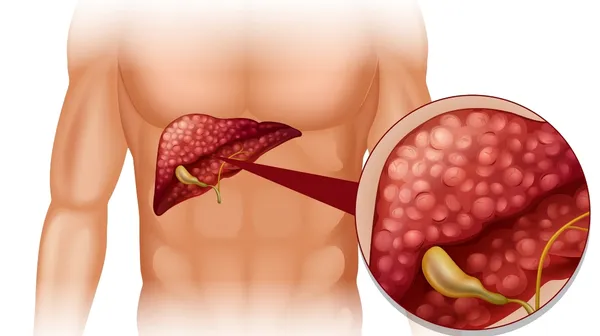
When typical gallstone pain — right upper abdominal, after fatty food — is now accompanied by fever and does not resolve in 1-4 hours, the attack has escalated from simple biliary colic to acute cholecystitis. This is an infected gallbladder requiring hospital admission, IV antibiotics, and laparoscopic cholecystectomy. Do not manage this combination at home.
Quick Answers
Every patient who has had multiple biliary colic attacks is at risk of this transition. Biliary colic occurs because a stone temporarily obstructs the cystic duct — the gallbladder contracts against the obstruction, producing pain, then the stone shifts and pain resolves. Acute cholecystitis occurs when the stone does not shift — sustained obstruction causes the gallbladder to become distended, inflamed, and infected.
The clinical transition from biliary colic to acute cholecystitis is one of the most important recognition skills in emergency medicine. Understanding the distinguishing features allows patients to seek care at the right time — before complications develop.
The Transition: Biliary Colic → Acute Cholecystitis
How to Recognise When This Transition Has Occurred
Clinical Features of Acute Cholecystitis
- Constant right upper abdominal pain — not colicky, does not come and go; continuous and worsening
- Fever — typically 38-39°C; rigors in severe cases
- Murphy's sign positive — sharp pain and involuntary breath-holding when the right upper abdomen is pressed on during inspiration
- Nausea and vomiting — more persistent than in simple biliary colic
- Right upper abdomen tender to press — in biliary colic, the abdomen is not usually tender between episodes
- Loss of appetite
- Patient looks unwell — unlike biliary colic where the patient feels completely well between attacks
Seek emergency care immediately if fever + gallstone pain adds:
- Jaundice — bile duct stone obstruction on top of cholecystitis
- Rigid or board-like abdomen — perforation and peritonitis
- Confusion, low blood pressure, rapid heart rate — septic shock
- Pain spreading from right upper to entire abdomen — generalised peritonitis
- Rapidly worsening despite being on antibiotics at home
Investigations at Hospital
- Blood tests: White blood cell count (elevated in infection), CRP, liver function tests (elevated if CBD involvement), blood cultures if sepsis suspected
- Ultrasound abdomen: Confirms gallstones, gallbladder wall thickening (>4mm), pericholecystic fluid (fluid around gallbladder = inflammation), dilated CBD if CBD stones present
- CT scan: When ultrasound is inconclusive or complications are suspected — identifies perforation, empyema, or pericholecystic abscess
Treatment of Acute Cholecystitis
Hospital admission — always
- IV antibiotics covering gram-negative and anaerobic organisms (piperacillin-tazobactam, cefuroxime + metronidazole)
- IV fluids and IV analgesia
- Nil by mouth (reduces gallbladder stimulation)
- Regular monitoring of vital signs, blood tests, and clinical status
Laparoscopic cholecystectomy — timing
Early cholecystectomy (within 72 hours): Current evidence strongly favours early surgical management. Outcomes are better — shorter hospital stay, lower conversion to open rate, faster recovery. Previously, "delayed" surgery (after 6 weeks) was standard but is now known to be inferior.
Interval cholecystectomy: For patients presenting very late (>72 hours with significant inflammation) or with very high surgical risk — antibiotics and drainage first, then elective surgery after 6 weeks when inflammation has settled.
Percutaneous cholecystostomy
Ultrasound-guided drain placed into the gallbladder for patients too unwell for surgery — provides temporary decompression and infection control while the patient is stabilised for definitive surgery.
What Happens If Ignored
- Empyema of gallbladder — pus filling the gallbladder; requires urgent surgical drainage
- Gallbladder perforation — bile spills into the peritoneal cavity causing generalised peritonitis; life-threatening; emergency surgery required
- Pericholecystic abscess — collection of pus around the gallbladder
- Mirizzi syndrome — gallstone in the cystic duct compressing the common bile duct from outside, causing jaundice
- All these complications are preventable with timely management of acute cholecystitis
Frequently Asked Questions
This Cluster in India
Key India-specific factors
- Acute cholecystitis is one of the most common surgical emergencies in India — largely because symptomatic gallstones are not managed definitively with early elective cholecystectomy
- Many patients delay hospital presentation for 1-2 days taking home antibiotics — by which time complicated cholecystitis may have developed, significantly increasing surgical risk
- The distinction between "usual attack" and "fever + constant pain" is the critical recognition task for Indian patients and families
Desi Patient Questions
Ha — bilkul different. Pain not resolving + bukhaar = acute cholecystitis. Gallbladder infected thayo chhe. Hospital javo ABHI. IV antibiotics + surgery zaruri chhe. Home antibiotics leta nahi — IV treatment ane surgical management required chhe.
Seek Urgent Care in Vadodara
Fever with gallstone-type pain — go to Sterling Hospital, Vadodara. Dr Samir Contractor provides IV antibiotics, ultrasound, and early laparoscopic cholecystectomy within 72 hours for best outcomes.
Gallstone Pain + Fever = Go to Hospital Urgently in Vadodara
IV antibiotics and early laparoscopic cholecystectomy within 72 hours. Dr Samir Contractor at Sterling Hospital, Vadodara.