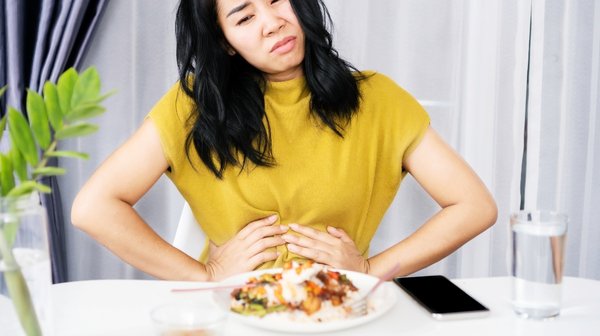
Abdominal pain that starts 30-60 minutes after eating oily, fried, or fatty food is one of the most specific symptoms in gastroenterology. It is the classic presentation of gallstones causing biliary colic - the gallbladder contracts against a stone when stimulated by fat in food, producing cramping right upper abdominal pain. An ultrasound quickly confirms the diagnosis, and laparoscopic surgery provides a definitive cure.
Quick Answers
In India, the post-meal pain pattern is one of the most recognisable presentations in surgical practice: a woman in her 30s or 40s who develops cramping right upper abdominal pain 30-60 minutes after eating puri, bhajia, heavy thali, or any oily food. She may have had several similar episodes, each resolving after a few hours. Between attacks, she feels completely normal.
This pattern is biliary colic from gallstones - until proven otherwise. An ultrasound will identify the stones in the vast majority of these patients. The treatment - laparoscopic cholecystectomy - is one of the most common and most successful elective surgeries in India.
Why Fatty Food Triggers Gallbladder Pain
The Mechanism - Fat → CCK → Gallbladder Contraction → Pain
When fat enters the duodenum (upper small intestine) after a meal, cells in the intestinal lining release a hormone called cholecystokinin (CCK). CCK signals the gallbladder to contract and push bile into the bile duct for fat digestion. In a normal gallbladder, this contraction is smooth and painless. In a gallbladder with stones, contraction can push a stone against the cystic duct (outlet). This obstruction produces a wave of cramping pain as the gallbladder contracts against the resistance - classic biliary colic. As the stone shifts back and obstruction is relieved, the pain eases.
What the Pain Feels Like
- Located in the right upper abdomen or upper central abdomen
- Cramping, colicky, or steady aching character - described as gripping or squeezing
- May radiate to the right shoulder tip or the right upper back (scapula)
- Comes in waves - builds, plateaus, then eases
- Often accompanied by nausea, sometimes vomiting
- Lasts 1-4 hours and then resolves completely
- Patient feels completely well between attacks
- Triggered specifically by fatty, oily, or heavy meals
Other Causes of Post-Fatty Food Pain
Gallstones are the most important cause, but fatty food also worsens other conditions:
- GERD - fat delays gastric emptying and relaxes the LES, worsening reflux. But GERD produces central chest burning, not right upper colicky pain.
- Functional dyspepsia - fat worsens post-meal fullness and discomfort. But typically central, diffuse, without right shoulder radiation.
- Chronic pancreatitis - fat-rich meals worsen abdominal pain from an inflamed pancreas. Pain is central, often radiating to the back.
- IBS - fatty meals can trigger cramping and diarrhoea, but predominantly lower abdominal location.
Right upper pain specifically, with right shoulder radiation, 30-60 min after fatty food, lasting 1-4 hours, and resolving completely - this specific constellation is gallstones until an ultrasound proves otherwise.
Seek urgent care if post-fatty food pain:
- Does not resolve after 4-6 hours - pain is now constant, not colicky
- Is accompanied by fever - suggests cholecystitis (infected gallbladder)
- Is accompanied by yellow eyes or skin (jaundice) - bile duct obstruction
- Radiates to the back and is severe and constant - pancreatitis
- Causes the abdomen to be rigid or extremely tender - perforation or peritonitis
Simple biliary colic resolves. If the pain after a fatty meal does not ease within 4-6 hours, becomes constant, and fever develops - the gallbladder has likely become infected (cholecystitis) and hospital admission is needed.
Tests
Ultrasound abdomen - primary test
Identifies gallstones with high accuracy. Shows gallbladder wall thickness (cholecystitis), bile duct diameter (CBD stones). The first and most important investigation. Should be performed in any patient with the typical post-fatty food pain pattern.
Blood tests
Liver function tests (elevated if CBD stones present), full blood count (raised white cells in cholecystitis), amylase (pancreatitis).
MRCP
When bile duct stones are suspected on ultrasound (dilated CBD) - MRCP provides non-invasive imaging of the bile ducts and confirms whether stones are present before deciding on ERCP.
Treatment
Immediate management
- Avoid all fatty, oily, and fried food - this is the single most effective immediate measure to reduce attack frequency
- Pain relief during an acute episode - anti-spasmodics (hyoscine), analgesics
- Anti-emetics for nausea
Definitive treatment - Laparoscopic Cholecystectomy
Removal of the gallbladder through 3-4 small incisions (5-10mm). The gallbladder - the source of stones - is removed permanently. Once the gallbladder is gone, biliary colic attacks cannot occur. The operation is performed under general anaesthesia, takes 30-60 minutes, and most patients go home the same day or the next day. Recovery to light activity takes 5-7 days; full recovery 2 weeks.
Laparoscopic cholecystectomy is one of the most commonly performed and safest operations in India. It has an excellent safety profile in experienced hands and a very low complication rate.
Foods That Trigger Attacks
- Puri, bhajia, samosa, gathiya
- Heavy thali with oily curries
- Ghee in large quantities
- Fried snacks (chakli, chevdo)
- Full-fat dairy in excess
- Very heavy festival meals
- Meat with skin, fatty cuts
Foods to Choose
- Plain dal, khichdi, soft roti
- Steamed vegetables
- Low-fat curd (thin curd, chaas)
- Fruit (banana, papaya)
- Boiled rice with light dal
- Clear vegetable soup
- Idli, upma, poha (minimal oil)
Why Untreated Gallstones Get Worse
- Episodes of biliary colic typically increase in frequency and severity over time
- A stone that causes simple biliary colic may later become wedged, causing constant cholecystitis
- Migration of stones into the common bile duct causes jaundice and cholangitis
- Gallstone-triggered pancreatitis - a potentially severe complication
- Low-fat diet reduces attack frequency but does not remove stones or prevent progression
Frequently Asked Questions
Post-Fatty Food Pain in India
India-specific context
- Gujarati and Indian cuisine - particularly festival and wedding food - is high in fat and provides the most direct trigger for biliary colic attacks. The link between heavy oily food and right upper pain is the most clinically recognisable symptom pattern in Indian GI surgery
- Many patients correctly identify oily food as the trigger but attribute the pain to "gas" or "acidity" rather than recognising the gallbladder as the cause - leading to months of antacid use without a diagnosis
- The postprandial delay of 30-60 minutes is the key feature that distinguishes biliary colic from GERD (which produces burning during eating or immediately after) in the Indian clinical setting
Desi Patient Questions
Ha - 30-60 min delay after fatty food + right upper pain = biliary colic nu classic pattern chhe. Ultrasound karo - gallstones confirm thashe most likely. Low fat diet for now ane doctor pase surgery consultation mate javo.
Ha - festival heavy oily meals gallbladder ko contract karva ma trigger kare chhe. Jyaré gallstones hoy to biliary colic attack thay. Aa pattern very common Indian practice ma chhe. Ultrasound karo - gallstones confirm karo ane elective surgery plan karo.
Seek Care in Vadodara
If fatty food triggers your right upper abdominal pain - an ultrasound at Sterling Hospital, Vadodara will confirm or exclude gallstones in minutes. Dr Samir Contractor provides same-day consultation and surgical planning.
Pain After Fatty Food? Get an Ultrasound and Diagnosis in Vadodara
This is a classic gallstone symptom. A 30-minute ultrasound confirms the diagnosis. Dr Samir Contractor at Sterling Hospital, Vadodara.