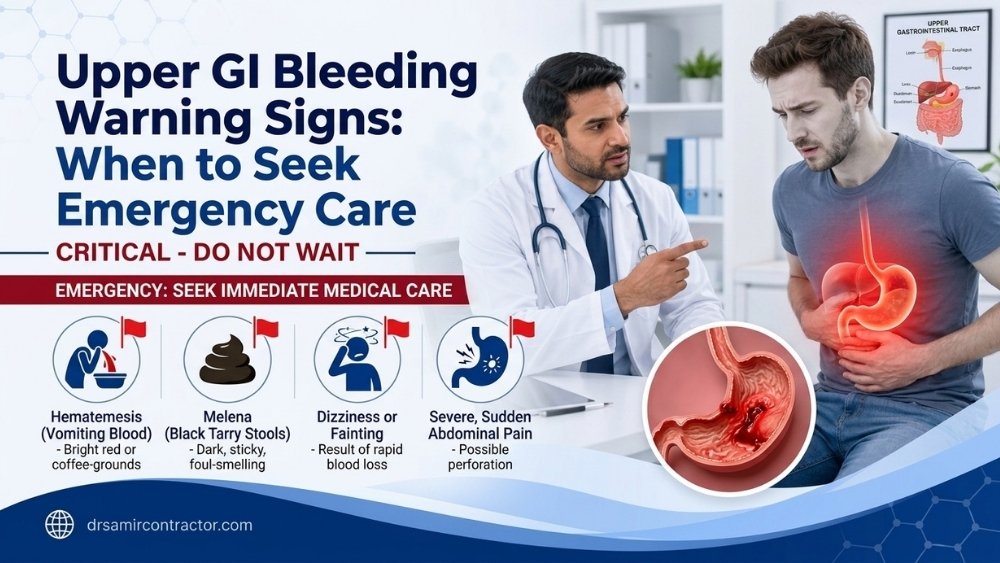
Upper GI bleeding - blood from the esophagus, stomach, or duodenum - is always a medical emergency. It presents as vomiting blood, black tarry stool, or signs of significant blood loss. Every presentation, regardless of how mild it initially appears, requires immediate hospital evaluation and endoscopy. Delay worsens outcomes.
Quick Answers
This Is a Medical Emergency - Go to Hospital Immediately If You Have:
- Vomiting blood - bright red, maroon, or dark brown like coffee grounds
- Black, tarry, foul-smelling stool that looks like tar or coal
- Dizziness or fainting, especially with abdominal pain
- Rapid weak pulse, pale sweaty skin, extreme weakness - signs of shock from blood loss
- Collapse or loss of consciousness
Upper GI bleeding requires IV fluids, blood transfusion where needed, and urgent endoscopy to identify and stop the bleeding source. Time matters. Do not manage these signs at home.
Recognising Upper GI Bleeding - Signs and What They Mean
High Urgency Signs
- Haematemesis (vomiting blood) - bright red blood indicates active or recent arterial bleeding from the upper GI tract
- Coffee-ground vomit - digested blood; slower bleed, but still a medical emergency
- Melaena (black tarry stool) - blood digested over 4-8 hours; indicates significant upper GI blood loss; foul-smelling, sticky, black like tar
- Shock signs - dizziness, fainting, cold pale sweaty skin, rapid weak pulse - significant blood volume loss
Also Needs Evaluation
- Unexplained iron deficiency anaemia - may indicate slow, occult upper GI blood loss from peptic ulcer or cancer
- Passage of dark red blood rectally - can sometimes originate from a brisk upper GI source
- Weakness and fatigue with known peptic ulcer history - possible chronic bleeding
Black stool from upper GI bleeding (melaena) is different from dark green stool from eating dark leafy vegetables, or very dark stool from iron supplements. Melaena has a distinctive tarry consistency and a foul smell unlike any other stool. If you are unsure, go to hospital and let the doctor assess.
Causes of Upper GI Bleeding
Common Causes (in order of frequency in India)
- Peptic ulcer disease - most common cause. NSAIDs and H. pylori are the main drivers. Silent ulcers from NSAIDs present without prior pain, directly with bleeding.
- Esophageal and gastric varices - dilated veins from portal hypertension (liver cirrhosis, portal vein thrombosis). Can produce catastrophic, life-threatening bleeds. High mortality without urgent treatment.
- Mallory-Weiss tear - mucosal tear at the esophagogastric junction from forceful vomiting; often after alcohol. Usually settles with supportive management.
- Erosive gastritis - from NSAIDs, alcohol, critical illness. Multiple small erosions that bleed slowly or acutely.
- Esophagitis - severe acid-related or infectious esophagitis can bleed
- Dieulafoy's lesion - an abnormally large submucosal artery that erodes through the mucosa. Rare but causes massive, recurrent bleeds with no visible ulcer.
- Gastric or esophageal cancer - presents with bleeding when ulceration in the tumour surface occurs
- Gastric antral vascular ectasia (GAVE) - "watermelon stomach" - abnormal blood vessels in the stomach antrum; causes chronic occult bleeding and anaemia
What Happens at Hospital - Management of Upper GI Bleeding
Immediate resuscitation
- Two large-bore IV lines established immediately
- Blood tests: full blood count, clotting profile, cross-match, kidney function, liver function
- IV fluids and blood transfusion based on degree of blood loss
- Nil by mouth to prepare for endoscopy
- PPI given IV - reduces acid and stabilises blood clots on ulcers
Urgent Upper GI Endoscopy
The most important investigation and treatment. Performed within 24 hours of presentation (within 12 hours for high-risk patients). Identifies the bleeding source and allows endoscopic haemostasis at the same session:
- Adrenaline injection - contracts vessels around the bleeding point
- Endoscopic clipping - mechanical closure of the bleeding vessel
- Thermocoagulation - heat applied to cauterise the bleeding point
- Variceal band ligation - for esophageal varices - rubber bands placed around the varices to occlude them
- Variceal sclerotherapy - injection of sclerosing agent into varices
Surgical management
For the 10-15% of patients where endoscopic haemostasis fails - emergency surgery is performed. Laparoscopic or open ligation of the bleeding vessel, over-sewing of the ulcer, or in selected cases partial gastrectomy.
Interventional radiology
Angiographic embolisation - selective blocking of the feeding artery to the bleeding site. An alternative to surgery in selected patients with high surgical risk.
Who Is at Higher Risk of Upper GI Bleeding?
- Regular NSAID or aspirin users - especially without food or PPI co-prescription
- Patients with known peptic ulcer disease - particularly if continuing NSAIDs
- People with liver disease / cirrhosis - varices from portal hypertension can bleed catastrophically
- Heavy alcohol users - erosive gastritis and varices
- Elderly patients - reduced mucosal healing capacity; often on multiple medications
- Patients on anticoagulants (warfarin, newer blood thinners) or antiplatelet drugs - increased bleeding risk
- ICU patients - stress ulcers without PPI prophylaxis
Prevention - Reducing the Risk of Upper GI Bleeding
- Always take NSAIDs with food - never on an empty stomach
- PPI co-prescription for all patients on long-term NSAIDs, aspirin, or anticoagulants
- H. pylori eradication - removes the most common preventable cause of peptic ulcer bleeding
- Avoid alcohol in excess - damages gastric mucosa and causes varices in those with liver disease
- Regular endoscopic surveillance for patients with known varices - band ligation prevents first bleed
- Beta-blockers for known varices - reduce portal pressure and bleeding risk
Frequently Asked Questions
Upper GI Bleeding in India
India-specific context
- NSAID-related upper GI bleeding is a major and preventable problem in India - ibuprofen and diclofenac are widely available without prescription and frequently taken without food or PPI co-therapy
- H. pylori-driven peptic ulcer bleeding is extremely common - India's high H. pylori prevalence means ulcer disease (and its complications) is more prevalent here than in many Western countries
- Esophageal variceal bleeding from alcohol-related liver cirrhosis is an important cause of upper GI bleeding emergencies in India - particularly in men 40-60 years of age
- Delay in presentation is a major problem - many patients with melaena self-medicate for several days before coming to hospital, allowing significant blood loss to occur
- Patients often attribute black stool to iron supplements or diet - any black tarry sticky stool that smells abnormal and is not explained by iron tablets should be taken seriously and evaluated
Emergency Care in Vadodara
Upper GI bleeding is a medical emergency. Go directly to Sterling Hospital Emergency, Vadodara. Dr Samir Contractor's team provides emergency endoscopy, haemostasis, and surgical management 24 hours.
Desi Patient Questions
Turant hospital javo - delay na karo. Khaalo tarry stool = melaena = upper GI bleeding. Minimum 50-100ml blood loss ni indication chhe. Hospital ma IV access, blood tests, ane urgent endoscopy zaruri chhe. Ghar pe wait karvathi worse thay chhe.
Ha - coffee ground vomit = digested blood = upper GI bleeding. Emergency chhe. Turant hospital javo. Nil by mouth raho (khaau pivo nahi). Endoscopy same day zaruri chhe to bleeding source identify ane treat karvanu.
Ha - NSAIDs stomach lining damage kare chhe ane peptic ulcer + bleeding produce kare chhe, sometimes without prior pain. Always food sathe lo. High risk patients (age >65, prior ulcer) ko PPI simultaneously zaruri chhe. Doctor prescription thi lo - OTC without guidance risky chhe.
Signs of Upper GI Bleeding? Go to Hospital Immediately
Sterling Hospital, Vadodara provides 24-hour emergency GI evaluation, urgent endoscopy, and surgical management. Dr Samir Contractor's team is available.