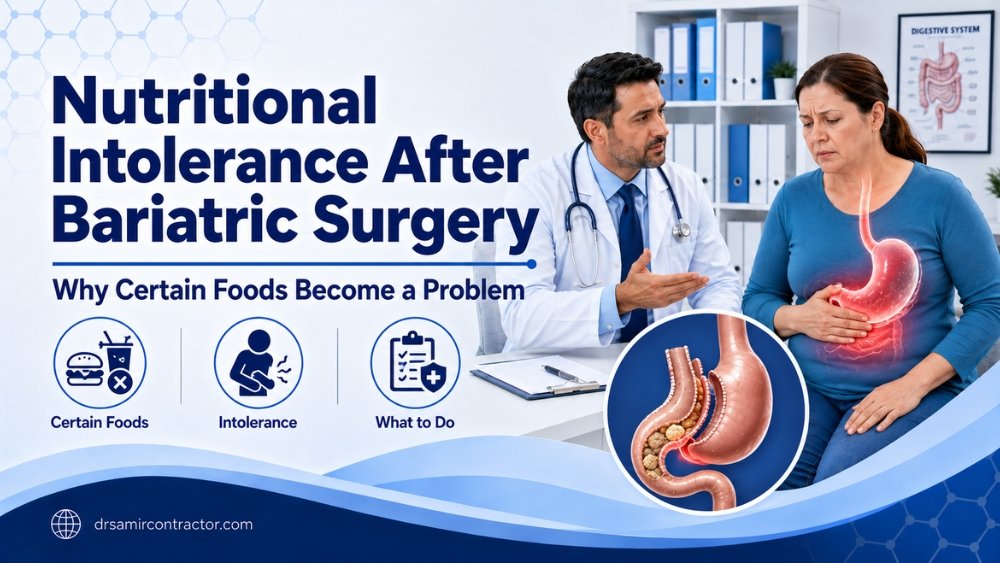
After bariatric surgery, many patients discover that foods they previously enjoyed now cause nausea, cramping, or diarrhoea. Red meat, bread, rice, dairy, and sugary foods are the most frequent triggers. Some of these intolerances are expected adaptations to your new anatomy. Others - like dumping syndrome and reactive hypoglycemia - are specific clinical conditions that require proper management.
✦ Quick Answers
Bariatric surgery changes how you eat. This is, by design, part of how it works. A smaller stomach, altered anatomy, and changed gut hormone signalling all combine to reduce food intake and promote weight loss. But these same changes also mean that certain foods - often foods you enjoyed for decades - may now trigger significant discomfort.
This page focuses specifically on food intolerances as clinical entities after bariatric surgery. This is different from the general difficulty eating after bariatric surgery (which covers mechanical issues like eating too fast or taking bites that are too large) and different from nutritional GI symptoms (which covers deficiency-related signs like fatigue, hair loss, and tingling). Here, we address the specific food groups that become problematic, why they do, and the clinical syndromes - dumping syndrome and reactive hypoglycemia - that represent the most significant forms of post-bariatric food intolerance.
The Most Common Food Intolerances After Bariatric Surgery
Red meat intolerance
This is the single most frequently reported food intolerance after bariatric surgery. Studies report that 40 to 50 percent of patients develop some degree of red meat intolerance within the first year. Chicken and fish are generally tolerated much better. The reasons are physiological: red meat has dense, fibrous muscle tissue that requires significant mechanical breakdown and gastric acid to digest. After surgery, the stomach is smaller, produces less acid, and empties differently. Dry-cooked or grilled red meat is the worst tolerated; slow-cooked, minced, or braised preparations are significantly easier on the post-surgical stomach.
Bread, rice, and pasta intolerance
Starchy carbohydrates - particularly white bread, sticky rice, and pasta - are the second most common problem. These foods tend to swell in the small post-surgical stomach, creating a sensation of severe fullness, pressure, and nausea. Bread that is soft, doughy, or fresh from the oven is worse than toasted or dry bread. Sticky Indian rice varieties are harder to tolerate than fluffier basmati rice in small portions. These foods can also form a bolus that temporarily blocks the stomach outlet, causing pain and vomiting.
Lactose intolerance (new or unmasked)
Dairy intolerance affects a large proportion of bariatric patients, particularly after gastric bypass. There are two mechanisms at play. First, many Indian patients have mild pre-existing lactose intolerance that was manageable before surgery but becomes symptomatic when gut transit is altered. Second, gastric bypass specifically bypasses the duodenum and proximal jejunum - the segments with the highest concentration of lactase enzyme. The result is bloating, gas, cramping, and diarrhoea after consuming milk, ice cream, or paneer in larger quantities. Curd (dahi) is often tolerated better because the fermentation process partially breaks down lactose.
Sugar and high-fat food intolerance
Sugary foods and high-fat foods can trigger dumping syndrome (discussed in detail below). Even in patients who do not experience full dumping, concentrated sweets and fried foods commonly cause nausea, abdominal discomfort, and a general feeling of being unwell after consumption. This is partly a protective mechanism - your altered anatomy is signalling that these foods are not appropriate in their previous quantities.
Fibrous vegetables and raw salad
High-fibre vegetables - particularly when raw - can be difficult to tolerate in the early months. Stringy vegetables like celery, raw carrot, and raw cabbage may cause discomfort or get stuck. Cooked vegetables are almost always better tolerated. Over time, tolerance to fibre typically improves, and increasing vegetable intake gradually is encouraged for overall health.
Food Intolerances by Procedure: Sleeve vs Bypass
The type of bariatric surgery you had directly influences which intolerances you are most likely to experience and their severity.
| Food Group | Sleeve Gastrectomy | Gastric Bypass (Roux-en-Y) |
|---|---|---|
| Red meat | Very common; smaller stomach struggles with dense texture. Improves over 6-12 months with texture modification. | Very common; similar mechanism plus reduced acid. Minced or slow-cooked preparations tolerated better. |
| Bread / rice | Common; swelling in small stomach causes pressure, nausea. Toasted bread and small portions of basmati rice tolerated better. | Common; similar swelling plus risk of triggering early dumping if refined carbohydrates. |
| Dairy / lactose | Moderate risk; mostly unmasking of pre-existing mild intolerance. Curd usually tolerated. | High risk; bypassed lactase-rich segments plus unmasking. May need lactase supplements or lactose-free products. |
| Sugar / sweets | Mild intolerance; nausea possible but full dumping syndrome is uncommon because the pylorus is intact. | High risk of dumping syndrome; sugar reaches small intestine rapidly without pyloric regulation. |
| Fried / fatty food | Moderate; nausea, heaviness, and delayed emptying common. | High; triggers both nausea and dumping-type symptoms. Fat malabsorption can also cause steatorrhoea. |
| Carbonated drinks | Poorly tolerated; gas in a small restricted stomach causes pain and distension. | Poorly tolerated; gas distension in the small pouch and can contribute to pouch stretching. |
Key difference: The pylorus - the muscular valve at the stomach outlet - is preserved in sleeve gastrectomy but bypassed in gastric bypass. This is why dumping syndrome is far more common after bypass. The pylorus normally controls how quickly food enters the small intestine. Without it, sugary and fatty foods flood the intestine and trigger the cascade of symptoms known as dumping.
Dumping Syndrome: Early and Late
Dumping syndrome is the most clinically significant form of food intolerance after bariatric surgery. It occurs primarily after gastric bypass, though mild forms can occasionally occur after sleeve gastrectomy. Understanding the two distinct types is essential for managing it effectively.
| Feature | Early Dumping | Late Dumping (Reactive Hypoglycemia) |
|---|---|---|
| Timing after eating | Within 10 to 30 minutes | 1 to 3 hours after eating |
| Trigger | Sugary foods, refined carbohydrates, large meals, high-fat foods | Carbohydrate-rich meals that cause a blood sugar spike followed by an exaggerated insulin response |
| Mechanism | Rapid entry of food into the small intestine draws water into the bowel (osmotic effect), triggers gut hormone release | Exaggerated insulin release after rapid glucose absorption causes blood sugar to drop below normal |
| GI symptoms | Nausea, abdominal cramping, bloating, diarrhoea (urgent, watery) | Minimal GI symptoms; occasionally mild nausea |
| Systemic symptoms | Sweating, flushing, rapid heartbeat, dizziness, need to lie down | Shakiness, tremor, sweating, confusion, weakness, hunger, palpitations |
| How common | Affects 20-50% of bypass patients; less common after sleeve | Affects 10-20% of bypass patients; can develop months to years after surgery |
| Primary management | Avoid trigger foods, eat small meals, avoid drinking fluids with meals, increase protein and fibre intake | Eat complex carbohydrates instead of simple sugars, include protein with every meal, carry glucose tablets for acute episodes |
Reactive hypoglycemia: the overlooked problem
Late dumping, more accurately called reactive hypoglycemia, deserves special attention because it is frequently misdiagnosed or attributed to other causes. The patient eats a meal containing carbohydrates. The sugar is absorbed rapidly into the bloodstream through the shortened gut pathway. The pancreas responds with an excessive insulin surge. One to three hours later, blood sugar crashes below normal, causing tremor, sweating, confusion, and weakness. Some patients experience episodes severe enough to cause near-fainting or actual loss of consciousness.
If you experience shakiness, sweating, or confusion 1 to 3 hours after meals - particularly after carbohydrate-heavy meals - this is the likely diagnosis. A continuous glucose monitoring study or a mixed meal tolerance test can confirm it. Management centres on dietary modification: reducing refined carbohydrates, combining protein and healthy fat with every meal, and in resistant cases, medication such as acarbose to slow carbohydrate absorption.
When Intolerance Signals a Structural Problem
Most food intolerances after bariatric surgery are expected adaptations to your new anatomy. However, certain patterns indicate that something beyond normal adaptation may be happening - specifically, a stricture (narrowing), marginal ulcer, or other complication that requires investigation.
Seek evaluation if you experience:
- Progressive intolerance to all solid foods - if tolerance is getting worse over weeks rather than gradually improving, a stricture (narrowing at the surgical join or stomach outlet) is likely
- Vomiting after every meal regardless of food type, texture, or portion size - suggests mechanical obstruction, not food-specific intolerance
- Intolerance that returns after a period of improvement - foods you tolerated well for weeks or months suddenly cause problems again; may indicate a developing ulcer or stricture
- Severe epigastric pain with eating - burning or sharp pain in the upper abdomen with meals suggests a marginal ulcer (ulcer at the surgical connection), especially after gastric bypass
- Inability to keep fluids down for more than 24 hours - risk of dehydration and acute thiamine deficiency; requires urgent assessment
- Blood in vomit or black stools - may indicate an ulcer that is bleeding
- Unintended rapid weight loss beyond what is expected - intolerance severe enough to cause malnutrition requires immediate investigation
Signs that your intolerance is likely normal adaptation:
- Specific foods cause problems (meat, bread) but other foods are tolerated well
- Tolerance gradually improves over weeks and months
- Adjusting texture (mince instead of steak, toasted instead of fresh bread) resolves the problem
- Eating slowly and in small portions prevents symptoms
- Dumping symptoms only occur with identifiable triggers (sugar, fried food) and are avoidable
- You are maintaining adequate hydration and your weight loss is on track
Struggling With Food Intolerance After Bariatric Surgery?
Persistent food intolerance that does not improve with dietary modification may need endoscopic evaluation. Dr Samir Contractor provides comprehensive post-bariatric assessment - including upper GI endoscopy when indicated - at Sterling Hospital, Vadodara.
Managing Food Intolerances: Practical Strategies
Protein sources: adapting when meat is a problem
Protein is the most important macronutrient after bariatric surgery - you need 60 to 80 grams per day. When red meat is not tolerated, the priority is finding alternative protein sources that you can eat comfortably. Fish, eggs, paneer, tofu, dal, and chicken (especially moist preparations) are typically well tolerated. Protein supplements (whey protein or plant-based protein powder) can bridge the gap on days when solid protein intake is low.
Carbohydrate management
Refined carbohydrates (white bread, white rice, maida-based foods, sweets) are the primary triggers for dumping syndrome. Switching to complex carbohydrates - whole grains, dalia, oats, ragi - provides slower absorption and reduces the sugar spike that triggers dumping. Always eat carbohydrates together with protein rather than on their own.
Dairy: finding what works
If you have developed lactose intolerance, you do not need to eliminate dairy entirely. Curd and buttermilk are naturally lower in lactose due to bacterial fermentation. Hard cheeses contain very little lactose. Lactase enzyme tablets taken before a meal containing dairy can prevent symptoms. Lactose-free milk is widely available and nutritionally equivalent to regular milk. Paneer in small quantities is often tolerated because much of the lactose is drained off with the whey.
The 30-minute rule for fluids
Drinking fluids during meals washes food through the stomach more rapidly, increasing the risk of dumping and reducing the time available for digestion. The standard recommendation is to stop drinking 30 minutes before eating, avoid fluids during the meal, and wait 30 minutes after eating before drinking again. This single habit change significantly reduces both dumping symptoms and food intolerance complaints.
Step-by-Step Food Reintroduction After Bariatric Surgery
- Weeks 1-2 post-surgery: Clear liquids only - Water, clear broth, diluted fruit juice (no sugar), electrolyte drinks. Sip slowly throughout the day.
- Weeks 2-4: Full liquids and pureed foods - Protein shakes, thin dal, strained soups, curd, mashed banana, pureed vegetables. Focus on protein intake.
- Weeks 4-8: Soft foods - Soft-cooked eggs, fish, soft paneer, well-cooked vegetables, khichdi, mashed potato. Introduce one new food at a time to identify intolerances.
- Months 2-6: Gradual regular food introduction - Slowly reintroduce chicken, dal, rice (small portions), roti (soft), cooked vegetables. If a food causes problems, wait 2-4 weeks and try again. Many intolerances resolve with time.
- 6 months onward: Stabilised diet - Most patients establish their personal tolerance pattern by 6-12 months. Continue avoiding known triggers (typically dry red meat, fresh bread, sugary foods). Annual dietary review recommended.
How Doctors Evaluate Persistent Food Intolerance
When food intolerance does not improve with dietary modification, or when it worsens over time, a structured clinical evaluation is needed to rule out complications.
Clinical Evaluation Pathway
- Step 1 - Detailed dietary and symptom history: Which foods trigger symptoms? What is the timing (during meal, 30 minutes after, 1-3 hours after)? Is it getting better or worse? Is it all foods or specific ones? This helps distinguish dumping from stricture from expected intolerance.
- Step 2 - Upper GI endoscopy (gastroscopy): If mechanical obstruction or ulcer is suspected, endoscopy directly visualises the surgical anatomy, identifies strictures, and detects marginal ulcers. A stricture can often be treated during the same procedure by balloon dilation.
- Step 3 - Blood sugar evaluation for reactive hypoglycemia: If late dumping is suspected, continuous glucose monitoring or a mixed meal tolerance test can confirm the diagnosis and guide dietary and medical management.
- Step 4 - Hydrogen breath test for lactose intolerance: If dairy intolerance is unclear, a lactose hydrogen breath test can objectively confirm lactose malabsorption and guide whether lactase supplementation or dairy avoidance is needed.
Indian Food Adaptation After Bariatric Surgery
Navigating Indian cuisine with post-bariatric food intolerances
- Roti and rice challenges: Fresh, soft roti and sticky rice are among the hardest foods to tolerate after surgery. Strategies that work: eat roti only when slightly dried or toasted, choose fluffy basmati rice over short-grain varieties, and limit starch to one-quarter of your plate. Dalia (broken wheat) and khichdi are usually well tolerated and provide a familiar comfort food option.
- Dal as a protein bridge: When meat intolerance limits protein intake, dal becomes essential. Moong dal is the easiest to digest. Prepare it thinner (more watery) in the early months and gradually thicken as tolerance improves. Adding dal to every meal ensures consistent protein intake even when other sources are not tolerated.
- Managing mithai and sweets: Traditional Indian sweets are extremely high in sugar and ghee - both primary triggers for dumping syndrome. During festivals and social occasions, this creates significant social pressure. Inform family members about your dietary needs. Small quantities of sugar-free alternatives or date-based sweets may be tolerated, but concentrated sugar must be avoided.
- Curd over milk: If dairy intolerance develops, curd (dahi) and chaas (buttermilk) are almost always tolerated better than milk. The bacterial cultures in curd partially digest the lactose. Including 1-2 servings of curd daily provides calcium and protein without triggering symptoms.
- Spice tolerance: Many patients find that very spicy food is harder to tolerate, particularly in the first 3-6 months. Gradually reintroducing spices works better than eliminating them permanently. Turmeric, cumin, and coriander are typically well tolerated; chilli can be increased slowly as comfort allows.
- Oil and frying: Deep-fried foods (pakora, puri, bhajiya) are among the worst tolerated after bariatric surgery. Air-frying, baking, or shallow-frying with minimal oil are practical substitutes that maintain flavour while reducing fat content enough to prevent dumping symptoms.
Sample Day’s Eating Plan: Indian Post-Bariatric Patient
- Breakfast: 1 moong dal cheela with green chutney + 1 small cup of curd - protein-first, minimal starch
- Mid-morning: Protein shake (whey or plant-based) blended with half a banana
- Lunch: 2-3 tablespoons rice + thin moong dal + 1 small portion of sabzi + curd - eat dal and sabzi first, rice last
- Afternoon: Handful of roasted chana or a small piece of paneer
- Dinner: 1 small soft roti (or half) + chicken/fish/paneer preparation + cooked vegetables - protein first, roti last
- Evening: Glass of chaas or small bowl of curd if protein target not met
- Remember: No fluids 30 minutes before or after meals. Eat slowly. Stop when you feel satisfied - not full.
Frequently Asked Questions
Desi Patient Questions (Gujarati / Hinglish)
Red meat intolerance bahu common chhe surgery pachhi. Dry-cooked ya grilled meat na badle keema, stew, ya pressure-cooked meat try karo. Chicken ane fish soft preparations ma tolerate thay chhe. Dheema-dheema khaavo ane nana pieces ma chew karo. 6 mahina pachhi tolerance improve thaay chhe majority patients ma.
Aa dumping syndrome chhe. Sugar jaldi small intestine ma jaay chhe ane nausea, cramping, sweating, ane diarrhoea thaay chhe. Bypass pachhi aa bahu common chhe. Mithai, halwa, jalebi avoid karo. Sugar-free alternatives try karo. Aa body no signal chhe ke aa foods hve suitable nathi.
Bypass pachhi lactose intolerance common chhe kyaa ke lactase enzyme vaadhu hoy chhe te area bypass thaay chhe. Doodh ni jagya ae dahi ane chaas piyo - aa ma lactose ochchhu hoy chhe. Lactose-free milk pan available chhe. Paneer nana portion ma chalé chhe. Lactase tablet milk pehlaa leshö to problem ochchhi thaay chhe.
Ha, bread ane rice surgery pachhi common intolerance chhe. Fresh soft rotli ane sticky rice stomach ma swell thaay chhe. Toasted rotli, basmati rice nana portion ma, ane dalia/khichdi vadhare saru tolerate thaay chhe. Pehla protein khaavo - rotli/bhaat last ma ane ochchha khaavo.
Aa reactive hypoglycemia (late dumping) hoi shake chhe. Carbohydrate khaadha pachhi blood sugar pehla vadhé chhe, pachhi excess insulin ne leedhe bahu ochchhu thaay chhe. Tremor, sweating, confusion thaay chhe. Complex carbohydrates khaavo (whole grain), har meal ma protein rakhö, ane doctor ne batavo. Continuous glucose monitoring thi confirm thaay chhe.
Jo specific food na badle badhu j solid food problem karé, ane vomiting har meal pachhi thaay, ane tolerance improve na thaay ya worse thaay - to stricture (narrowing) hoi shake chhe. Aa ma endoscopy karavvi joiye. Stricture ma balloon dilation thi treatment thaay chhe. Turant surgeon ne batavo.