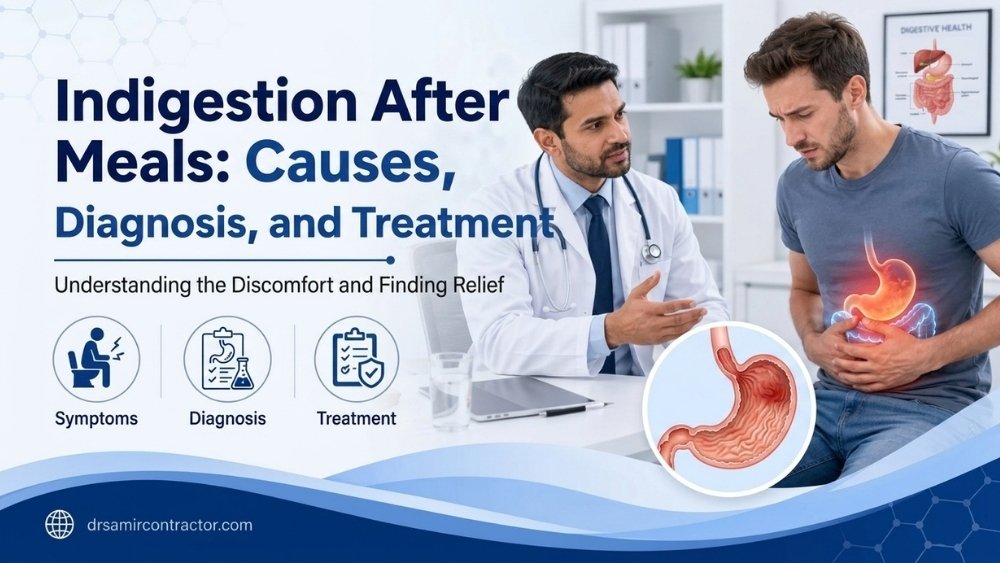
Indigestion after meals - upper abdominal discomfort, bloating, heaviness, and nausea that occur specifically in relation to eating - is one of the most common GI complaints in India. This post-meal symptom cluster has a specific name: postprandial distress syndrome, a form of functional dyspepsia. Most cases are very treatable with the right dietary changes and targeted medication.
✦ Quick Answers
Most people in India eat two or three large meals per day - often at irregular times, with heavy oily preparations, and then rest or sleep immediately afterward. This eating pattern is the most direct cause of postprandial indigestion. But when indigestion after meals is persistent, present with every meal regardless of what is eaten, and not improving with dietary changes, it signals an underlying condition that needs identification.
This page focuses specifically on the post-meal timing of indigestion - which makes it a distinct and useful clinical pattern - and what that timing tells us about the underlying cause.
What Post-Meal Indigestion Tells Us
Indigestion that occurs specifically after meals - rather than on an empty stomach - points toward:
- Postprandial distress syndrome (functional dyspepsia) - the stomach's accommodation reflex is impaired; eating triggers an exaggerated fullness and discomfort response
- Gastritis - food entering an inflamed stomach triggers pain, nausea, and bloating
- Biliary dyspepsia from gallstones - fat in meals triggers gallbladder contraction against a stone, producing right upper pain and bloating 30-60 minutes post-meal
- GERD / hiatal hernia - food stretches the full stomach, increasing pressure on a weak LES, triggering reflux and discomfort
Typical Symptoms of This Cluster
- Upper abdominal discomfort beginning within 30 minutes of eating - before the meal is finished or shortly after
- Bloating and a sense of distension in the upper abdomen after meals
- Nausea - especially after heavy or oily food
- Uncomfortable fullness that lingers for 1-3 hours after eating
- Belching to try to relieve the discomfort
- Loss of appetite for the next meal due to persistent discomfort from the previous one
- Specific food triggers - oily, spicy, gas-forming foods, or large meal volumes
Common Triggers and Causes
Dietary and Lifestyle Triggers
- Large meal portions - overwhelming gastric accommodation
- Oily, fried, or very spicy food
- Eating quickly - swallowing air, inadequate chewing
- Gas-forming foods - rajma, chole, cabbage, cauliflower
- Lying down immediately after eating
- Stress affecting gastric motility
- Irregular meals - long gaps then overeating
Medical Causes
- Functional dyspepsia - impaired gastric accommodation and hypersensitivity
- H. pylori gastritis - direct inflammation triggered by eating
- GERD - food distension triggers reflux and discomfort
- Gallstones - fatty food triggers biliary colic
- Peptic ulcer (gastric) - pain worsens immediately after eating
- NSAIDs / aspirin - direct gastric mucosal irritation
- Gastroparesis - food accumulates rather than emptying normally
Red Flags - When to Escalate
Seek evaluation if post-meal indigestion is associated with:
- Weight loss - reduced eating from persistent post-meal discomfort
- Early satiety - fullness after only a few bites
- Vomiting of old food - gastroparesis or gastric outlet obstruction
- Difficulty swallowing accompanying the post-meal discomfort
- Fever with right upper pain - cholecystitis
- Black stool or vomiting blood
- New onset in a person above 45
Tests That May Be Needed
H. pylori testing - first step
Urea breath test or stool antigen. In India, this should be performed before any long-term medication. H. pylori eradication resolves post-meal indigestion completely in many positive patients.
Ultrasound abdomen
When right upper pain with fatty food is the dominant pattern - ultrasound identifies gallstones quickly and guides surgical referral.
Upper GI Endoscopy
When symptoms are persistent, above age 45, not responding to empirical treatment, or when red flags are present. Identifies gastritis, ulcer, GERD, and excludes malignancy.
Treatment
- Dietary modification (always first): Smaller meals, 4-5 times per day. Reduce oily, fried, spicy, and gas-forming food. Eat slowly. Walk briefly after meals. Avoid lying down for 1-2 hours after eating.
- H. pylori eradication: 14-day antibiotic + PPI course if positive. Highly effective for post-meal indigestion from gastritis.
- PPI therapy: For GERD-related post-meal discomfort. 30-60 minutes before breakfast. 4-8 week course.
- Prokinetics: For functional dyspepsia with prominent fullness and bloating - domperidone or itopride improve gastric accommodation and emptying speed.
- Laparoscopic cholecystectomy: For gallstone-related post-meal right upper pain - definitive treatment, prevents future attacks.
Indian Meal Pattern Changes That Make the Most Difference
- Split the thali: Eat the same total food - but split across 4-5 smaller meals instead of 2-3 large ones. This single change significantly reduces post-meal discomfort in functional dyspepsia
- Cook lighter: Reduce oil by 50% in sabzi preparation. Steam or boil vegetables rather than frying. Switch from deep-frying to air-frying or baking snacks
- After meals: 10-minute walk after lunch and dinner. This is evidence-based for improving gastric motility and reducing post-meal bloating
- Reduce rajma-chole frequency: These are nutritious but gas-forming - limit to 2-3 times per week, well-cooked with soaking water discarded
Frequently Asked Questions
Post-Meal Indigestion in India
India-specific context
- Two-meal eating culture - one large lunch and one large dinner - is the most direct structural cause of post-meal indigestion at a population level. The stomach is consistently over-filled twice daily
- H. pylori affects 40-60% of Indians - gastritis from this infection is the most common identifiable medical cause of post-meal indigestion and one endoscopy-proven test and a 14-day course away from resolution
- Very oily Gujarati cooking (ghee-heavy dal, deep-fried gathiya, bhajia, puri) is particularly associated with post-meal fullness and discomfort in patients with functional gastric sensitivity
- Post-meal rest (sova jaavanu) - taking a nap immediately after lunch - is culturally common and directly worsens post-meal reflux and bloating
Seek Care in Vadodara
If post-meal indigestion is occurring with most meals and not improving with 2-4 weeks of dietary change - consult Dr Samir Contractor at Sterling Hospital, Vadodara. H. pylori testing and endoscopy identify the cause quickly.
Desi Patient Questions
Post-meal discomfort = postprandial dyspepsia. Nana meals 4-5 times khaao, khata vadhare धीraja thi khaao, ane khava pachhi thodi chalo. H. pylori test karo - jyaré positive hoy to 14-day treatment thi most patients completely better thay.
Ghee ane oily food gastric emptying slow kare chhe - post-meal discomfort directly vadhare chhe. 50% oil reduce karvu cooking ma, baking ya steaming use karo, ane portions nana karo. Aa change thi j bahu improvement milshe within days.